
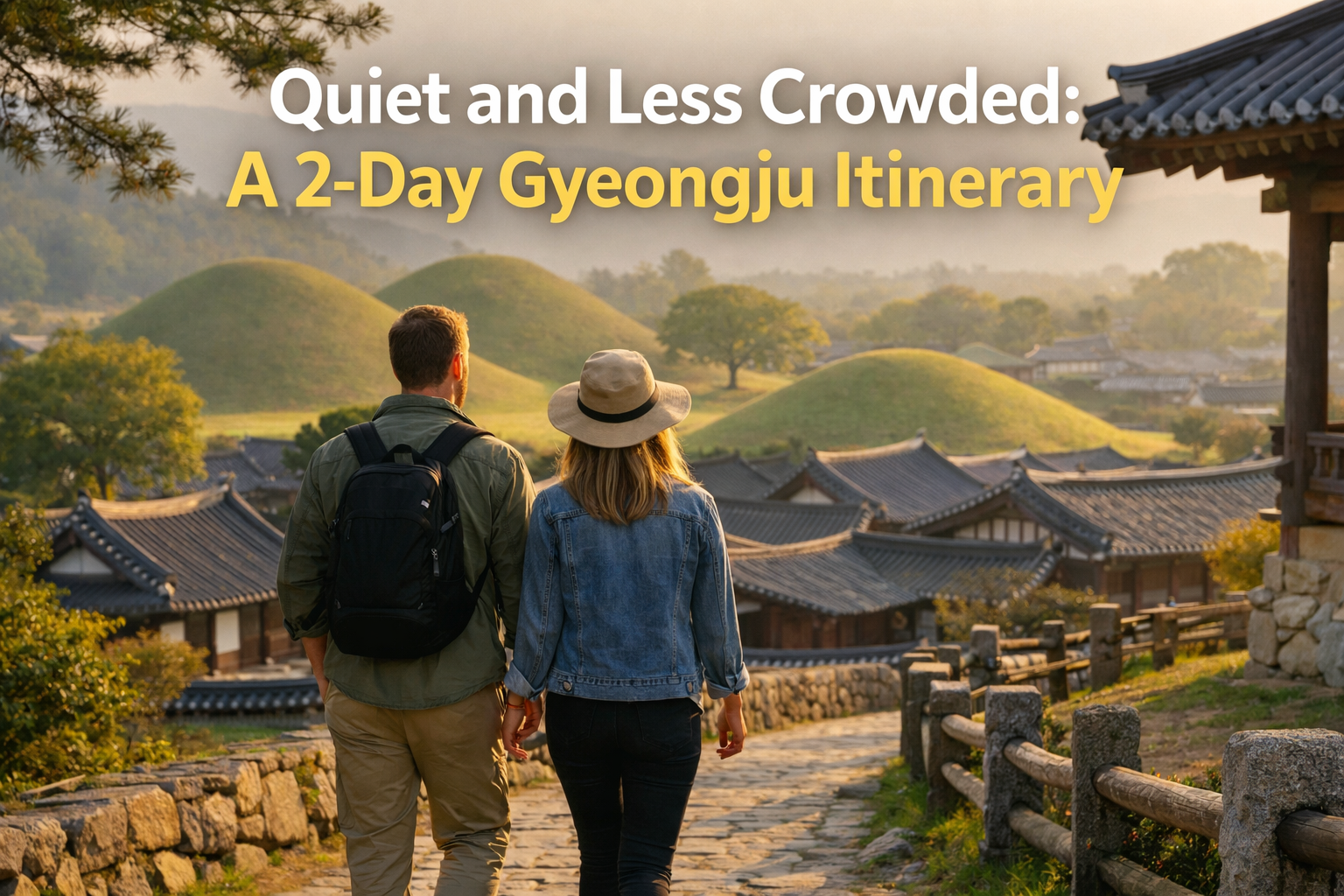
Gyeongju is one of the most beautiful historic cities in Korea. But many first-time visitors end up following the same crowded route. They rush through Bulguksa, Donggung Palace, and Hwangnidan-gil. Then the trip feels more busy than peaceful.
If you want a slower trip, this guide is for you. Here, I’ll show you a calm 2-day Gyeongju itinerary with quieter royal tombs, traditional villages, Confucian sites, and a peaceful East Sea beach. It’s perfect for travelers who want culture, scenery, and breathing room.
ON THIS PAGE
- 💡 How to choose quiet places in Gyeongju
- 📊 Best quiet and less crowded spots in Gyeongju
- 📌 A practical 2-day quiet itinerary
- 📋 Quick comparison table
- 💰 Time, budget, and value analysis
- ❓ FAQ
💡 How to Choose Quiet Places in Gyeongju
Not every beautiful place in Gyeongju is crowded. The trick is knowing what to prioritize. These are the five key criteria I use when planning a peaceful itinerary.
1. Pick sites outside the main downtown cluster
Central Gyeongju is convenient, but it gets busy fast. Quiet travelers usually enjoy places a little outside the core city area. Yangdong Village, Oksan Seowon, and Najeong Beach are good examples.
2. Choose open-air heritage sites
Wide outdoor spaces feel calmer. Royal tomb parks, old villages, and beachside stops give you room to walk without shoulder-to-shoulder crowds.
My tip: In Gyeongju, “quiet” often means choosing places where the landscape is part of the experience. Open space makes a huge difference.
3. Visit early or late, not at peak midday
Even popular places can feel peaceful in the first hour after opening. Morning light is also better for photos.
4. Mix history with nature
Too many back-to-back ruins can feel repetitive. A better balance is village + tombs + hanok area + coast. It keeps the trip fresh and relaxing.
Many visitors spend too much time where everyone else goes. A quieter Gyeongju trip works best when you focus on atmosphere, not just famous photo spots.
📊 Best Quiet and Less Crowded Spots in Gyeongju
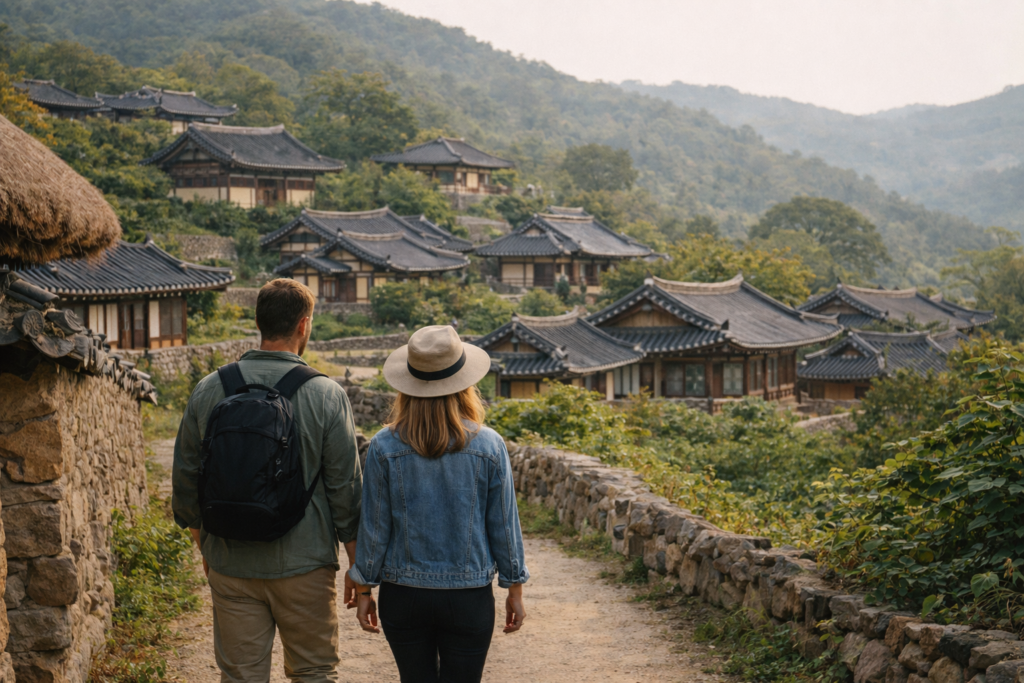
These are the best places to include if you want Gyeongju to feel calm, scenic, and meaningful.
1. Yangdong Village
This is one of the best peaceful heritage stops in the Gyeongju area. The village is large, traditional, and set in beautiful natural surroundings. Because it spreads across a broad area, it often feels calmer than central city attractions.
My tip: Don’t rush Yangdong Village. Walk slowly uphill and pause often. The quiet views over tiled roofs are the real highlight.
2. Oksan Seowon
Oksan Seowon is ideal for travelers who want Korean history without heavy crowds. It has a calm Confucian atmosphere, elegant traditional architecture, and a more reflective mood than the better-known temple circuit.
3. Gyeongju Oreung (Five Royal Tombs)
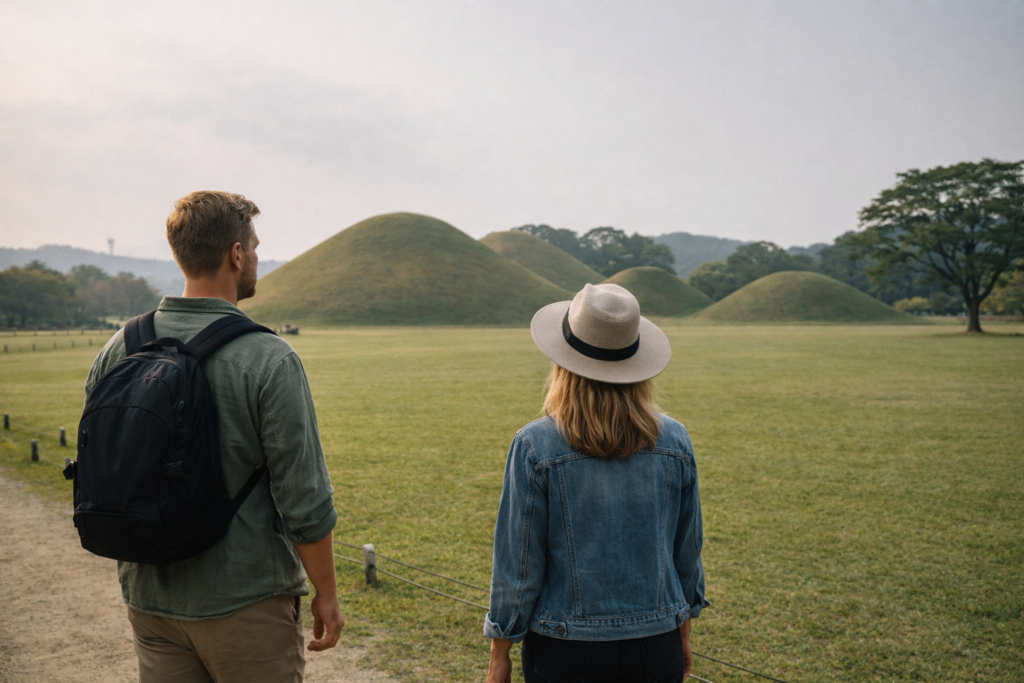
Oreung is one of the most underrated historic sites in Gyeongju. The grassy royal tombs are simple, spacious, and quietly impressive. It’s a great alternative if you want Silla history without the busier feel of the main tomb complex.
4. Gyochon Traditional Village
Gyochon is not completely hidden, but it still feels gentler than the busiest tourist streets. It works especially well in the late afternoon when you want a relaxed hanok atmosphere, local heritage, and an easy riverside walk near Woljeonggyo.
My tip: Gyochon is best as a slow evening stop, not a rushed midday stop. Walk, sit, and stay until the light softens.
5. Samneung Royal Tombs
If you want an even quieter tomb area, Samneung is a smart pick. The setting feels more local and less crowded. It is a good stop for travelers who enjoy walking and photography.
6. Najeong Beach
If your idea of rest includes sea air, Najeong Beach is worth adding. It gives your itinerary a completely different mood. After a day of tombs and hanok lanes, the coast feels refreshing and calm.
📌 A Practical 2-Day Quiet Gyeongju Itinerary
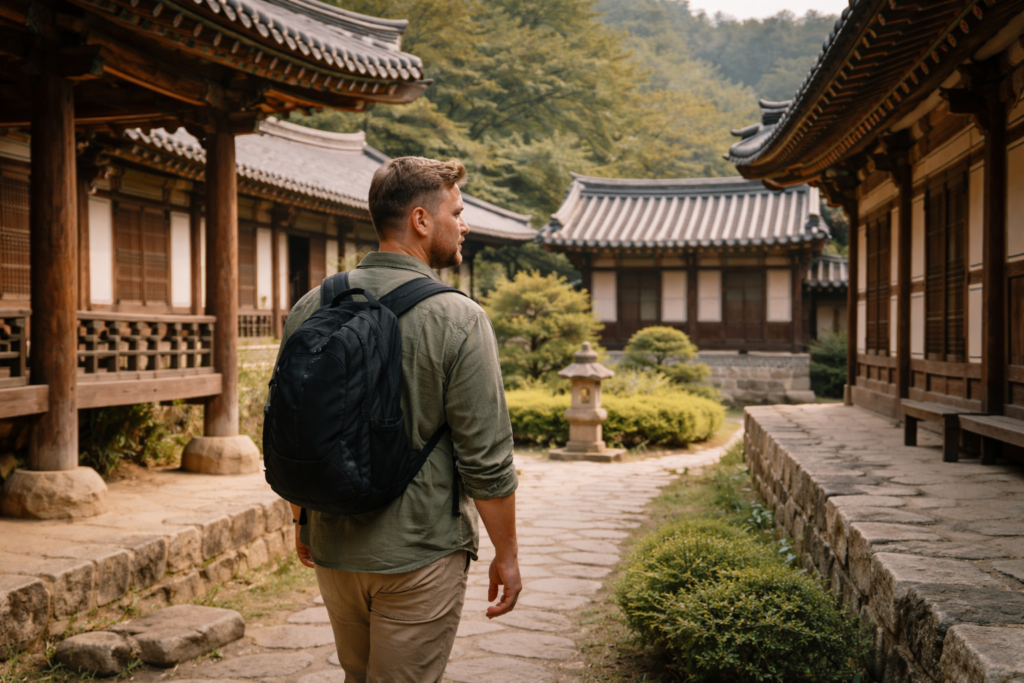
Day 1: Traditional heritage and peaceful city edges
Morning: Start at Yangdong Village. Spend 2 to 3 hours walking slowly and enjoying the village landscape.
Late morning to early afternoon: Head to Oksan Seowon. This pairing works very well because both stops feel spacious and thoughtful.
Afternoon: Return toward central Gyeongju and visit Oreung. It is easy, calm, and not too tiring.
Evening: Finish at Gyochon Traditional Village and nearby Woljeonggyo. This gives you a soft and scenic end to the day.
Why this works: Day 1 focuses on history and atmosphere. But it avoids the most crowded downtown checklist style.
Day 2: Quiet tomb walks and the East Sea
Morning: Visit Samneung Royal Tombs. It’s a peaceful place to start the day.
Late morning: Have a relaxed brunch or coffee before heading east.
Afternoon: Go to Najeong Beach. Walk the shore, rest in the pine area, and enjoy a slower side of Gyeongju.
Optional stop: If you still have energy, add another gentle coastal viewpoint nearby instead of returning to crowded downtown areas.
Why this works: Day 2 gives you more breathing room. It balances Silla heritage with nature and helps the trip end on a calm note.
Transport Strategy
For this itinerary, taxis or a rental car save time. Public transportation is possible, but transfers can slow down your day. If you want a quiet pace, cutting transit stress matters a lot.
📋 Quiet Gyeongju Spots Comparison Table
| Place | Best For | Crowd Level | Suggested Stay | Travel Style |
|---|---|---|---|---|
| Yangdong Village | Traditional scenery, slow walks | Low to moderate | 2–3 hours | Culture + photography |
| Oksan Seowon | Quiet history, reflection | Low | 1–1.5 hours | History lovers |
| Oreung | Silla tombs, easy walk | Low | 45–60 min | Light heritage stop |
| Gyochon Village | Hanok mood, gentle evening walk | Moderate | 1–2 hours | Relaxed cultural stroll |
| Samneung Royal Tombs | Peaceful morning walk | Low | 1 hour | Nature + history |
| Najeong Beach | Sea view, rest, fresh air | Low outside peak summer | 1.5–3 hours | Coastal escape |
💰 Time, Budget, and Value Analysis
A quiet 2-day Gyeongju trip can also be efficient. Here’s the practical upside.
- Time saved: You avoid long waits, traffic around the busiest hotspots, and packed café streets. That can easily save 1 to 2 hours over two days.
- Better photo value: Less crowding means cleaner photos and less editing later.
- Lower stress cost: This matters more than people think. A slower route means less fatigue and more real enjoyment.
- Transport efficiency: Grouping Yangdong Village and Oksan Seowon together, then keeping Oreung and Gyochon for the city return, makes the route smoother.
- Estimated daily budget: With simple meals, local transport, and light entrance costs, many travelers can keep this style of trip in a moderate budget range.
My tip: The real luxury in Gyeongju is not spending more. It’s having space, silence, and time to enjoy where you are.
✨ Final Thoughts
If you want a different side of Gyeongju, skip the pressure to do only the most famous places. A quieter itinerary often feels richer. Yangdong Village, Oksan Seowon, Oreung, Samneung, Gyochon, and Najeong Beach give you history, scenery, and calm without the usual rush.
For many travelers, this is the smarter 2-day Gyeongju plan. It feels more personal. More breathable. And honestly, more memorable.
❓ FAQ
Is Gyeongju worth visiting for 2 days?
Yes. Two days is a great amount of time. You can enjoy both heritage sites and relaxing scenery without rushing too much.
What is the quietest area in Gyeongju for travelers?
Places outside the busiest downtown core are usually quieter. Yangdong Village, Oksan Seowon, Samneung, and Najeong Beach are all strong choices.
Do I need a car for this itinerary?
No, but it helps. Taxis make this route much easier. A rental car is even better if you want maximum flexibility.
When is the best time to visit Gyeongju for fewer crowds?
Weekdays are better than weekends. Early mornings are best. Spring and autumn are beautiful, but they can still get busy around major attractions.
Can I still include one famous Gyeongju highlight?
Yes. You can add one major sight if you want. Just keep the rest of the route quiet so the trip stays balanced.