
Korean Skin Clinics for Americans: What to Know Before Booking
If you are an American thinking about booking a Korean skin clinic, you are definitely not alone. A lot of travelers come to Korea for facials, laser treatments, acne care, pigmentation work, and overall skin maintenance. On paper, it sounds simple. You find a clinic, book a session, show up, and walk out glowing.
In reality, it can feel a little overwhelming at first. Prices vary a lot. Some clinics feel very foreigner-friendly, while others move fast and expect you to already know what you want. I remember the first time I looked into Korean clinics, I thought the hardest part would be choosing the treatment. It turned out the harder part was figuring out which clinic actually fit my skin, my budget, and my comfort level.
That is exactly what this guide is for. This post breaks down what Americans should know before booking a Korean skin clinic, how to compare your options, what questions to ask, and how to avoid the most common mistakes. I wrote this in a practical way, the same way I would explain it to a friend planning their first appointment in Seoul.
💡 1) The 5 Most Important Things to Check Before Booking
1. Treatment fit matters more than hype
This is the first thing I tell people. Do not book a clinic just because it is popular on social media. A clinic that is great for brightening and maintenance facials may not be the right place for acne scars, redness, melasma, or stronger laser treatments. Before booking, get clear on your actual goal. Are you trying to calm breakouts, improve texture, fade pigmentation, tighten skin, or just get a short-term glow before a trip?
One thing I learned quickly is that “best clinic” is way too broad. The better question is, “Best clinic for what exactly?”
2. Communication can change your whole experience
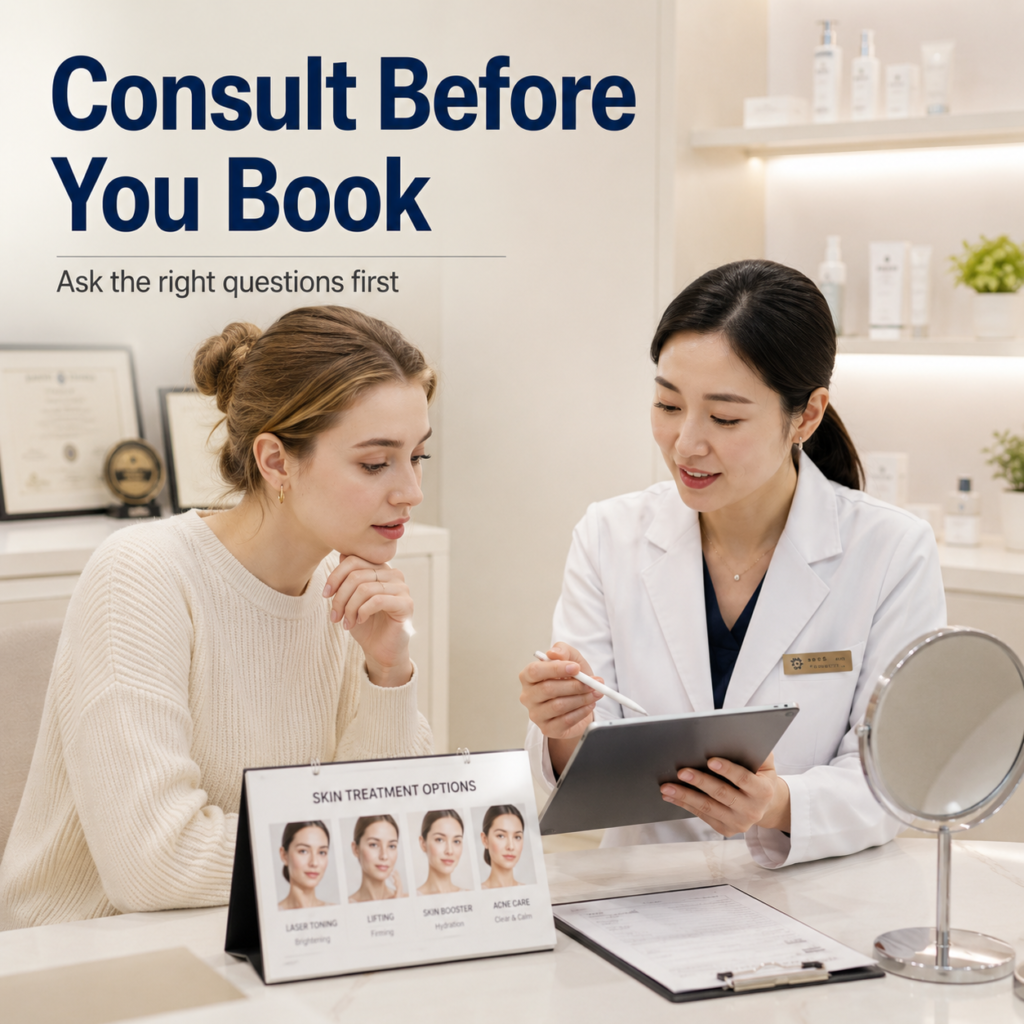
Some clinics handle English very well. Others can manage basic consultations, but things move fast once you are inside. That may be totally fine for a simple facial, but if you are considering lasers, injectables, or any treatment with downtime, you want clear communication. You should feel comfortable asking what the treatment does, what recovery looks like, and what you should not do afterward.
3. Cheap does not always mean good value
Korea is often seen as more affordable than the U.S. for many skincare procedures, and that is one reason so many Americans look into it. But the lowest price is not always the smartest choice. Some budget-focused clinics are great for simple maintenance. Others feel rushed, crowded, or too sales-driven. Good value usually means fair pricing, clear communication, realistic recommendations, and a treatment plan that actually makes sense for your skin.
4. Downtime can affect the rest of your trip
This is a big one that many first-timers underestimate. Even if a treatment sounds quick, your skin may be red, dry, flaky, sensitive, or swollen afterward. If you are only in Korea for a few days, booking an aggressive treatment right before photos, meetings, or sightseeing may not be the best move. In my opinion, timing matters almost as much as the clinic itself.
I always think of skincare appointments like haircut timing before an event. Even a good result can look awkward for a day or two before it settles.
5. Post-treatment care is part of the result
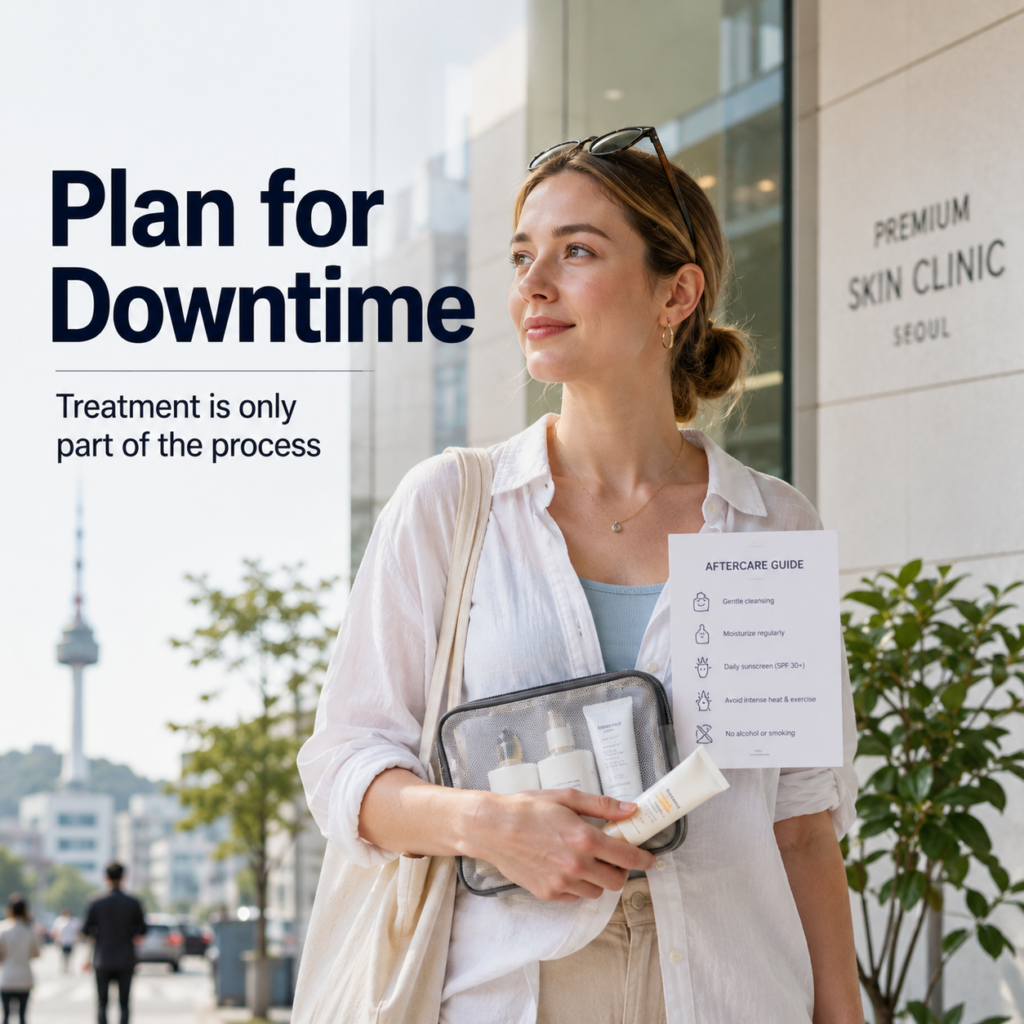
Booking the treatment is only part of the experience. What you do after matters. Sun exposure, active ingredients, makeup, sweating, flights, and dehydration can all affect how your skin responds. A clinic that explains aftercare clearly is usually easier to trust. If aftercare sounds vague or rushed, that is a red flag for me.
📊 2) 4 Types of Korean Skin Clinics Americans Usually Compare
1. High-volume chain clinics
These are usually the easiest to find online. They often have visible pricing, lots of treatment menus, and foreigner-friendly booking channels. The upside is convenience. The downside is that the experience can feel fast and transactional. These clinics can work well for basic skin treatments and repeat maintenance, especially if you already know what you want.
2. Boutique dermatology clinics
These clinics often feel more personalized. You may get more time during consultation, more tailored recommendations, and a calmer environment. Pricing is often higher, but many people feel better paying more for a slower and more customized experience. If you are nervous, have sensitive skin, or want a more detailed discussion, this type can be worth looking at.
3. Foreign-friendly aesthetic clinics
These clinics are often designed with international patients in mind. They may have English-speaking staff, easier booking systems, and more explanation built into the process. For Americans visiting Korea for the first time, this can reduce stress a lot. You may pay a little more for convenience, but for many people that tradeoff is worth it.
4. Local neighborhood clinics
These can be excellent, but they are not always easy for short-term visitors to navigate. They may have loyal local patients, practical pricing, and solid treatment quality, but less English support and less polished online booking. If you have a Korean-speaking friend or are comfortable doing more prep yourself, these clinics can sometimes be hidden gems.
The best clinic for a first-time American visitor is not always the clinic with the best deal. Sometimes the easiest communication is worth paying for.
📌 3) Practical Strategies Before You Book
Here is the simplest strategy I recommend.
- Decide on your real goal first, not just the treatment name.
- Shortlist 3 clinics, not 10. Too many options creates decision fatigue.
- Check whether they explain treatment, pricing, and downtime clearly.
- Ask what is included in the quoted price.
- Ask whether the clinic is comfortable communicating in English.
- Do not schedule a strong treatment right before a major event.
- Plan at least one lighter day after treatment if possible.
Personally, I think one of the smartest things you can do is separate “must-have treatment” from “nice-to-have treatment.” When people get overwhelmed, they often book too much in one visit. That is when the experience starts to feel rushed and your skin may not thank you for it.
Another tip is to screenshot your current skincare routine before your appointment. That way, if the clinic asks what you use, you are not trying to remember six product names on the spot.
Check Seoul Travel Information Before Your Appointment
📋 4) Quick Comparison Table
| Clinic Type | Best For | Pros | Things to Watch |
|---|---|---|---|
| High-volume chain clinic | Simple treatments, convenience | Easy booking, visible menus, often fast | May feel rushed or impersonal |
| Boutique dermatology clinic | Customized care, sensitive skin | More personalized, calmer experience | Usually more expensive |
| Foreigner-friendly aesthetic clinic | First-time American visitors | Better English support, less confusion | Convenience may raise the price |
| Local neighborhood clinic | Experienced travelers, Korean speakers | Can be practical and lower stress once you know the system | Less English support, less online info |
💰 5) What Americans Actually Gain: Cost, Value, and Time
One reason Americans look at Korean skin clinics in the first place is value. Even when prices are not “cheap,” many people feel they get more for the money compared with what they are used to paying at home. But I think the real value is not just price. It is the combination of access, efficiency, and treatment variety.
In practical terms, here is what many Americans see as the main upside:
- More treatment choices in one area
- Shorter wait times than some U.S. clinics
- Competitive pricing for many aesthetic procedures
- Ability to combine consultation and treatment in a short visit
- Strong focus on skin maintenance, not just correction
That said, the wrong booking can erase that value quickly. If the clinic does not communicate well, if the treatment is too aggressive for your schedule, or if you feel pushed into extras you did not plan for, the “good deal” stops feeling like a good deal. In my experience, the smartest booking is usually not the cheapest one. It is the one that fits your skin, your timing, and your comfort level.
🧴 A Few Extra Tips I Wish More People Knew
Bring a hat or cap if you are doing anything that may leave your skin sensitive. Seoul sun plus post-treatment skin is not always a fun mix.
Do not introduce three new skincare products at once after a procedure. That makes it much harder to know what your skin is reacting to.
If a consultation starts to feel too sales-heavy, it is okay to pause. You are allowed to say you want time to think. That one sentence can save you money and stress.
✅ Final Thoughts
Korean skin clinics can be a great option for Americans, but the best results usually come from going in informed. Know your goal. Know your schedule. Know how much explanation you need to feel comfortable. Once you do that, booking becomes much less intimidating.
If I had to sum it up simply, I would say this: choose clarity over hype, fit over trends, and timing over impulse. That alone will help you make a much better decision.
🙋 FAQ
Do Korean skin clinics usually speak English?
Some do very well, especially clinics used to international patients. Others may only handle basic English. If communication matters for your treatment, ask before booking.
Are Korean skin clinics cheaper than American clinics?
Many Americans feel that prices are more competitive, but it depends on the treatment, clinic type, and level of service. Low price alone should not be the deciding factor.
Should I book a treatment right before my flight home?
Usually, it is better to leave some buffer time. Even lighter treatments can leave your skin dry, red, or irritated, and flying can make that feel worse.
How do I know which treatment to choose?
Start with your skin goal, not the treatment trend. It is much easier to pick the right clinic and procedure when you know whether you want brightening, acne care, texture improvement, or anti-aging support.
What is the biggest mistake first-time visitors make?
Booking too much, too quickly. A packed treatment plan may sound efficient, but it can leave you overwhelmed and your skin overworked.
You Might Also Like:Why Americans Are Traveling to Korea for K-Beauty in 2026