
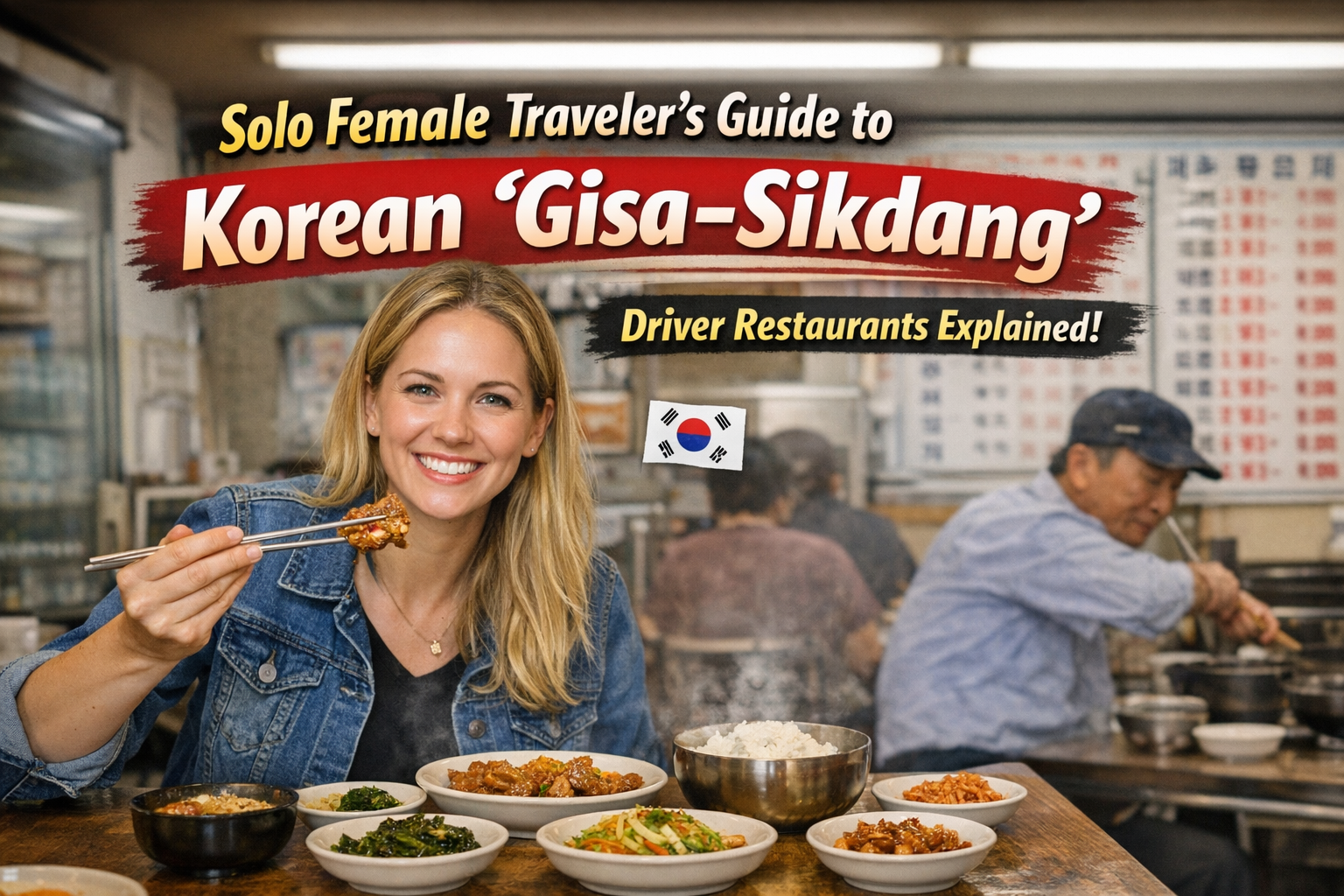
A practical solo female traveler guide to Korean gisa-sikdang, also called driver restaurants. Learn what they are, how to order, what to eat, safety tips, prices, and how to enjoy this local food culture with confidence.
Traveling alone in Korea can feel exciting and a little intimidating at the same time. You want authentic food. You want local prices. But you also want places that feel easy, fast, and safe.
That is exactly why gisa-sikdang can be such a great experience.
In Korea, gisa-sikdang literally refers to “driver restaurants” or “cabbie restaurants.” They became known as quick, affordable, hearty Korean eateries that originally served taxi and professional drivers, especially from the 1970s onward. Today, many are still loved for big portions, fast service, and no-nonsense comfort food. :contentReference[oaicite:0]{index=0}
If you are a solo female traveler, this guide will help you enjoy them with confidence. I’ll show you what to expect, how to choose a good one, what to order, and how to avoid awkward moments when you do not speak much Korean.
📌 ON THIS PAGE
- 💡 How to choose the right gisa-sikdang
- 📊 Best menu types for solo travelers
- 📌 Practical solo female traveler tips
- 📋 Quick comparison table
- 💰 Cost and value breakdown
- ❓ FAQ
💡 1) How to Choose the Right Gisa-Sikdang
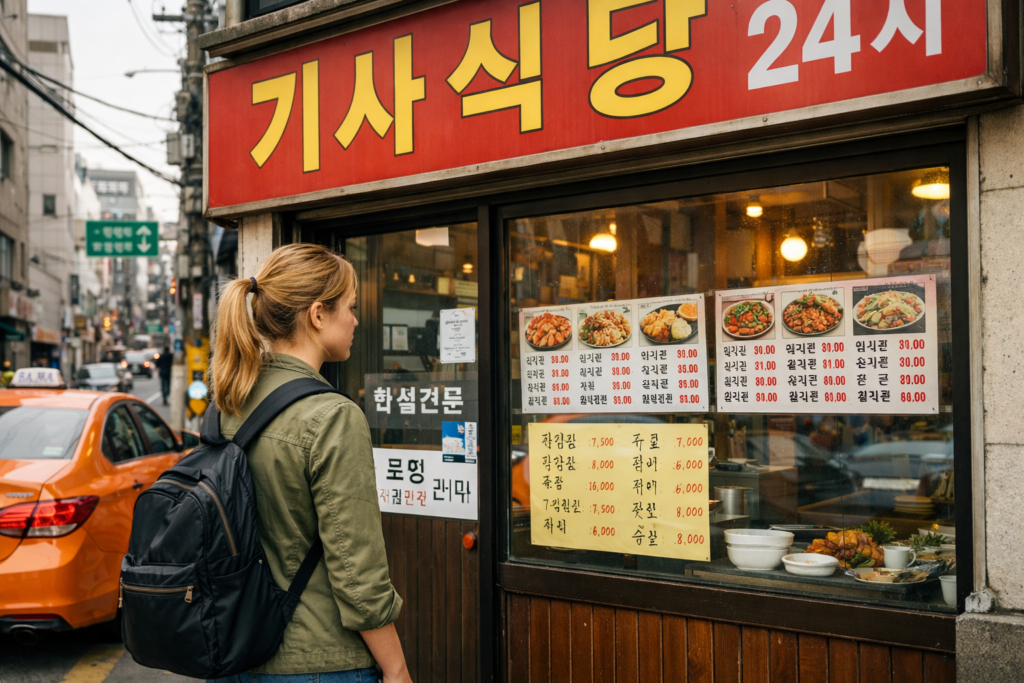
Not every gisa-sikdang feels the same. Some are ultra-local and busy. Others are easier for first-time visitors. Here are the 5 key things to check before you walk in.
1. Look for steady local traffic
If taxi drivers, delivery workers, office staff, and older locals are eating there, that is usually a strong sign. These places survive because they are fast, filling, and dependable.
A shorter menu is often better. Many famous driver restaurants focus on just one or two dishes and do them well.
3. Choose busy daytime hours for your first visit
For solo female travelers, lunch is the easiest time. It feels more comfortable, brighter, and less rushed than very late-night hours.
4. Notice the atmosphere
Some places are old-school and loud. That is part of the charm. But if you want a gentler first experience, choose one that looks bright, clean, and well-organized from the outside.
5. Prefer places near residential or mixed neighborhoods
Many classic gisa-sikdang are not in the middle of tourist zones. They are often found along busy roads or in local districts because they historically served working drivers who needed fast and affordable meals. :contentReference[oaicite:1]{index=1}
My tip: If the front window is slightly foggy, metal trays are moving fast, and people are eating without taking photos, you probably found the real thing.
My tip: For a first visit, avoid empty restaurants. In Korea, busy local restaurants usually feel easier because the ordering flow is already clear.
My tip: If you are nervous, go between 11:30 AM and 1:00 PM. The crowd helps you blend in.
📊 2) Best Menu Types for Solo Female Travelers
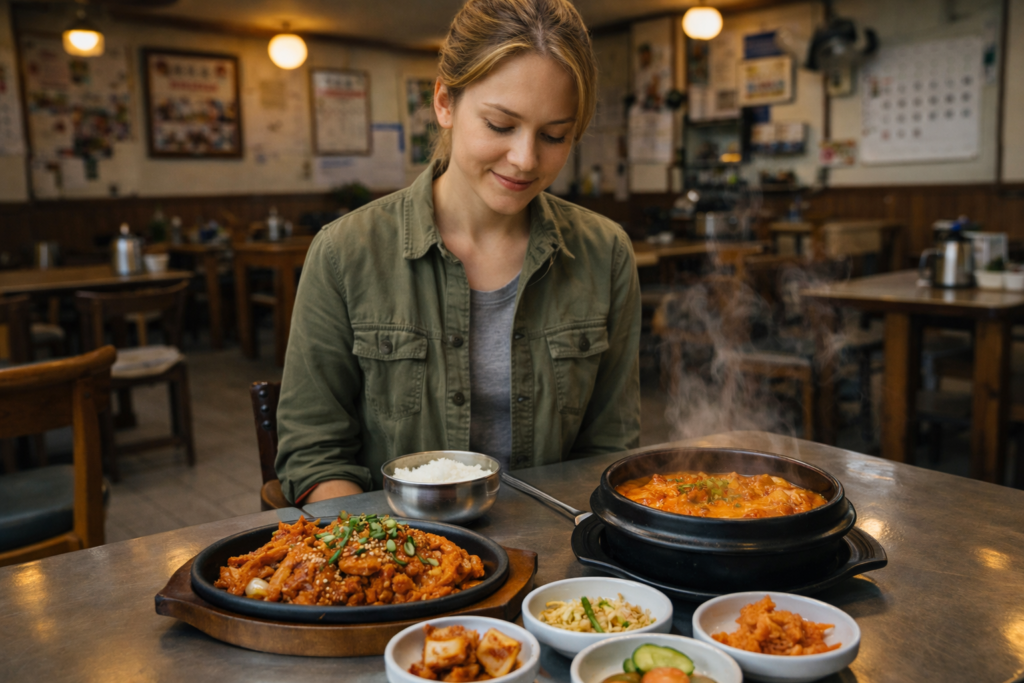
One reason gisa-sikdang became popular is simple: the food is quick, comforting, and satisfying. Historically, these restaurants were known for hearty Korean meals rather than slow or delicate dining. :contentReference[oaicite:2]{index=2}
Here are the 5 best menu styles for solo travelers.
1. 제육볶음 (Jeyuk-bokkeum, spicy stir-fried pork)
This is one of the most classic choices. It is flavorful, filling, and usually comes with rice and side dishes. Great if you want a strong “real local meal” feeling.
2. 김치찌개 (Kimchi-jjigae, kimchi stew)
Warm, comforting, and very Korean. A good choice on rainy days or when you want something familiar and easy to eat alone.
3. 된장찌개 (Doenjang-jjigae, soybean paste stew)
Less spicy than kimchi stew. It feels homey and balanced. Perfect if you want something deeply Korean but not too intense.
4. 돈까스 (Donkatsu, Korean pork cutlet)
This is a surprisingly common choice in some driver restaurants. It feels approachable for first-time visitors and is usually less challenging than stew-based dishes.
5. 백반 (Baekban, set meal)
If the restaurant offers a daily set meal, this is one of the best value picks. You get rice, soup, main dish, and several side dishes in one tray-like meal.
For first-time solo female travelers, I usually recommend this order: donkatsu → kimchi stew → jeyuk-bokkeum → baekban. It builds confidence step by step.
📌 3) Practical Solo Female Traveler Tips
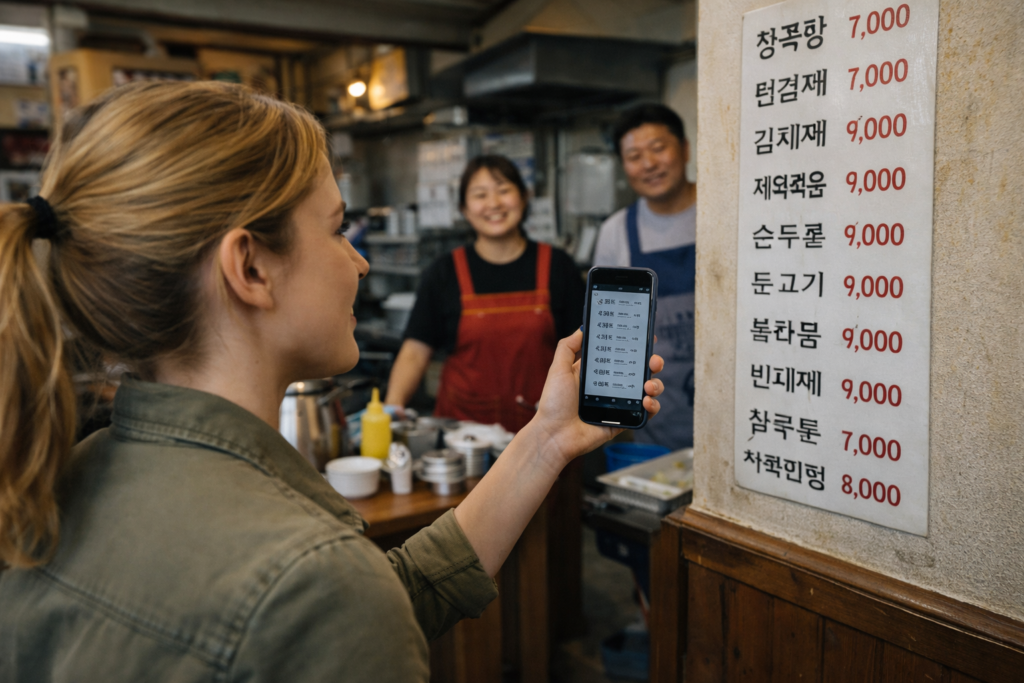
You do not need fluent Korean to enjoy a gisa-sikdang. You just need a simple plan.
How to enter confidently
Walk in, look for an open seat, and sit down unless staff guide you elsewhere. In many casual Korean restaurants, the system is quick and informal.
Useful Korean phrases
- 이거 하나 주세요 — “One of this, please.”
- 맵나요? — “Is it spicy?”
- 혼자예요 — “I’m alone.”
- 카드 돼요? — “Can I pay by card?”
Best solo strategy
Choose dishes made for one person. Some Korean meals are designed for sharing, but many gisa-sikdang specialize in fast single-person meals, which is one reason they work so well for solo travelers. :contentReference[oaicite:3]{index=3}
Safety and comfort tips
- Visit in daytime on your first try.
- Pick places with visible staff and a steady crowd.
- Keep your bag on your lap or beside you, not behind your chair.
- If the vibe feels too rushed, simply leave and try another place nearby.
Use Papago or your phone camera translator. Or point to a photo on the wall menu. In these restaurants, speed matters more than perfect pronunciation.
My tip: Screenshot the Korean name of one dish before you go. Showing your phone is often faster than speaking.
My tip: Do not judge friendliness by smiles. Some old-school places look blunt, but the food and service can still be excellent.
My tip: Bring tissues and a hair tie. Korean comfort food can get gloriously steamy and messy.
📋 4) Quick Comparison Table
| Dish / Style | Best For | Spice Level | Solo-Friendly | Typical Feel |
|---|---|---|---|---|
| Jeyuk-bokkeum | Bold flavor lovers | Medium to High | Very good | Classic driver meal |
| Kimchi-jjigae | Comfort food seekers | Medium | Excellent | Warm, hearty, familiar |
| Doenjang-jjigae | Milder first-timers | Low to Medium | Excellent | Home-style Korean taste |
| Donkatsu | Cautious eaters | Low | Excellent | Easy and approachable |
| Baekban | Best value hunters | Varies | Very good | Balanced full meal |
💰 5) Cost and Value Breakdown
This is where gisa-sikdang really shine.
Compared with trendier tourist-facing cafes or modern brunch spots in Seoul, driver restaurants usually give you much more food for your money. Their long-standing reputation is built on affordability, speed, and generous portions. :contentReference[oaicite:4]{index=4}
- Budget meal: Often a filling single meal for roughly the price of one coffee-and-pastry combo in a tourist district.
- Value: Rice + soup + side dishes + main course in one stop.
- Time saved: Usually 15–30 minutes for a full meal.
- Practical gain: Less planning, less waiting, more local experience.
For solo travelers, that means three clear benefits:
- You spend less.
- You eat more authentically.
- You avoid the awkward “table for one” feeling common in some trendy restaurants.
Real-world payoff: choosing one gisa-sikdang meal instead of a tourist-area casual meal can often reduce your food spending noticeably over a week, while giving you a much more local experience.
✅ Final Thoughts
If you are a solo female traveler in Korea, gisa-sikdang can be one of the most underrated food experiences in your trip.
They are simple. Fast. Unpretentious. And very Korean.
You are not going there for polished interior design. You are going for honest food, efficient service, and a small window into everyday local life. That is exactly what makes these places memorable.
Start with a daytime visit. Order one familiar dish. Use your phone if needed. After that first meal, you will probably feel much more confident exploring deeper into Korea’s everyday food culture.
❓ FAQ
What does gisa-sikdang mean in Korea?
It usually means a “driver restaurant” or “cabbie restaurant,” referring to affordable Korean eateries historically associated with taxi and professional drivers. :contentReference[oaicite:5]{index=5}
Are gisa-sikdang safe for solo female travelers?
Yes, generally they can be a comfortable option, especially during daytime and in busy local areas. Choose places with visible staff, regular customers, and a clean, active atmosphere.
Do I need to speak Korean?
No. Basic phrases help, but pointing at menu photos or using a translator app usually works well.
What is the easiest first order?
Donkatsu, kimchi-jjigae, or a simple baekban set meal are usually the least stressful starting points.
Are these restaurants only for drivers?
No. While the concept came from serving drivers, many are now popular with all kinds of local diners who want fast, affordable Korean food. :contentReference[oaicite:6]{index=6}