
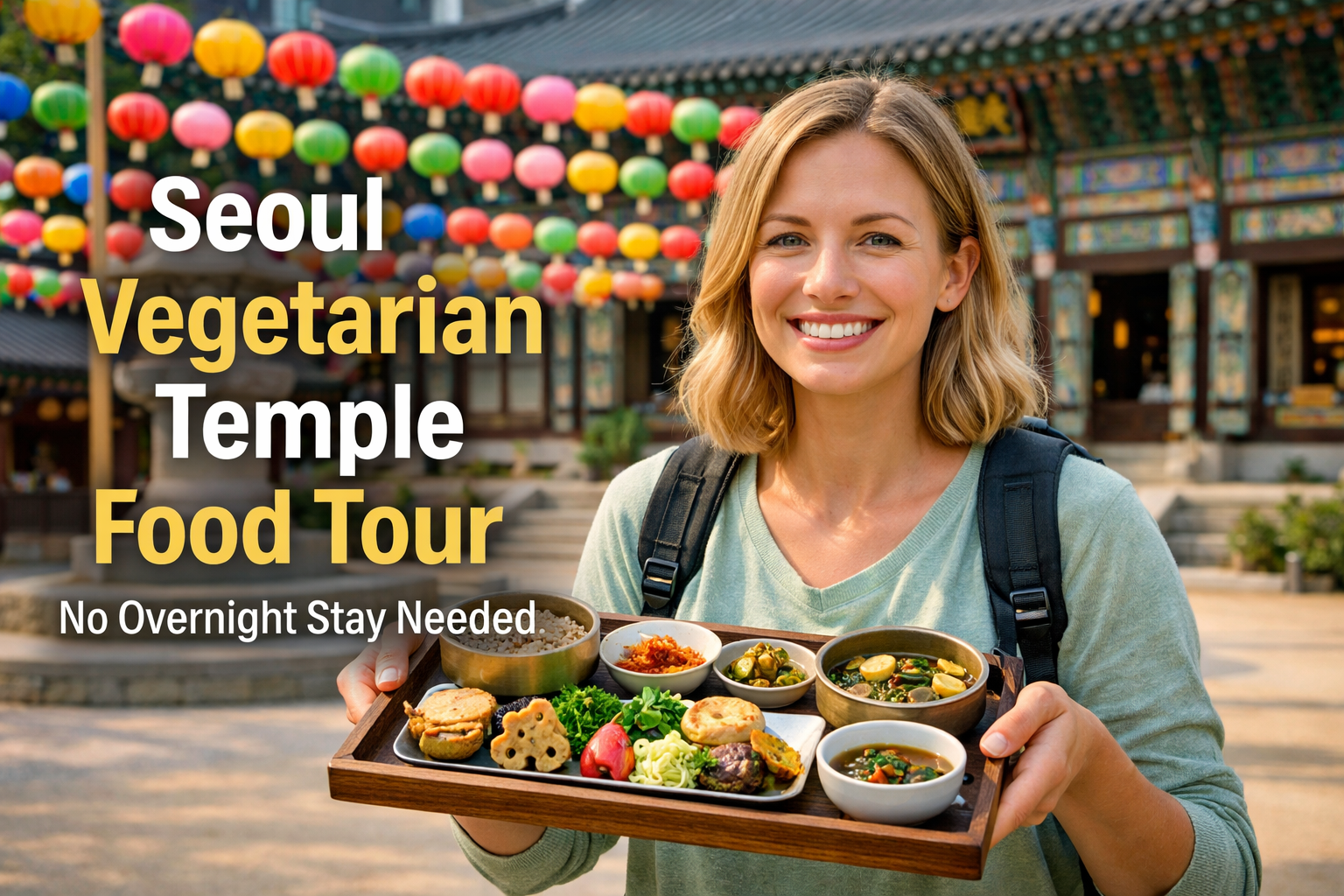
Looking for a peaceful, vegetarian-friendly food experience in Seoul without booking a temple stay? You are not alone. Many travelers want to try authentic Korean temple food, but they do not have time for an overnight program. The good news is this: Seoul makes it possible to enjoy temple cuisine, mindful dining, and Buddhist culture in just half a day or one full day.
In this guide, you will learn how to plan a vegetarian temple food tour in Seoul without staying overnight. I’ll show you what matters most, where to go, how to compare the best options, and how to save both time and money. This route works especially well for foreign visitors, solo travelers, couples, and food lovers who want a calm Korean cultural experience.
ON THIS PAGE
- 💡 What to check before choosing a temple food experience
- 📊 Best day-friendly vegetarian temple food stops in Seoul
- 📌 Practical strategy for a smooth self-guided tour
- 📋 Quick comparison table
- 💰 Time and cost benefits
- ❓ FAQ
💡 1) What to Check Before Choosing a Temple Food Experience
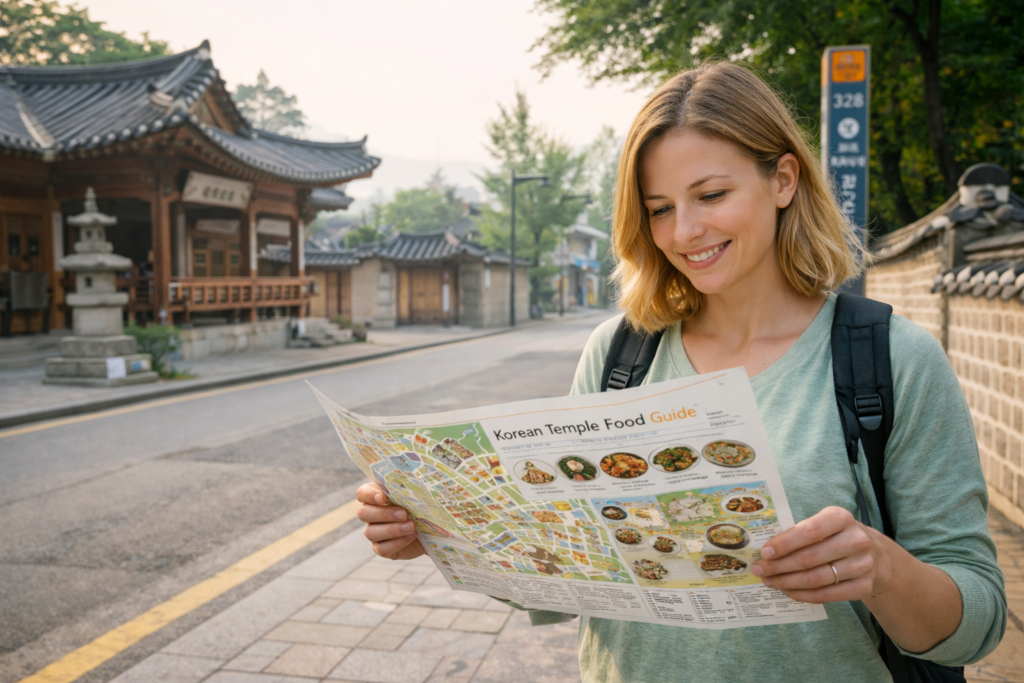
Not every “vegetarian” stop in Seoul offers the same kind of experience. Some places focus on formal Korean Buddhist cuisine. Others are temple-style vegan restaurants. To choose the right option, check these five points first.
- Day-access only: Make sure the program does not require an overnight temple stay. This is the most important filter for short-term travelers.
- Location: Central areas like Jongno, Anguk, Insadong, and Jogyesa are ideal because you can combine food, walking, and sightseeing in one route.
- English support: Some official temple food classes in Seoul provide English translation, which is very helpful for overseas visitors.
- Food style: Temple food is usually plant-based and avoids strong-smelling alliums such as garlic, chives, onions, and leeks in traditional Buddhist practice.
- Reservation difficulty: Official classes and famous restaurants can fill up quickly, so advance booking matters.
My tip: choose one “learning stop” and one “eating stop.” That balance makes the day feel cultural, not rushed.
Another tip: temple food is subtle, seasonal, and calm. Do not expect heavy seasoning. Go in with curiosity, and the meal becomes much more rewarding.
Best mobile-friendly route: Anguk Station → temple food class → Insadong walk → Jogyesa Temple → temple-style lunch or dinner.
📊 2) Best Vegetarian Temple Food Stops in Seoul Without Overnight Stay
Here are the most useful options for a Seoul temple food day tour.
1. Korean Temple Food Center near Anguk
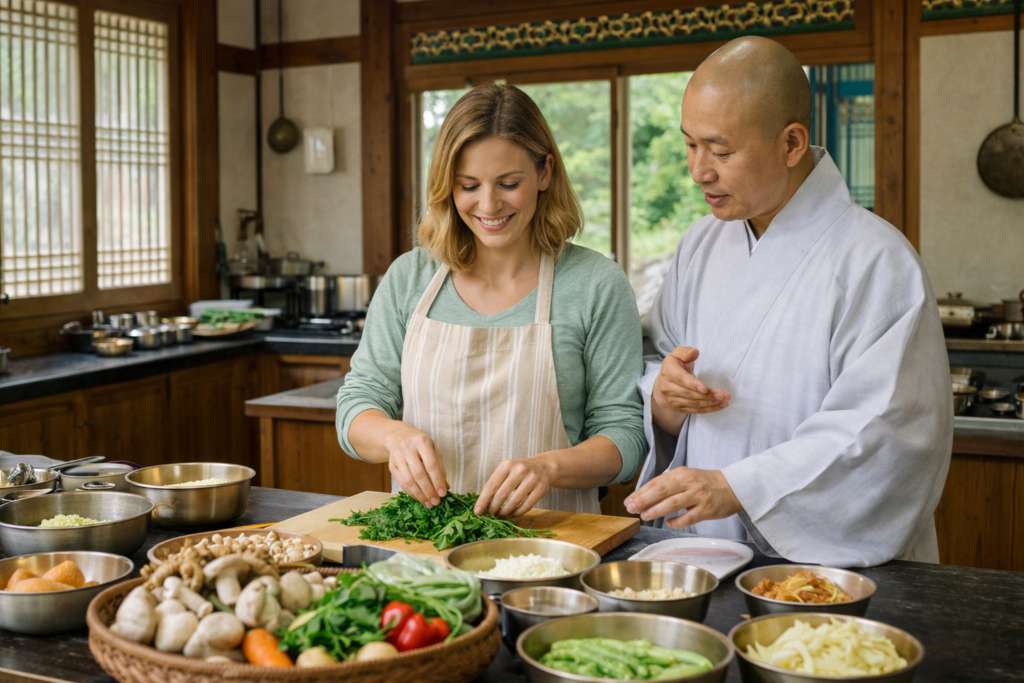
This is the strongest choice for travelers who want a real short temple food experience in Seoul. The official Korean Temple Food site lists short-term classes at the Korean Temple Food Center, and recent schedules show many sessions around 10:00–11:30. Some classes are marked as available to foreigners with English translation provided. The center is near Anguk Station Exit 1, which makes it perfect for a day route in central Seoul.
Why it stands out: you are not just eating. You are learning ingredients, philosophy, and seasonal cooking methods.
2. Jogyesa Temple
Jogyesa is one of the easiest temples to visit in central Seoul. It works beautifully as the cultural heart of your route. Even without an overnight stay, stopping here adds meaning to the meal. You can walk the temple grounds, slow down, and understand the spirit behind temple cuisine before or after lunch.
3. Balwoo Gongyang
For a more refined meal, Balwoo Gongyang is one of Seoul’s best-known temple cuisine restaurants. It is operated by the Jogye Order and is a very strong option for travelers who want a polished sit-down experience without doing a full temple stay. Official business information shows lunch and dinner service from Monday to Saturday, 11:30–21:00, with a 15:00–17:00 break.
This is a smart choice for couples, food-focused travelers, and visitors celebrating a special day in Seoul.
4. Maji or Sanchon for temple-style vegetarian dining
If you want a lighter or more casual version, places like Maji and Sanchon are often recommended in Seoul travel guides for temple-style or temple-cuisine dining. These are useful when official programs are sold out or when you want flexible meal timing.
Practical tip: book the formal class first, then build the rest of the day around it. The class slot is the least flexible part.
📌 3) Practical Strategy for a Smooth Seoul Temple Food Day Tour
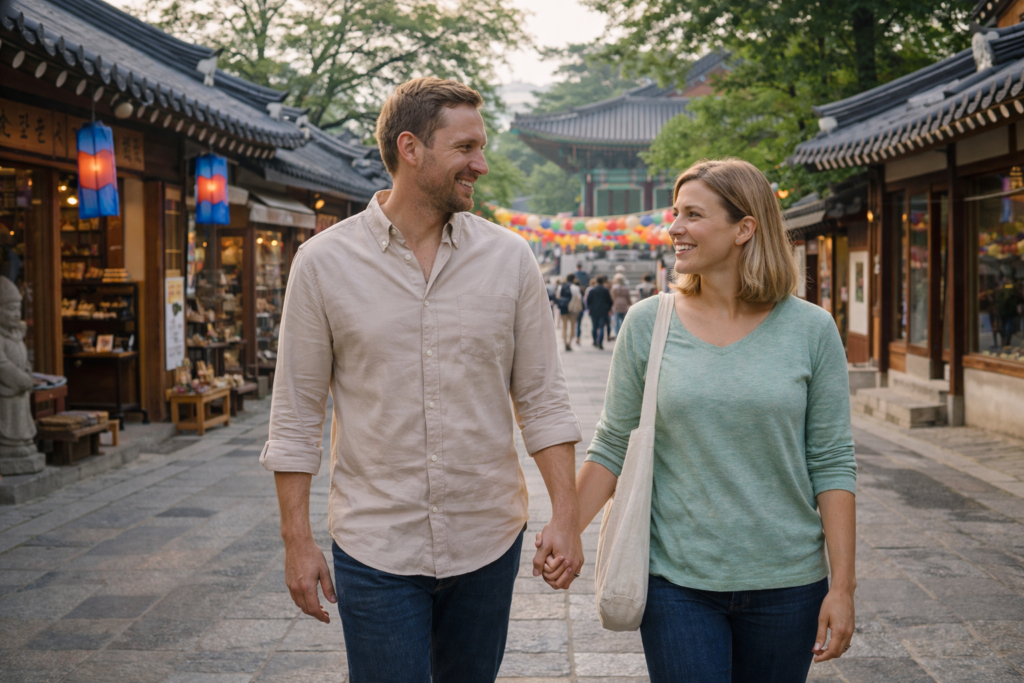
Here is a simple route that works very well for first-time visitors.
Recommended Half-Day Route
09:30 – Arrive near Anguk Station
10:00–11:30 – Join a short temple food class or meditation-style food program
11:40–12:30 – Walk around Bukchon or Insadong
12:40–13:40 – Visit Jogyesa Temple
14:00 – Enjoy a temple-style lunch or tea break
Recommended Full-Day Route
Morning – Temple food class at the Korean Temple Food Center
Lunch – Balwoo Gongyang or another vegetarian/temple-style restaurant
Afternoon – Jogyesa + Insadong cultural walk
Evening – Vegan café stop or light dinner nearby
Three key strategies make the experience better:
- Reserve early: official classes can have limited capacity.
- Travel light: some classes ask participants to bring small cloths or takeaway containers.
- Do not over-schedule: temple food is about slowing down. Leave breathing room between stops.
My own planning rule: one reservation, one temple, one meal, one neighborhood. That is enough for a satisfying Seoul day.
📋 4) Quick Comparison Table
| Option | Best For | Location | Reservation | Experience Style |
|---|---|---|---|---|
| Korean Temple Food Center | Travelers wanting a real learning experience | Anguk / Jongno | Strongly recommended | Class, tasting, seasonal temple food |
| Jogyesa Temple | Culture-focused visitors | Jongno | Usually not needed for grounds visit | Spiritual atmosphere, walking, reflection |
| Balwoo Gongyang | Premium dining seekers | Near Jogyesa / Insadong | Highly recommended | Refined temple cuisine meal |
| Maji / Sanchon | Flexible vegetarian dining | Bukchon / Insadong area | Helpful but varies | Temple-style vegan or vegetarian meal |
💰 5) Time and Cost Benefits of a No-Overnight Temple Food Tour
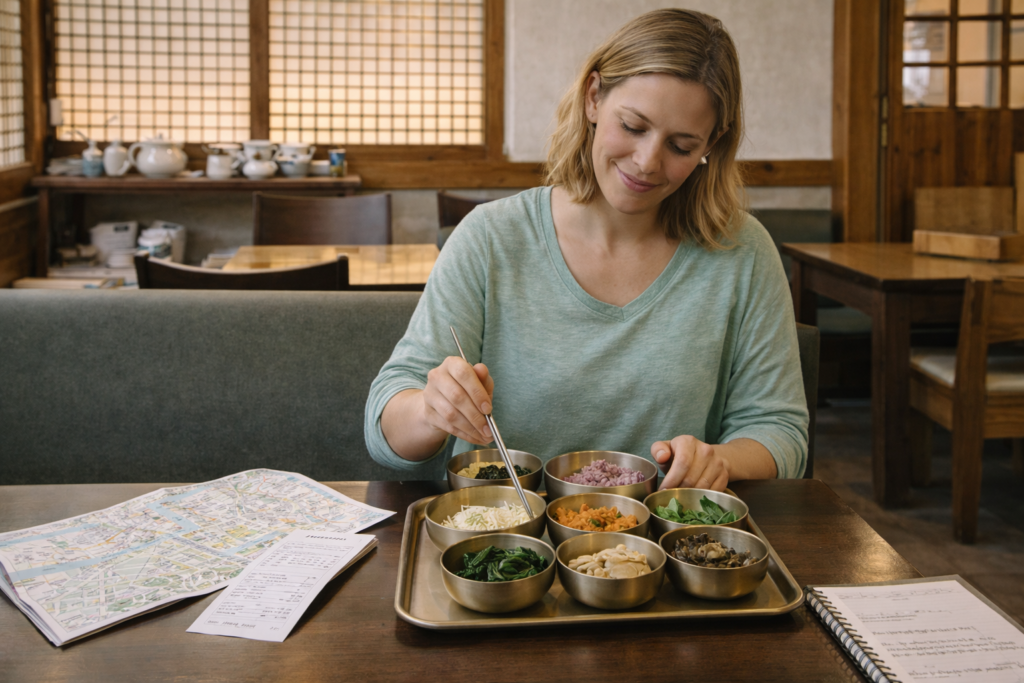
Choosing a Seoul vegetarian temple food tour without staying overnight has very practical advantages.
- Official class cost: recent short-term programs at the Korean Temple Food Center show a fee of about KRW 20,000.
- Time needed: many classes run for about 90 minutes, which fits easily into a morning itinerary.
- Transit savings: by staying around Jongno, Anguk, Insadong, and Jogyesa, you can often do most of the route on foot.
- Value: compared with an overnight temple stay, a day route saves accommodation time, packing stress, and schedule restrictions while still giving you food, culture, and mindfulness.
For many visitors, that means getting 70–80% of the cultural food experience in just half a day. That is a very efficient return, especially on a short Seoul trip.
✅ Final Thoughts
A vegetarian temple food tour in Seoul without staying overnight is not only possible. It is one of the smartest cultural food experiences in the city. You can join a short official class, visit Jogyesa, enjoy a beautiful neighborhood walk, and finish with temple-style dining — all in one day.
If your goal is to eat well, slow down, and experience a quieter side of Seoul, this route is absolutely worth adding to your itinerary.
❓ FAQ
Is Korean temple food always vegan?
Traditional Korean temple food is generally plant-based and avoids meat and the five pungent vegetables used in Buddhist cooking. Still, always check the menu or ask ahead, especially at temple-style restaurants.
Can foreigners join temple food classes in Seoul?
Yes. Some official short-term programs at the Korean Temple Food Center are specifically marked as available to foreigners, with English translation provided.
Do I need to stay overnight at a temple to try temple food?
No. That is the best part of this itinerary. You can enjoy temple food in Seoul through short classes, cultural visits, and temple cuisine restaurants without booking an overnight stay.
What is the best area for this tour?
Jongno is the easiest base. Anguk, Insadong, and Jogyesa are close together and ideal for a walkable temple food route.
How far in advance should I reserve?
Reserve as early as possible for official classes and premium restaurants. Weekend slots are usually the first to go.