


Planning a Korea trip in July can feel a little risky. You picture cute cafés, palace walks, coastal trains, maybe a day in Busan by the sea, and then suddenly you remember one thing: rainy season.
I get it. I’ve done Korea in wet summer weather before, and the biggest mistake is building a trip that only works if the sky is perfect. That usually leads to stress, soaked shoes, and a lot of last-minute Googling under an umbrella.
So this post is built differently. This is a July 2026 Korea itinerary designed for real weather — meaning indoor backups, short travel times, easy subway access, and places that are still genuinely worth visiting when it rains. If the weather turns out better than expected, great. If not, your trip still works.
☔ Why a July Korea itinerary needs to be different
Korea in July is not impossible at all. It can actually be fun, cozy, and very photogenic. But it does reward a smarter plan. The Korea Tourism Organization describes summer as hot and humid, and historical KMA July data shows fairly frequent rain nationally. In other words, this is not the month for a rigid sunrise-to-midnight outdoor schedule. Flexibility is the travel hack.
My own rule for Korea in July is simple: one outdoor highlight, one indoor backup, and one easy food stop every day. That alone makes the trip feel much lighter.
💡 1) 5 key things to consider before choosing your July 2026 Korea itinerary
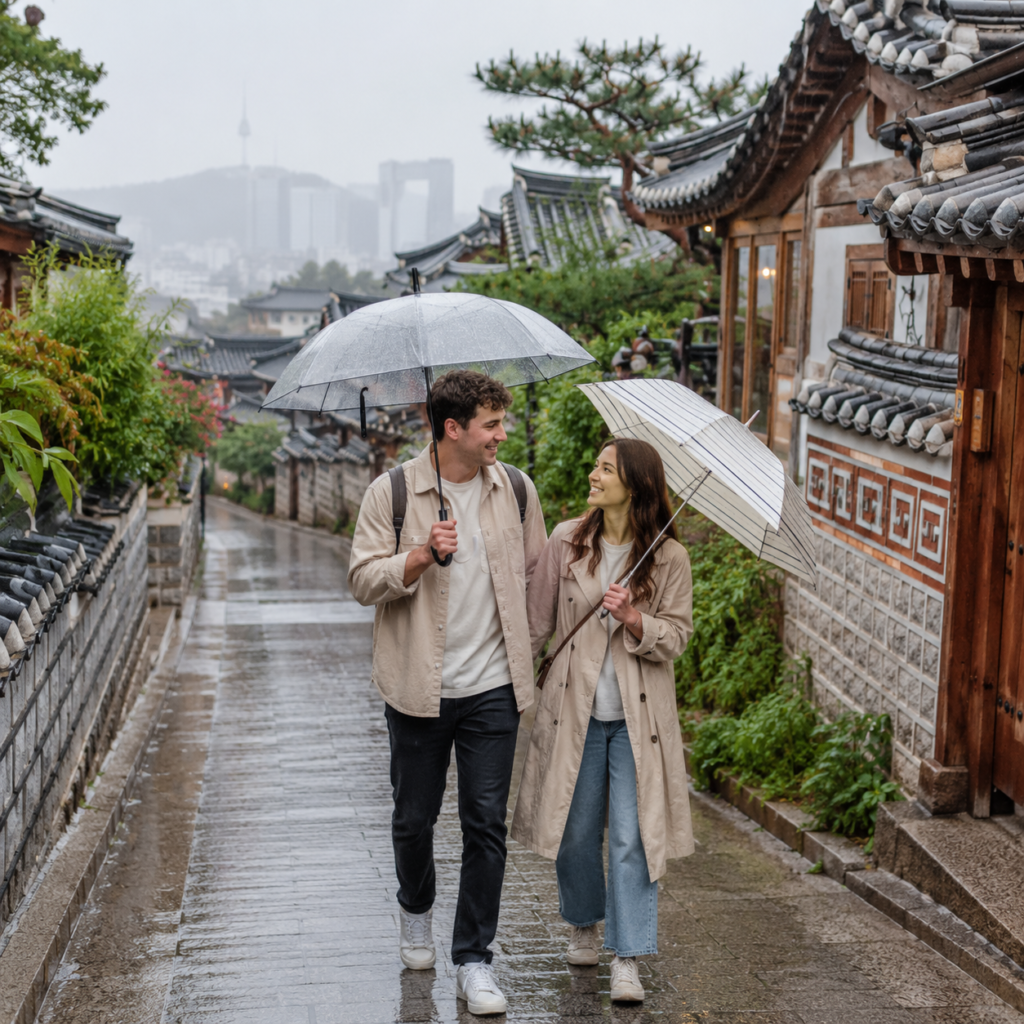
1. Keep city changes minimal
In rainy weather, long intercity travel feels more tiring than it looks on paper. I would rather do Seoul + Busan well than rush through four cities just to say I did more.
2. Prioritize places with strong indoor options nearby
This is why Gangnam works so well in July. COEX, the aquarium, shopping, cafés, and transit are all close together. VISITKOREA also highlights Lotte World as a good rainy-day option because of its large indoor area.
3. Put museums and covered attractions in the middle of the day
July showers can shift fast. I like using mornings and evenings for short walks, then keeping the middle of the day for places like the National Museum of Korea or COEX Aquarium. Both are official, reliable options for bad-weather hours.
4. Watch weather alerts, not just the weather app icon
A cloud icon is one thing. A heavy-rain warning is another. KMA’s warning criteria are serious enough that I would always check official alerts before a coastal or hiking day.
5. Build your trip around neighborhoods, not scattered pins
This matters more in July than in spring or fall. Staying within one area per day means fewer soaked transfers and more time actually enjoying the trip.
Check official Korea travel ideas before you go
This is the best place to double-check attraction details and seasonal updates.
Official Korea travel information on VISITKOREA
📊 2) My recommended Korea rainy season itinerary for July 2026
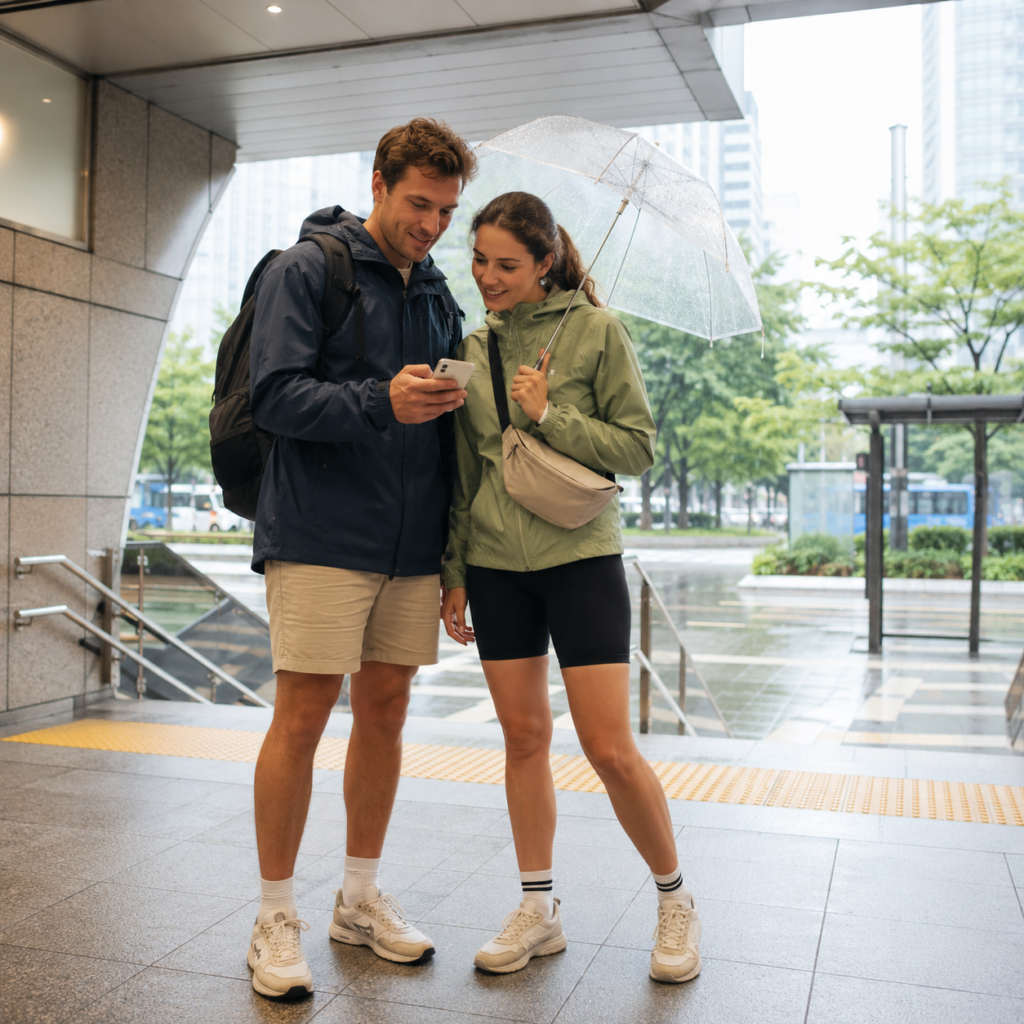
Day 1 – Arrive in Seoul + easy indoor evening
Land in Seoul, keep the first day light, and don’t overbook. I’d stay somewhere with easy subway access, drop my bags, then head to a simple indoor area like COEX if energy allows. It is directly connected to transit and works well if the weather is messy right away.
Day 2 – Palace area in the morning, museum plan in the afternoon
Start with Gwanghwamun or the palace district early, when the weather is often calmer. If rain picks up, switch to a museum-heavy afternoon. VISITKOREA’s recommended Seoul course around Gyeongbokgung and nearby museums makes this kind of flexible day very easy.
One of my favorite rainy-day Korea moments is actually walking old streets for 20 minutes, getting slightly wet, and then hiding in a museum or café. It feels more memorable than trying to force a perfect full-day outdoors plan.
Day 3 – Gangnam rainy-day cluster: COEX Aquarium + mall + Bongeunsa area
This is the easiest “bad weather but still fun” day in Seoul. COEX Mall, COEX Aquarium, and nearby temple-and-café stops create a full day without too much walking in the rain. The aquarium is one of the strongest all-weather options in the city, and COEX is linked underground to transit.
Day 4 – KTX to Busan + relaxed coastal evening
Move to Busan, but keep expectations realistic. I’d use this day for a calm arrival, a seafood dinner, and a short waterfront walk only if conditions are good. Coastal scenery is beautiful in summer, but I never force it during heavy rain.
Day 5 – Haeundae Blue Line Park if the weather is stable
If you get a clear or lightly cloudy window, this is the day to use it. VISITKOREA describes Haeundae Blueline Park as a 4.8 km scenic coastal route linking Mipo, Cheongsapo, and Songjeong, with both the Beach Train and the Sky Capsule. It is one of the best Busan picks for a soft scenic day that does not require hardcore planning.
If weather is rough instead, swap the order and make this your café-and-food day. That flexibility is the whole point of this itinerary.
Day 6 – Busan city views + easy backup plan
On a better-weather day, spots like Oryukdo Skywalk can be worth it for views. On a worse-weather day, I’d honestly skip the viewpoint race and keep it simple with markets, cafés, and one indoor stop. Busan is still enjoyable when it’s slower.
Day 7 – Return or final Seoul day
Keep your last day open-ended. This is where you slot in whatever the weather stole earlier: a palace walk, one more museum, shopping, or a final food crawl. In July, this buffer day is not optional in my opinion. It is what saves the trip from feeling rushed.
If I had to cut one thing from a rainy July Korea trip, I’d cut the “must-do everything” pressure first. Korea is much more enjoyable when you leave room for weather, food, and random neighborhood moments.
📌 3) Practical rainy-season travel tips that actually help
- Book hotels close to a subway station, not just close on the map.
- Carry one pair of quick-dry shoes and one small umbrella, not a giant travel setup.
- Use mornings for short outdoor plans and afternoons for indoor attractions.
- Check the official KMA warning page before coastal days or longer outings.
- Avoid scheduling two major transfers on the same rainy day.
- Leave one free half-day in both Seoul and Busan if possible.
For weather checks, I would trust the official Korea Meteorological Administration page more than a random screenshot from social media. Heavy-rain alerts can matter a lot for timing and safety.
You can use the KMA severe weather warning page for Korea before day trips, especially in July.
📋 4) Quick comparison table
| Area / Plan | Best in Rain? | Outdoor Dependence | Travel Ease | Why It Works in July |
|---|---|---|---|---|
| Central Seoul palace + museum day | Good | Medium | Easy | Easy to switch between outdoor and indoor stops |
| Gangnam / COEX day | Excellent | Low | Very easy | Aquarium, mall, cafés, transit all close together |
| Busan arrival day | Good | Low | Moderate | Lower-pressure day protects the trip from delays |
| Haeundae Blue Line Park | Best in light rain or clear weather | Medium | Easy once there | Big scenic payoff when weather gives you a window |
| Lotte World rainy-day backup | Excellent | Low | Easy | Large indoor area makes it useful in July |
💰 5) Budget and value: what this itinerary does well
This kind of itinerary is not the absolute cheapest possible Korea trip, but it is a very high-value one in July.
- Less wasted money: fewer canceled plans, fewer expensive same-day changes.
- Less wasted energy: fewer cross-city detours in wet weather.
- Better attraction hit rate: more of your planned stops still work if it rains.
- More comfort: you spend less time drenched and more time actually enjoying the trip.
In practical terms, I think this style of itinerary can easily save you one or two “bad travel days” over the course of a week. That may not sound dramatic, but on a short international trip, that is a big difference.
✅ Final thoughts
If you’re visiting Korea in July 2026, I would not cancel the dream just because it’s rainy season. I would just plan smarter. Focus on Seoul and Busan, build in indoor backups, protect your transfer days, and let the weather decide which scenic stop gets your best window.
That’s honestly the most human way to travel Korea in July. Not perfect. Just realistic, flexible, and still genuinely fun.
🙋 FAQ
Q1. Is July a bad time to visit Korea?
Not necessarily. It is hot and humid, and rain is common, but a flexible itinerary with indoor options works well. Korea’s tourism board explicitly describes summer as hot and humid, so the key is planning for that instead of pretending it won’t happen.
Q2. Which Korean city works best in rainy season?
Seoul is the easiest because it has so many indoor attractions close to transit. Busan is still worth it, but I would treat scenic coastal days as weather-dependent.
Q3. Is Busan still worth visiting in July?
Yes, especially if you build in flexibility. Haeundae Blueline Park is a great scenic option when the weather cooperates, and Busan still works as a slower food-and-coast city when it doesn’t.
Q4. What should I check right before the trip?
Check official KMA weather and warning pages. Heavy-rain criteria can be serious, and those alerts matter more than a simple rain icon on a phone app.
Q5. Should I add Jeju in a one-week July trip?
I wouldn’t, unless Jeju is your main goal. In July, keeping the trip simpler usually gives you a better experience overall.
You Might Also Like:How to Order Food in Korea Without Speaking Korean