
Why Americans Are Traveling to Korea for K-Beauty in 2026
A few years ago, when American friends asked me about Korea, they usually wanted restaurant lists, cafe neighborhoods, or an easy Seoul itinerary. In 2026, the questions feel different. Now I hear things like, “Where should I shop for skincare in Seoul?”, “Is it better to do beauty shopping in Myeong-dong or Seongsu?”, and “Can I fit a skin consultation, beauty shopping, and a cafe stop into one day?”
That shift says a lot. For many travelers from the U.S., Korea is no longer just a destination where you happen to buy a few sheet masks. It has become a place where beauty is part of the reason for the trip itself. And honestly, that makes sense. Korea makes K-beauty feel accessible, layered, and experience-driven in a way that is hard to replicate somewhere else.
I’ve seen this firsthand when helping visiting friends plan their Seoul days. What surprises them most is not just the products. It’s how easy it is to connect the whole experience: skin analysis, beauty shopping, shade matching, hair or makeup styling, a nice lunch, and a walk through a neighborhood that actually feels current. It doesn’t feel like a random errand. It feels like a full lifestyle experience.
In this post, I’ll break down why Americans are traveling to Korea for K-beauty in 2026, what makes the experience different on the ground, and how travelers can make the most of it without turning the trip into an exhausting checklist.
💡 5 Key Things That Matter When Planning a K-Beauty Trip to Korea
1. It’s not just about buying products anymore
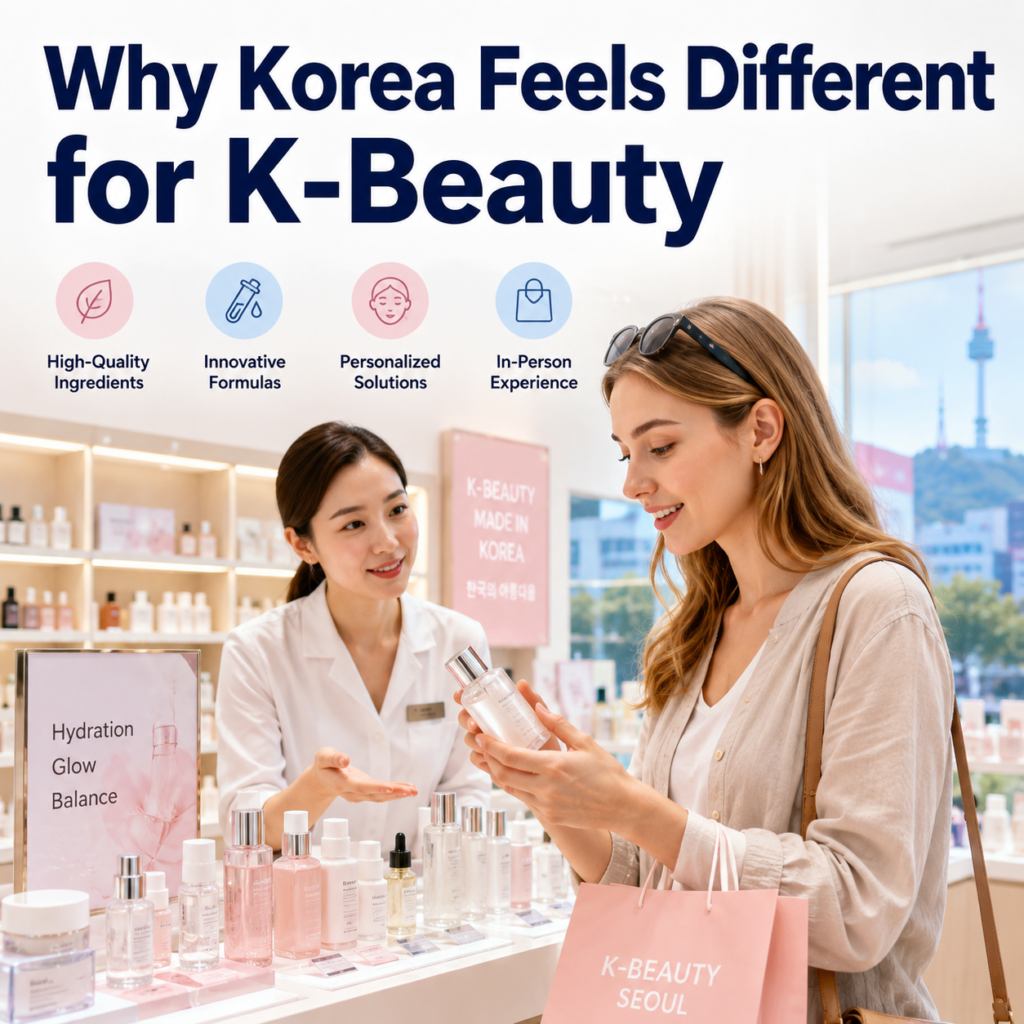
This is probably the biggest change. American travelers are not only coming to Korea to stock up on sunscreen, toner pads, or cushion foundations. They’re also looking for experiences that feel more personal: skin consultations, beauty testing, makeup touch-ups, scalp care, personal color analysis, and neighborhood-based beauty shopping. That shift from “buying” to “experiencing” is a big part of why the trend feels stronger now.
One thing I’ve noticed when friends visit is that they remember the experience more than the haul. They may forget the third serum they bought, but they definitely remember the place where someone explained their skin type in detail and helped them find products that actually made sense.
2. Seoul makes beauty travel easy to build into a real itinerary
One of Korea’s biggest advantages is density. In Seoul, beauty shopping, clinics, cafes, restaurants, and photogenic streets often sit close together. That means travelers can get more out of one afternoon without wasting half the day in transit.
Neighborhood choice matters here. Myeong-dong feels easy and familiar for first-time visitors. Seongsu feels more trend-driven and brand-forward. Apgujeong and Cheongdam feel more premium. The nice part is that each area gives a different version of K-beauty instead of the exact same experience over and over.
3. Americans like K-beauty because it feels explainable, not just trendy
A lot of U.S. consumers are tired of vague beauty marketing. One reason Korea lands so well is that the routines often feel more specific. People want to know what a product does, who it’s for, how it layers, and why it fits their skin concerns. Korean beauty spaces often do a better job turning beauty into something understandable rather than intimidating.
4. Time efficiency matters just as much as price
People often talk about K-beauty travel as a price story, but I think that misses the full picture. For many Americans, the appeal is also about efficiency. In Korea, it can be easier to compare products in person, get recommendations quickly, and build multiple beauty-related stops into one compact day. That time-saving element is a huge advantage for travelers on a short trip.
5. K-beauty works best when it connects with the rest of Korean culture
K-beauty becomes more memorable when it doesn’t sit alone. Travelers enjoy it more when it blends naturally with Korean food, fashion, cafe culture, K-pop, and neighborhood exploration. That is one reason Korea feels especially strong as a beauty destination. The beauty experience fits neatly into a broader cultural trip rather than feeling isolated from it.
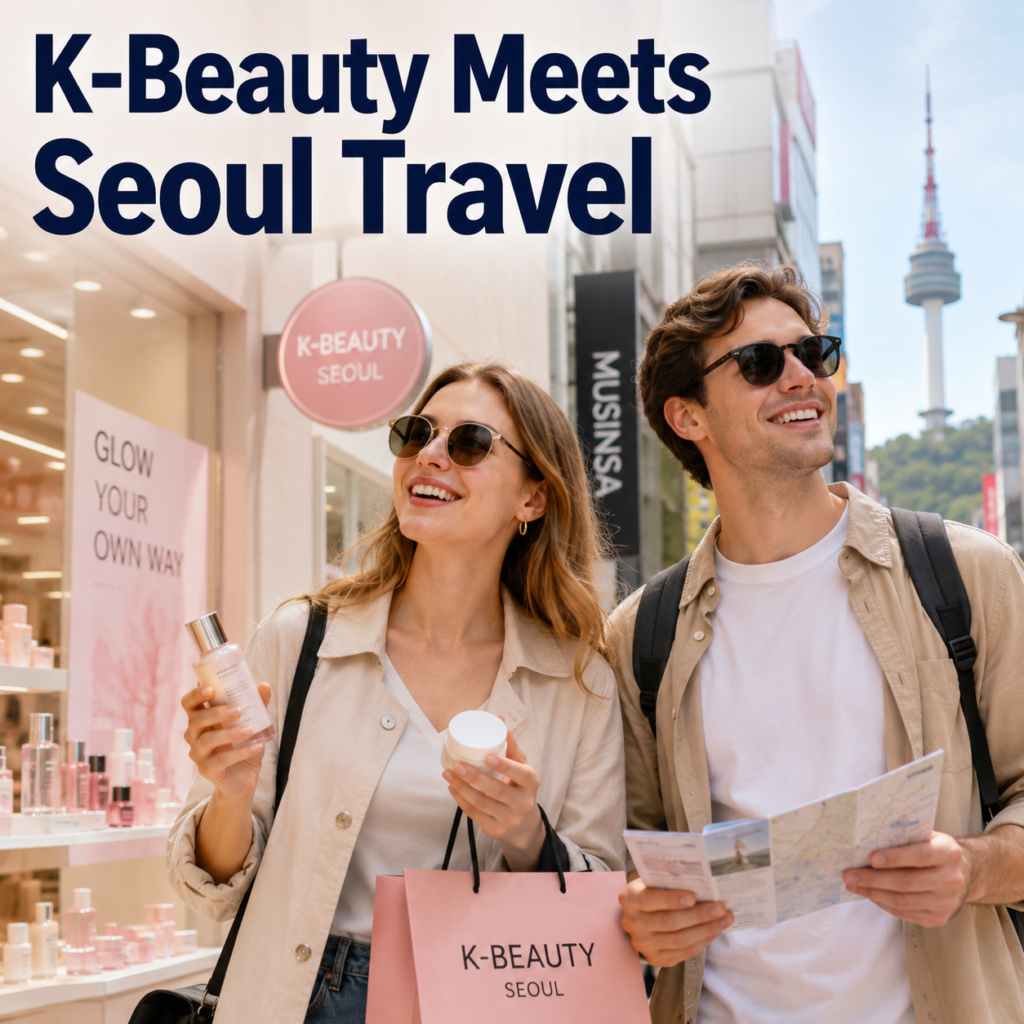
What I like most about beauty days in Seoul is that they never feel one-note. You can test skincare, grab coffee, browse a concept store, take photos, and end the day with dinner in the same area. That rhythm feels very Korean, and visitors tend to love it.
📊 4 Real Reasons Americans Are Traveling to Korea for K-Beauty in 2026
1. Korea’s beauty and skin-focused visitor economy is now very visible
Part of this trend is backed by what official Korean organizations are already seeing. Korea’s health industry data has shown strong foreign demand for dermatology-related care, and Seoul continues to dominate as the main destination for international patients. That matters because it confirms something travelers already feel on the ground: beauty, skincare, and skin-focused services are no longer niche parts of the Korea trip. They are central to it.
2. Korea is actively packaging beauty as a travel experience
This is another major reason the trend feels bigger in 2026. Korea is not leaving beauty travel to chance. Official tourism channels have already highlighted K-beauty festivals, experience programs, and beauty-centered events for international visitors. In other words, this is no longer just tourists finding beauty on their own. Korea’s tourism ecosystem is clearly presenting beauty as a travel category.
Related source: Korea Beauty Festival for international visitors
3. The Korean Wave still pushes beauty interest higher
Beauty does not exist in a vacuum. People often arrive through another doorway first. Sometimes it is K-pop. Sometimes it is Korean dramas. Sometimes it is fashion or food. Official Korean cultural survey results have continued to show strong global recognition of Korean cultural content, with beauty ranking as one of the concepts associated with Korea. For American travelers, that means K-beauty often begins long before the flight. The trip just turns online curiosity into an offline experience.
Related source: 2025 Overseas Hallyu Survey by the Ministry of Culture, Sports and Tourism
4. Visitors can actually try things instead of just guessing online
This point sounds small, but it matters a lot. Many Americans discover K-beauty online first, but online shopping has limits. You cannot test texture properly, compare shades with confidence, or ask detailed questions in the same way. In Korea, travelers can walk into dedicated K-beauty experience spaces, test products, get suggestions, and make decisions faster. That moves the experience from passive browsing to active discovery.
Related source: Beauty Play K-beauty experience center
Want to explore official K-beauty travel info in Korea?
Visit the official Korea tourism site
📌 Practical Strategy: How to Plan a K-Beauty Trip That Actually Feels Good
1. Don’t overload day one
After a long flight, skin is usually dehydrated, and energy levels are all over the place. I always think the first day should be light. A beauty store visit, a skin-friendly meal, and one easy neighborhood walk is enough. People enjoy the rest of the trip more when they don’t try to do everything immediately.
2. Match the neighborhood to the beauty goal
- Myeong-dong: easy shopping, familiar brands, low friction for first-timers
- Seongsu: trendier beauty and lifestyle experience, more discovery-driven
- Apgujeong / Cheongdam: premium beauty, clinics, salons, polished atmosphere
- Hongdae: younger energy, beauty plus fashion and casual exploration
3. Use a “one main thing, two supporting things” structure
This works especially well for short trips. Pick one anchor activity for the day, like a skin consultation or focused shopping session. Then add two lighter pieces around it, such as lunch and a cafe, or a beauty store and a neighborhood walk. It feels balanced and much less stressful.
Whenever I plan beauty-heavy Seoul days, I try to leave breathing room. The people who enjoy the city most are usually not the ones sprinting through ten skincare stores. They’re the ones who do a few things well and actually have time to notice where they are.
4. Leave room for repeat visits
This may sound counterintuitive, but not trying to “finish” K-beauty in one trip is part of the appeal. Korea rewards repeat travelers. One trip can focus on mainstream beauty shopping. Another can focus on premium neighborhoods, services, or slower discovery. That sense of unfinished curiosity is one reason people come back.
📋 Comparison Table: U.S. Beauty Access vs. K-Beauty Travel in Korea
| Category | Typical U.S. Experience | Typical Korea Travel Experience | Best For |
|---|---|---|---|
| Product discovery | Often online-first, limited in-person testing | Hands-on browsing, easier comparison, faster decision-making | First-time K-beauty travelers |
| Skin-focused services | Can feel expensive, fragmented, and time-consuming | More concentrated ecosystem, easier to fit into travel days | Skincare-motivated visitors |
| Beauty + lifestyle connection | Often separated from dining and tourism | Naturally woven into neighborhoods and daily travel | Experience-driven travelers |
| Cultural immersion | Mostly product consumption | Beauty connects with K-culture, fashion, food, and local trends | K-culture fans |
💰 What’s the Real Payoff?
When people ask why Americans are traveling to Korea for K-beauty in 2026, I don’t think the answer is just “because it’s cheaper” or “because it’s trendy.” The better answer is that the value comes from experience density.
In a relatively short amount of time, travelers can compare products, learn more about their own skin, explore a neighborhood, connect beauty with the larger Korean lifestyle, and come away with a trip that feels personal rather than generic. That combination is hard to manufacture elsewhere.
And this is where Korea has a real edge. It doesn’t just sell beauty well. It stages beauty well. It turns it into something visitors can move through, understand, remember, and talk about later.
To me, that’s the biggest reason the trend feels durable. People are not only buying things in Korea. They are collecting stories, routines, and reference points they take home with them.
✅ Final Thoughts
Why are Americans traveling to Korea for K-beauty in 2026? Because Korea offers more than products. It offers context, convenience, trend visibility, and a kind of beauty travel experience that feels both practical and exciting.
If you ask me, the strongest part of the story is this: K-beauty in Korea feels less like shopping and more like participation. And once travelers experience that in person, it makes perfect sense that many of them want to come back for more.
❓ FAQ
Q1. Is K-beauty travel to Korea mostly about shopping?
A. Not anymore. Shopping is still part of it, but the 2026 version of K-beauty travel is much more experience-based. Travelers want testing, recommendations, beauty spaces, and neighborhood-driven discovery.
Q2. Why is Seoul especially popular for K-beauty travelers?
A. Seoul makes beauty travel easy. Shopping, clinics, beauty experiences, food, and transportation all connect well, which helps visitors fit more into a short trip without feeling overwhelmed.
Q3. Are Americans interested in K-beauty because of K-pop and K-dramas?
A. Very often, yes. For many people, beauty interest starts with Korean culture more broadly, then turns into a travel reason later. That culture-to-beauty pipeline is a big part of the story.
Q4. Is Korea a good destination for first-time K-beauty travelers?
A. Definitely. First-timers can keep it simple with easy shopping neighborhoods and official tourism resources, then go deeper on a future trip if they want a more specialized experience.
Q5. Will this trend keep growing after 2026?
A. It looks likely. Official tourism, cultural, and health-related organizations in Korea are already treating beauty as an important international travel category, which suggests this is more than a passing moment.
You Might Also Like:Korea Rainy Season Travel Itinerary for July 2026