
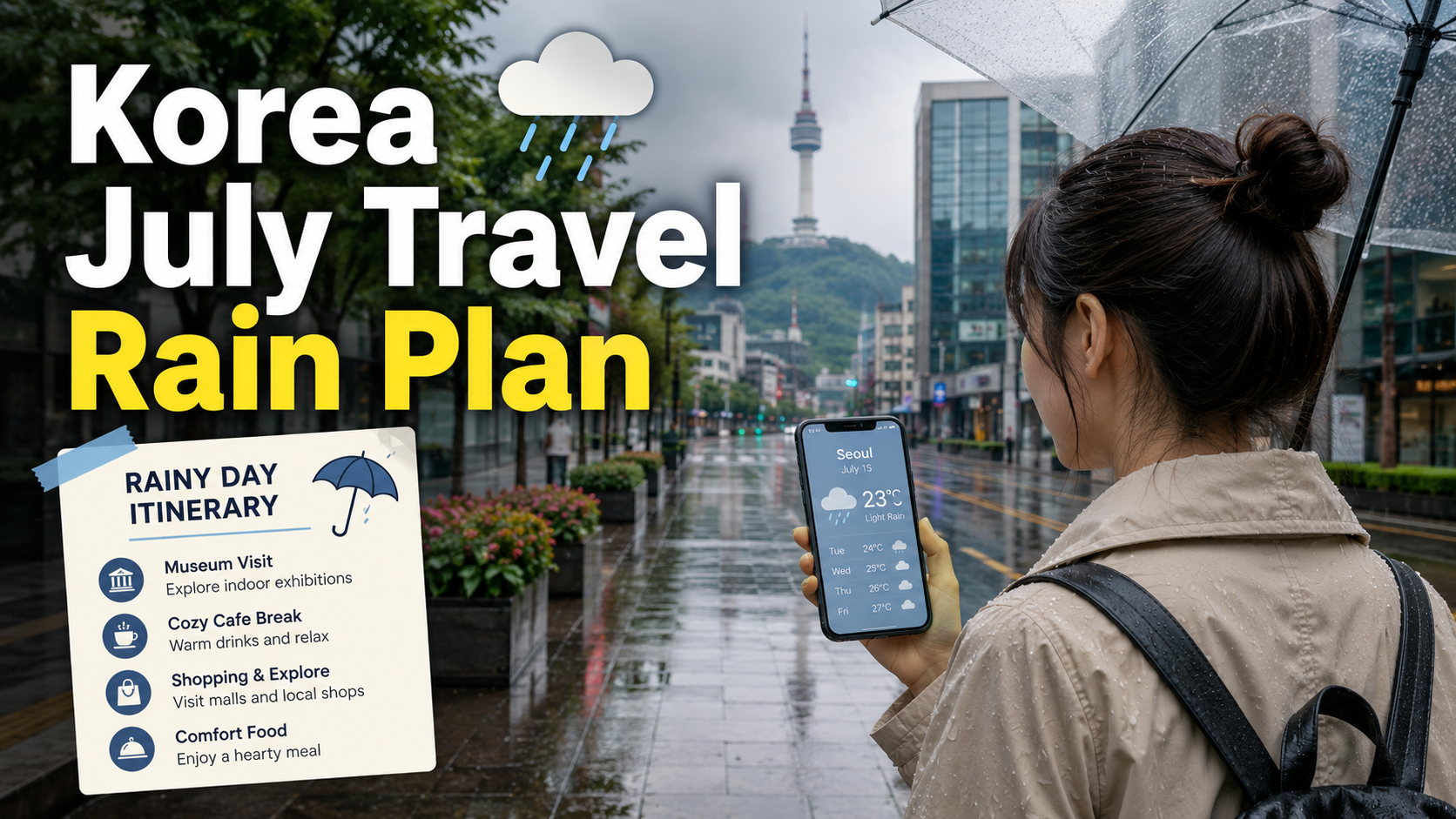
Korea July travel can be amazing, but sudden afternoon rain can completely change your day if you plan too tightly. I learned this the hard way in Seoul when a “quick coffee stop” turned into a two-hour wait because the sky opened up right after lunch.
The good news is that July rain in Korea does not have to ruin your trip. You just need a flexible route, one indoor backup near every outdoor stop, and the habit of checking the forecast before leaving your hotel.
✅ Quick Answer First
For Korea July travel, plan outdoor activities in the morning, save cafes, museums, shopping malls, or markets for the afternoon, and keep your route inside one neighborhood. Sudden rain is much easier to handle when you are not crossing the city at 3 p.m.
🔍 Key Rule: Do Outdoor Plans Before Lunch
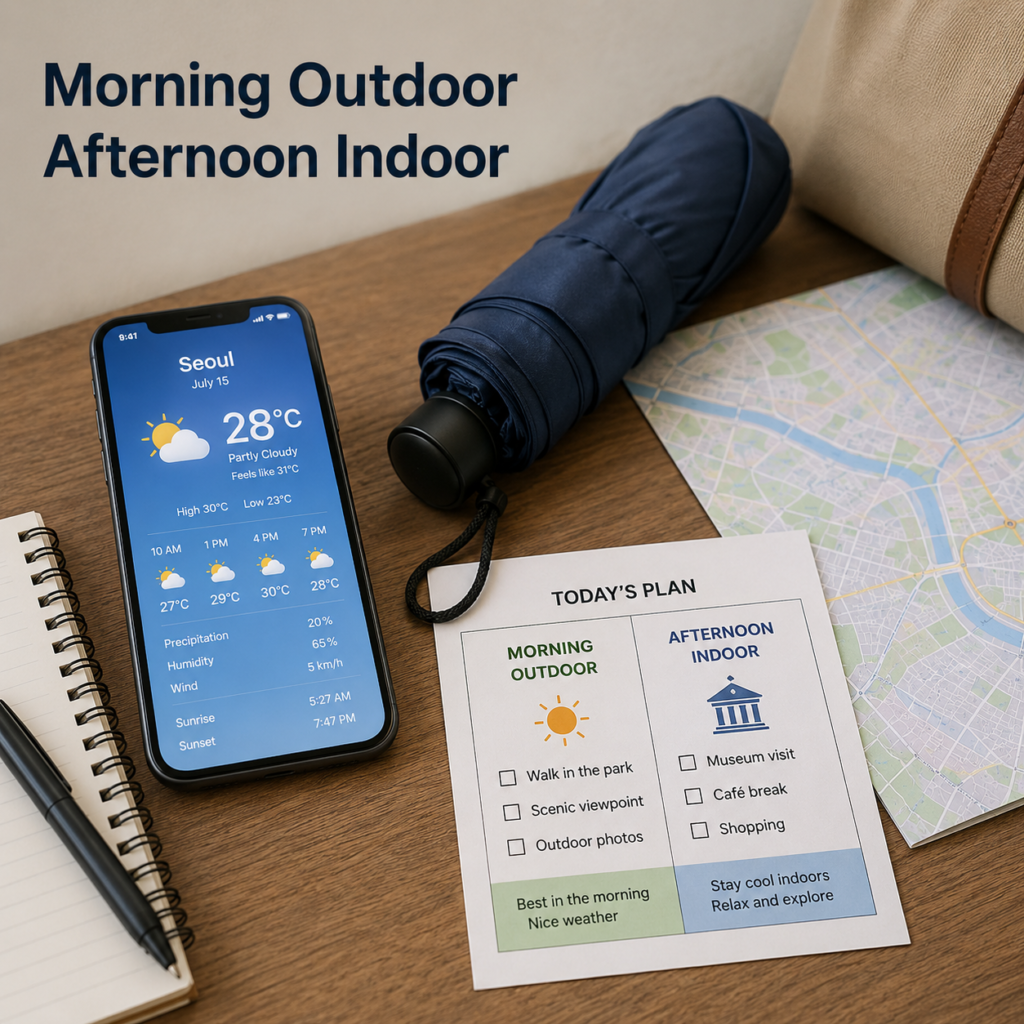
The simplest rule for Korea July travel is this: put your most weather-sensitive plan in the morning. Palaces, hanok villages, coastal walks, outdoor markets, and photo spots are much more enjoyable before the afternoon heat and sudden rain build up.
Before heading out, I usually check the Korea Meteorological Administration medium-range forecast in English. It is not about predicting every drop perfectly. It is about knowing whether you should carry light rain gear or redesign the day around indoor stops.
On one July trip, I planned Gyeongbokgung Palace, Bukchon, Insadong, and the Han River all in one day. It looked efficient on a map, but it was too exposed. By mid-afternoon, my shoes were soaked, my phone battery was low, and I was no longer enjoying the city. Since then, I build July routes with “rain exits” in mind.
💡 Personal Travel Tip
I now choose one main outdoor stop per day in July. After that, everything else is flexible. It feels slower on paper, but in real life it makes the day much less stressful.
⚖️ Morning vs Afternoon Travel Planning
July in Korea can feel like two different days packed into one. The morning may be bright and humid, while the afternoon can suddenly turn dark, windy, and rainy. That is why timing matters as much as location.
🧾 Comparison Table
| Time of Day | Best For | Risk | My Recommendation |
|---|---|---|---|
| Morning | Palaces, walking streets, viewpoints, hanok areas | Humidity and early heat | Use this time for your main outdoor plan |
| Afternoon | Museums, cafes, malls, galleries, underground shopping | Sudden rain and traffic delays | Keep it flexible and indoors |
| Evening | Dinner, night markets, short walks, city views | Wet streets and changed transport times | Stay near your accommodation or subway line |
🔍 Key Planning Standard
A good July itinerary in Korea is not the one with the most stops. It is the one that still works when rain starts halfway through the day.
🛠️ Practical Route-Building Steps
This is the exact process I use when planning a July day in Seoul, Busan, Gyeongju, Jeonju, or Jeju. It keeps the itinerary realistic and prevents that tired feeling of constantly running away from weather.
Step 1. Pick one outdoor highlight
Choose the one place you would regret missing. It could be Gyeongbokgung Palace, Gamcheon Culture Village, Seongsan Ilchulbong, or a coastal walk. Put that stop first in the day.
Step 2. Add one nearby indoor backup
For every outdoor stop, add a nearby museum, cafe, bookstore, mall, or covered market. The backup should be close enough that you can reach it within 10 to 15 minutes without needing a long transfer.
- ✅ Palace day: pair it with a museum or teahouse
- ✅ Beach day: pair it with a cafe street or aquarium
- ✅ Market day: choose a covered market if possible
- ✅ Han River day: keep a subway-connected dinner option nearby
Step 3. Avoid cross-city plans after 2 p.m.
This is where many first-time visitors make July harder than it needs to be. Seoul especially looks manageable on a subway map, but wet shoes, crowded stations, and humid air can make long transfers feel exhausting.
💡 What Worked for Me
I stopped planning “north Seoul in the morning, south Seoul in the afternoon” during July. Staying in one area made rainy days feel like part of the trip instead of a problem to solve.
⏱️ Time, Cost, and Effort Breakdown
Planning around sudden afternoon rain does not need to cost much. Most of the improvement comes from better timing, lighter packing, and choosing neighborhoods with indoor options.
| Preparation | Time Needed | Cost | Benefit |
|---|---|---|---|
| Checking the daily forecast | 3 minutes | Free | Helps you adjust before leaving |
| Packing a compact umbrella | 1 minute | Low | Saves time during sudden showers |
| Saving indoor backups | 10 minutes | Free to moderate | Prevents wasted afternoons |
| Choosing water-friendly shoes | Before packing | Varies | Makes walking more comfortable |
💡 What to Pack for Korea in July
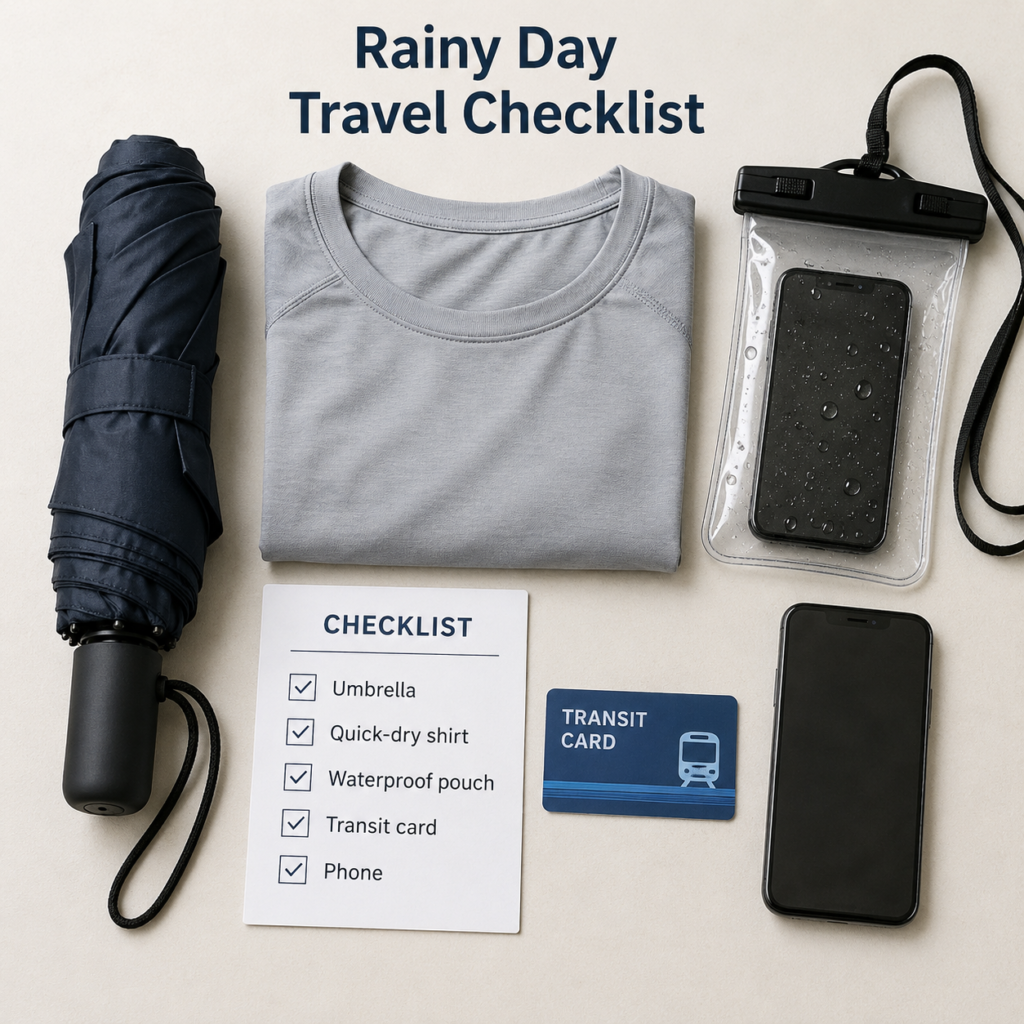
I used to overpack for July rain. Now I keep it simple. The goal is not to stay perfectly dry all day. The goal is to stay comfortable enough that a shower does not end the day.
- ✅ A small umbrella that fits in your day bag
- ✅ Quick-dry clothes instead of heavy cotton
- ✅ Sandals or shoes you do not mind getting wet
- ✅ A zip pouch for passport, cards, and electronics
💡 My Smallest Useful Item
A simple plastic zip pouch saved me more than once. When rain started suddenly, I could protect my passport, transit card, and phone charger without reorganizing my whole bag.
⚠️ Safety Notes for Heavy Rain Days
Most rainy days are manageable, but heavy rain can affect roads, stairs, streams, beaches, hiking paths, flights, and trains. If an official alert is issued, change your plan rather than trying to push through.
Travelers staying in Seoul may also find the Seoul Metropolitan Government Emergency Ready App information in English useful for disaster alerts and safety guidance.
- ⚠️ Avoid streams, riverbanks, and underpasses during heavy rain
- ⚠️ Do not hike if strong rain or lightning is expected
- ⚠️ Give yourself extra time for airport and train transfers
- ⚠️ Keep one low-effort indoor day in your itinerary
✅ Simple Rule I Follow
If rain looks heavy enough to make walking uncomfortable, I move the plan indoors. Korea has plenty of cafes, museums, malls, and covered markets, so forcing an outdoor plan rarely feels worth it.
✅ Final Thoughts
Korea July travel is not about avoiding rain completely. It is about planning in a way that gives you room to adjust. Once I stopped building tight, all-day outdoor itineraries, July became much easier to enjoy.
My favorite approach is simple: outdoor highlight in the morning, flexible indoor backup in the afternoon, and dinner near a subway line. It keeps the day realistic, especially when sudden rain rolls in right after lunch.
Bring the umbrella, wear practical shoes, and do not treat rain as a failure in the itinerary. Some of my best Korea travel memories happened because I ducked into a quiet cafe or small gallery I had not planned to visit.
❓ FAQ
❓ Is July a bad month to travel to Korea?
Not necessarily. July can be humid and rainy, but it is still very travelable if you plan flexible days. The key is to avoid packing every hour with outdoor activities.
❓ Should I cancel outdoor plans if rain is forecast?
I would not cancel too early unless the forecast shows heavy rain or safety warnings. For light or uncertain rain, move outdoor plans to the morning and keep an indoor backup nearby.
✅ Is Seoul easier than Jeju during rainy July weather?
Seoul is usually easier to adjust on the fly because there are many subway-connected indoor options. Jeju can still be beautiful, but rain and wind may affect coastal roads, viewpoints, and flights more noticeably.
❓ What is the best area to stay in during July rain?
I prefer staying near a major subway station with restaurants, cafes, and shops close by. Areas like Myeongdong, Hongdae, Jongno, Seomyeon, or Haeundae can make rainy evenings easier depending on your city.
🔗 You Might Also Like: Korean Cosmetics Date Labels Explained