
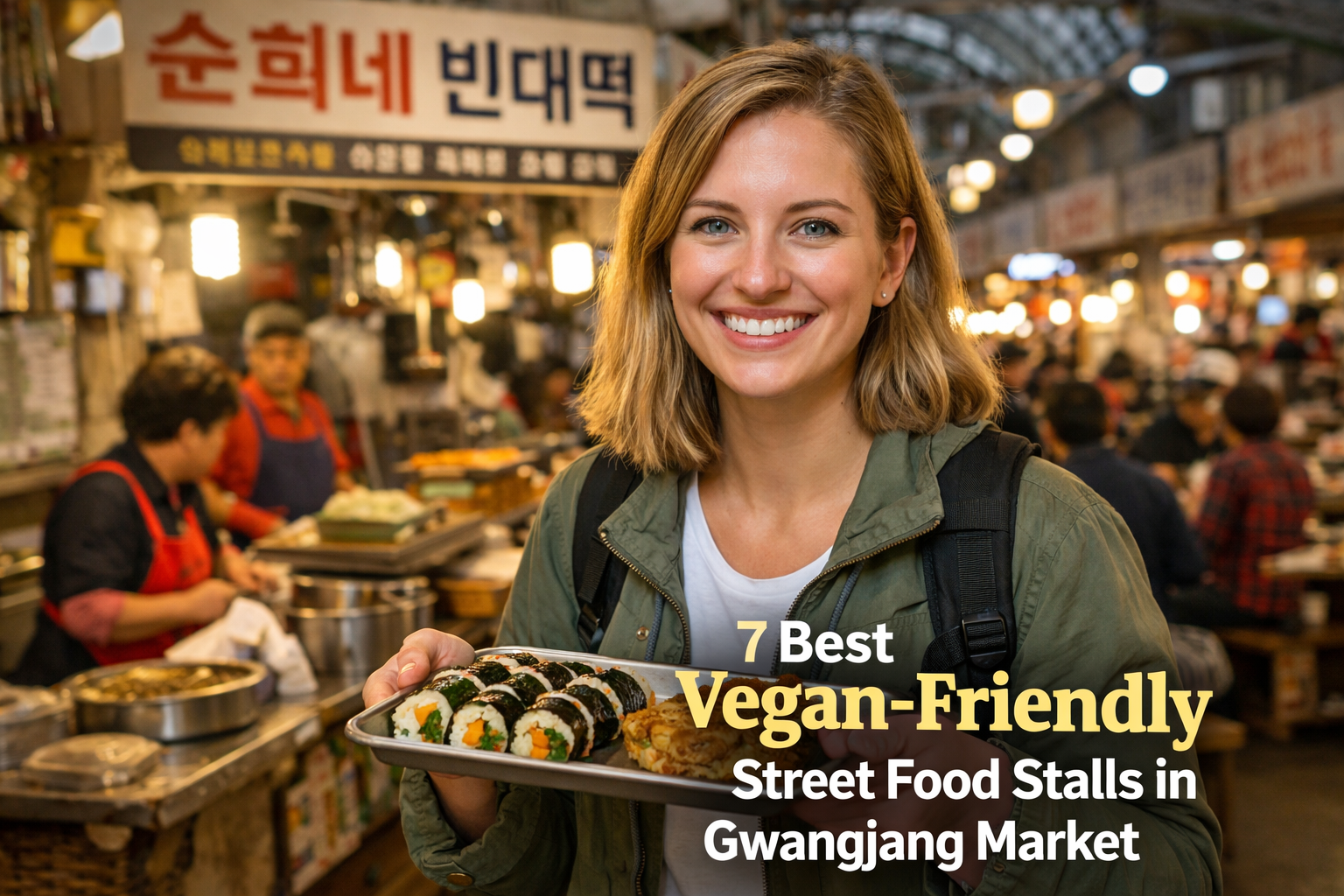
Planning a visit to Gwangjang Market but worried that Seoul’s most famous food market may be too meat-heavy for your diet? You’re not alone.
Many travelers arrive excited for Korean street food, then realize that fish sauce, broth, egg, or shared cooking oil can show up where they least expect it. The good news is that Gwangjang Market can still be a fun and satisfying stop for plant-based travelers if you know what to order, what to ask, and which stalls are more flexible.
In this guide, you’ll find the best vegan-friendly street food stalls and menu ideas in Gwangjang Market, plus practical ordering tips for avoiding hidden animal ingredients. Everything is written for first-time foreign visitors who want a smoother, more delicious market experience in Seoul.
📌 ON THIS PAGE
- 💡 How to judge whether a stall is truly vegan-friendly
- 📊 Best vegan-friendly street food stalls and menu picks
- 📌 Smart ordering strategy for plant-based travelers
- 📋 Quick comparison table
- 💰 Budget and value breakdown
- ❓ FAQ
💡 1. How to Choose a Vegan-Friendly Stall in Gwangjang Market
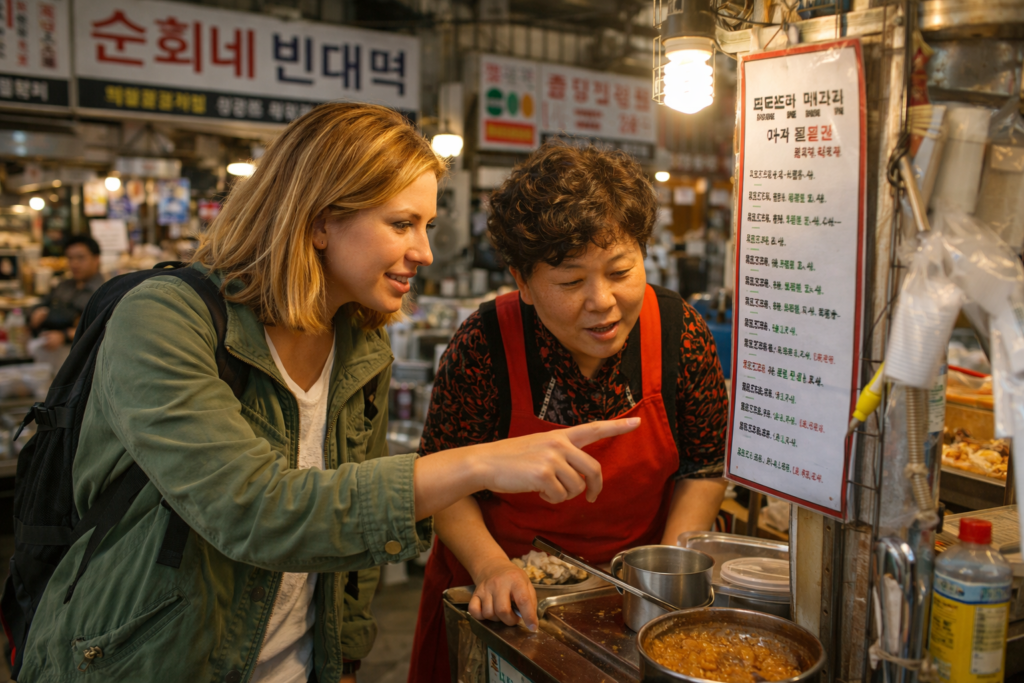
Not every “vegetable-looking” dish is vegan in Korea. At Gwangjang Market, the key is not only the dish itself, but also the sauce, filling, broth, and cooking setup.
Here are the five main things to check before you order.
1) Look for naturally plant-based base ingredients
The safest starting point is a dish built around mung beans, rice, noodles, tofu, vegetables, or sweet red bean. These ingredients appear often in Korean market food and are easier to adapt.
This matters a lot. Kimchi often contains fish sauce. Tteokbokki sauce may use fish stock. Dumpling filling can look vegetarian but still hide animal-based seasoning.
My personal tip: when a dish looks vegan but includes kimchi, I always ask one more question. In Korea, kimchi is one of the biggest hidden non-vegan ingredients.
3) Check for egg in the wrapper or topping
Some kimbap, pancakes, and dumplings may include egg or be brushed with egg wash. It’s a small detail, but it changes everything for strict vegans.
Some stalls cook vegetable pancakes on the same surface as meat pancakes. For some travelers, that is acceptable. For others, it is not. Decide your comfort level before you visit.
5) Favor stalls that are used to tourist questions
Busy stalls with clear menus, simple dishes, and quick communication are usually easier for foreign travelers. A friendly seller can save you time and stress.
My personal tip: I usually choose the stall with the shortest ingredient list, not the longest menu. Fewer ingredients often means fewer surprises.
📊 2. Best Vegan-Friendly Street Food Stalls in Gwangjang Market
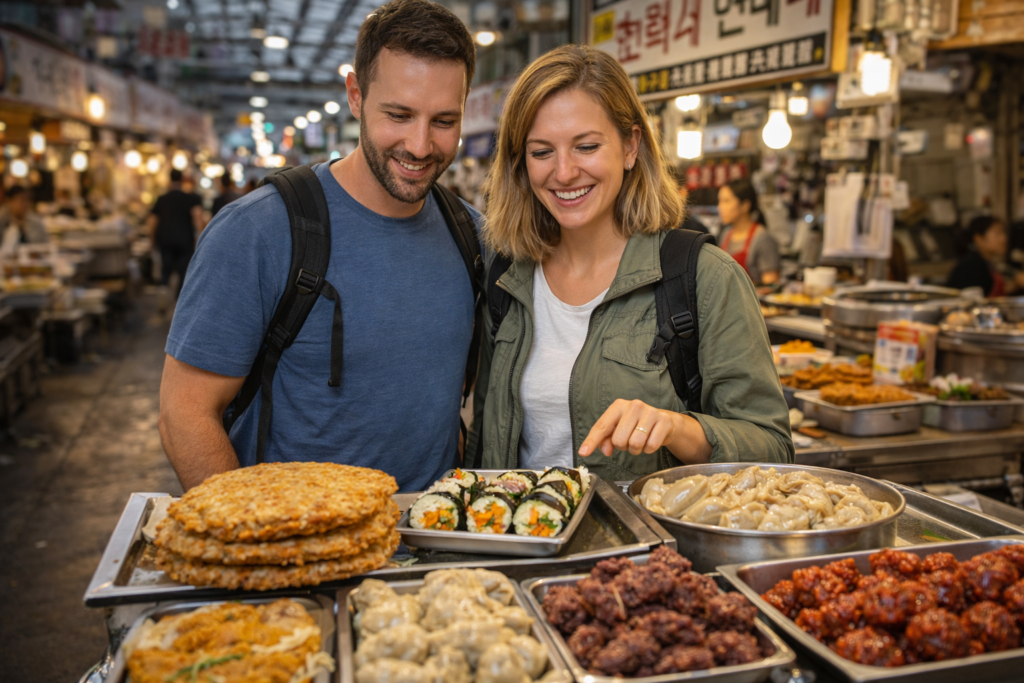
Below are the most realistic and traveler-friendly options inside Gwangjang Market. These are not all fully vegan stalls. Instead, they are the best places to start when you want tasty food with a reasonable chance of ordering plant-based successfully.
1) Mung Bean Pancake Stalls (Bindaetteok) 🥞
This is the classic Gwangjang Market food. A plain mung bean pancake can be one of the best vegan-friendly bites in the market because the base is made from ground mung beans and vegetables.
What to ask: “No kimchi, no meat, please.” Also ask whether it is cooked in the same oil or on the same griddle as meat items.
Best for: Travelers who want a famous local dish with a crispy, savory texture.
My personal tip: order this early, before the lunch rush. The pancake tastes best when it comes straight off the hot griddle.
2) Mayak Gimbap Stalls 🍙
Mayak gimbap is one of the easiest street foods for foreign visitors to try. The original version is small, simple, and snackable. Some stalls offer versions that are closer to vegan than others.
What to ask: Confirm that there is no egg, fish cake, tuna, or crab stick. Ask for a vegetable-only version if possible.
Best for: A quick snack, light lunch, or easy take-away food while exploring the market.
3) Dumpling Stalls with Tofu or Kimchi Mandu 🥟
Some dumpling stalls in Gwangjang Market are known among plant-based travelers for tofu or kimchi dumplings. But this category needs the most careful checking.
What to ask: “Is there meat? Is there egg? Is the kimchi vegan?” If the seller understands, also ask about fish sauce.
Best for: Visitors who want something warm, filling, and easy to share.
4) Tteokbokki Stalls with Custom Requests 🌶️
Tteokbokki can sometimes work for vegans, but only sometimes. The red sauce may contain anchovy broth, and many stalls add fish cakes automatically.
What to ask: “No fish cake. No fish broth. Only rice cakes, please.”
Best for: Flexible eaters who are okay asking extra questions and skipping a dish if the answer is unclear.
5) Sweet Snack Stalls: Hotteok or Red Bean Bungeoppang 🍯
For dessert, sweet red bean snacks are often the easiest win. A red bean-filled fish-shaped pastry or seed-filled hotteok can be vegan-friendly, depending on batter and butter use.
What to ask: “Any egg? Any milk? Butter?”
Best for: A safe-feeling finish after a savory meal.
Best overall pick for strict planning: vegetable kimbap or clearly confirmed dumplings.
Best iconic local pick: plain mung bean pancake with direct confirmation.
Best easy snack: mayak gimbap.
📌 3. Practical Strategy for Ordering Vegan Food at Gwangjang Market
You do not need perfect Korean to eat well here. You just need a smart system.
Step 1: Visit before peak lunch time
Late morning is usually easier than the busiest lunch window. Sellers may have a little more time to answer your questions.
Step 2: Start with the safer dishes
Try vegetable gimbap, plain mung bean pancake, or sweet red bean snacks first. Save broth-based dishes and kimchi-heavy dishes for later if you feel confident.
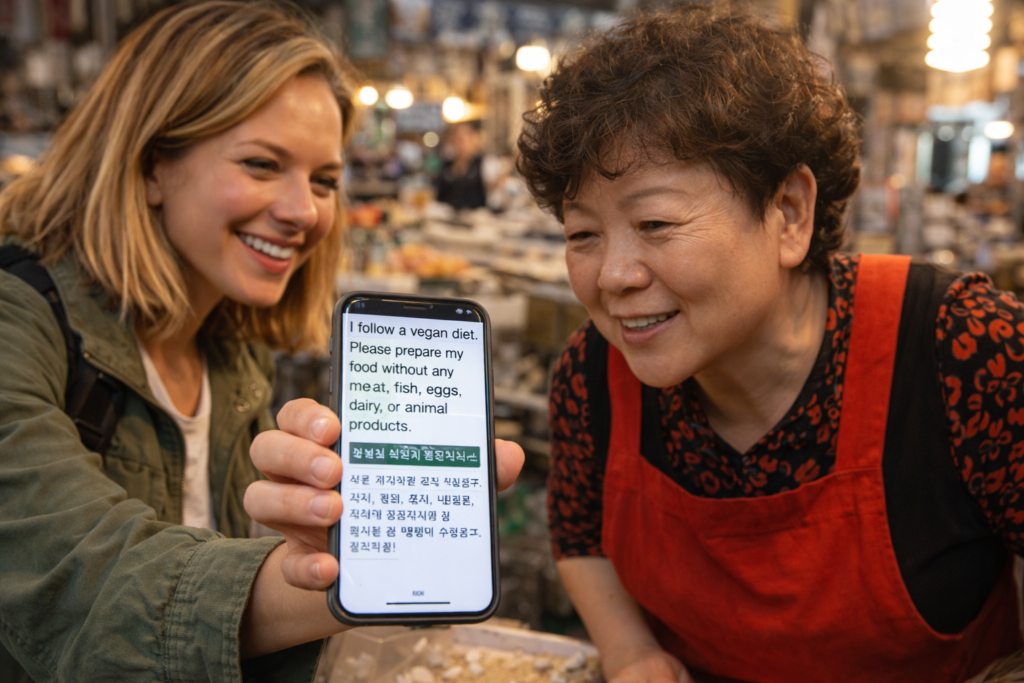
Step 3: Use a simple vegan check phrase
Show this on your phone:
“I don’t eat meat, fish, egg, milk, or fish sauce. Can you make this with vegetables only?”
Step 4: Accept that some dishes are “vegan-friendly,” not fully vegan
This is important. In traditional markets, there is often a gray area. Some dishes are plant-based in ingredients but cooked near meat. Decide your standard in advance.
Step 5: Build a mini tasting route
A great strategy is to share 3 small dishes instead of ordering one big plate. For example:
- 1 vegetable-style gimbap
- 1 confirmed plain mung bean pancake
- 1 sweet red bean snack
My personal tip: I never ask five questions at once. I ask one clear question, get the answer, then move to the next. It keeps the interaction friendly and much easier.
📋 4. Quick Comparison Table
| Dish / Stall Type | Vegan-Friendliness | What to Check | Price Range | Best For |
|---|---|---|---|---|
| Mung Bean Pancake Stall | Medium | Kimchi, meat topping, shared oil | ₩5,000–₩7,000 | Iconic local food |
| Mayak Gimbap Stall | Medium to High | Egg, fish cake, imitation crab | ₩3,000–₩5,000 | Quick snack |
| Tofu / Kimchi Dumpling Stall | Medium | Meat filling, egg, fish sauce in kimchi | ₩5,000–₩8,000 | Warm, filling bite |
| Tteokbokki Stall | Low to Medium | Anchovy broth, fish cake | ₩4,000–₩6,000 | Spicy food lovers |
| Hotteok / Bungeoppang Stall | Medium to High | Egg, milk, butter | ₩2,000–₩4,000 | Dessert |
💰 5. Budget and Value: Is Gwangjang Market Worth It for Vegans?
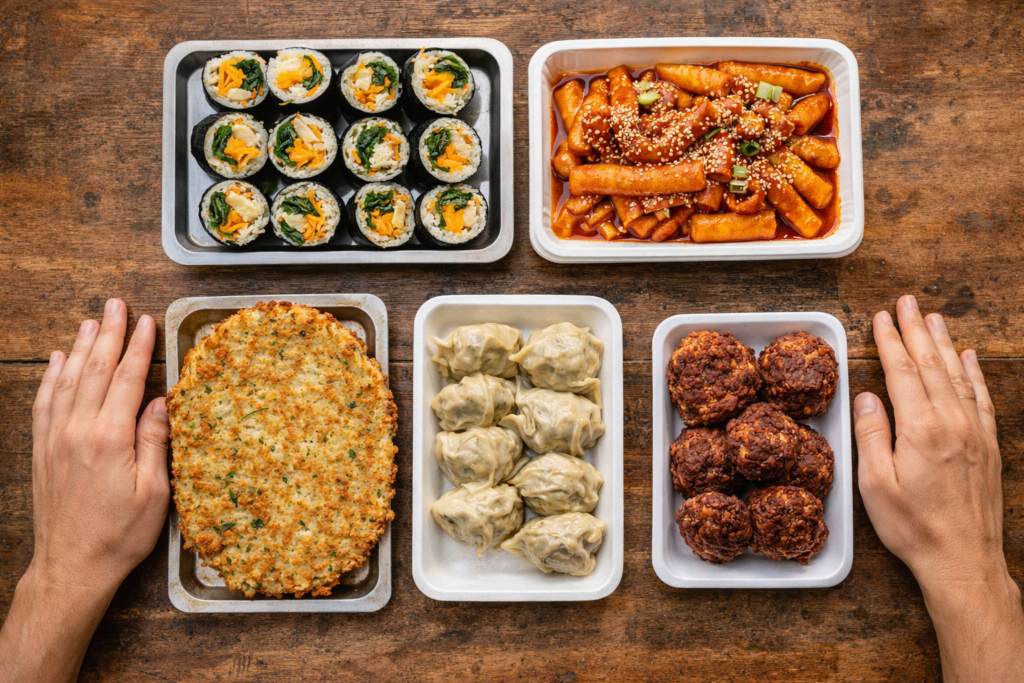
Yes, especially if you are flexible and informed.
A practical vegan-friendly tasting set at Gwangjang Market often costs around ₩10,000 to ₩18,000 per person. That usually covers two savory items and one dessert-sized snack.
- Budget traveler: ₩6,000–₩10,000 for one snack + one filling item
- Average food explorer: ₩10,000–₩18,000 for 2–3 items
- Share-style visit for two: ₩20,000–₩30,000 for multiple dishes to compare
Compared with a fully vegan restaurant in central Seoul, Gwangjang Market often gives you:
- more variety in one stop,
- lower per-dish prices,
- and a much more traditional Seoul atmosphere.
The trade-off is clear. You save money and gain cultural experience, but you must ask more questions.
For many travelers, that trade is worth it.
✅ Final Thoughts
If you are vegan or plant-based, Gwangjang Market is not impossible. You just need the right expectations.
The best approach is simple: start with easy wins like vegetable-style gimbap and red bean snacks, ask careful questions before ordering pancakes or dumplings, and stay cautious with kimchi and broth-based dishes.
Done right, Gwangjang Market can still become one of the most memorable food stops on your Seoul itinerary.
If your goal is to enjoy authentic Korean street food without completely giving up your plant-based lifestyle, this market is absolutely worth visiting.
❓ FAQ
Is Gwangjang Market good for strict vegans?
It can be enjoyable, but it is better described as vegan-friendly than fully vegan. Strict vegans need to ask about fish sauce, egg, broth, and shared cooking surfaces.
What is the safest vegan-friendly food to try first?
Vegetable-style gimbap and sweet red bean snacks are usually the easiest starting point.
Can I find fully vegan stalls inside Gwangjang Market?
That may change over time, so it is better not to assume. Check updated apps or recent reviews before visiting.
Is kimchi vegan in Korea?
Often, no. Many versions include fish sauce or other seafood-based seasoning.
How much should I budget for a vegan-friendly food crawl here?
Most travelers can enjoy a small tasting route for around ₩10,000 to ₩18,000.