
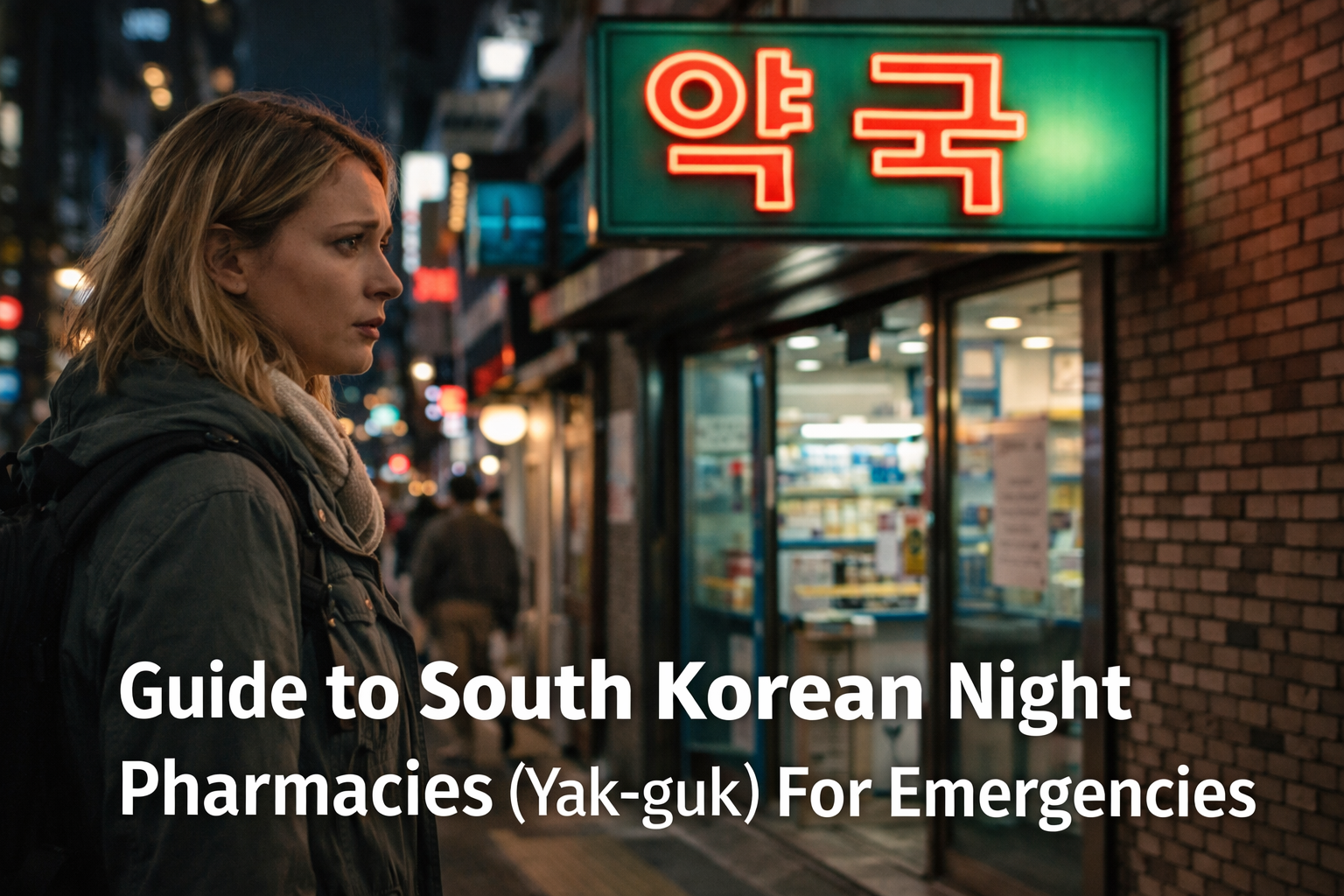
Getting sick late at night in a foreign country is stressful. It feels even worse when you do not know where to find medicine, how to explain your symptoms, or whether a pharmacy is still open.
If you are traveling in South Korea, the good news is that help is usually closer than you think. Korea has a strong emergency support system, useful pharmacy search tools, and many pharmacists who deal with sudden late-night needs such as fever, stomach pain, colds, allergies, and minor travel-related illnesses.
This guide explains how South Korean “night pharmacies” work, how to find one fast, what to prepare before you go, and when you should skip the pharmacy and go straight to emergency care instead.
Target keywords: Korea night pharmacy, late-night pharmacy Korea, South Korea emergency pharmacy, yak-guk in Korea, pharmacy open at night in Seoul
📌 ON THIS PAGE
- 💡 How night pharmacies work in South Korea
- 📊 5 things to check before choosing a pharmacy
- 📍 Best ways to find a late-night or holiday pharmacy
- 📋 Quick comparison table
- 💰 Time, cost, and convenience benefits
- ❓ FAQ for foreign travelers
💡 How Night Pharmacies Work in South Korea
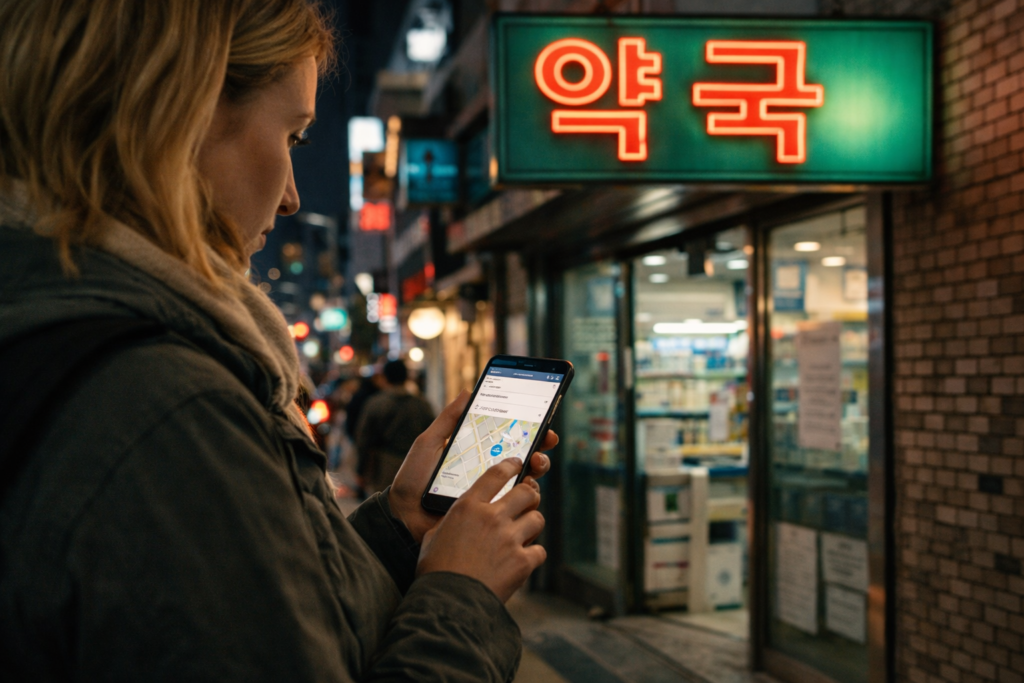
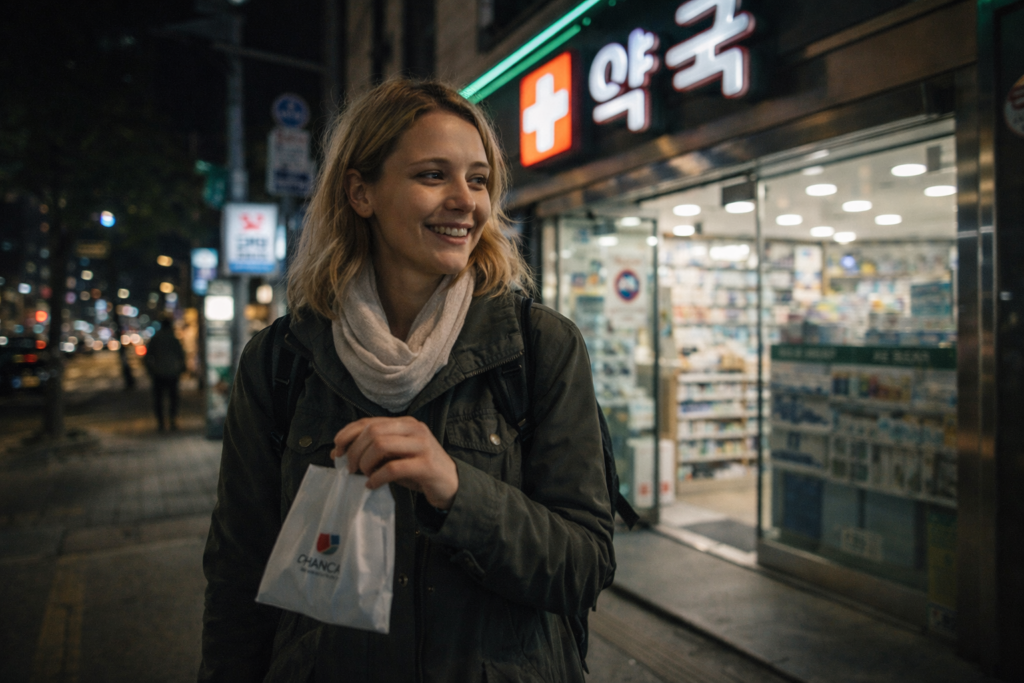
In Korea, a pharmacy is called yak-guk (약국). Most regular pharmacies are not open all night. That is why travelers should understand the difference between a standard pharmacy, a holiday-duty pharmacy, and a public late-night pharmacy.
A holiday-duty pharmacy is a pharmacy that stays open on Sundays, public holidays, or during special holiday periods. A late-night pharmacy stays open later than usual, and in Seoul, the city operates designated public late-night pharmacies that generally run from 10 PM to 1 AM.[4]
For broader emergency medical support, Korea’s official emergency system also provides tools to find nearby hospitals and pharmacies, and emergency numbers such as 119 and 1339 can help in urgent situations.[1][2][3]
My tip: On your first day in Korea, save one nearby pharmacy in your map app. It takes two minutes, and it can save you a lot of panic later that night.
Night pharmacies are best for minor but urgent problems such as:
- Fever or headache
- Upset stomach or diarrhea
- Cold medicine and cough relief
- Allergy symptoms
- Bandages, antiseptic, and basic first aid
- Prescription pickup if the pharmacy is dispensing during its operating hours
But if you have chest pain, breathing trouble, severe bleeding, loss of consciousness, a major allergic reaction, or intense dehydration, do not waste time searching for a pharmacy. Call 119 or go to an emergency room immediately.[2][3]
📊 5 Things to Check Before Choosing a Pharmacy
Not every open pharmacy will be the right one for your situation. Here are the five most important things to check.
1. Actual opening hours
Do not rely only on map apps or old blog posts. Korea’s official duty-pharmacy information changes by date, district, and holiday schedule. Always verify the operating time on the same day.[1][5]
2. Distance from your hotel or Airbnb
When you feel sick, even a short subway ride can feel exhausting. Choose the closest verified option first, especially late at night.
3. Your symptom type
Pharmacists can help with many over-the-counter medicines, but they are not a replacement for emergency treatment. If your symptoms are serious or worsening fast, choose a hospital, not a pharmacy.[2][3]
4. Language support
Many travelers get by with simple English, translation apps, and photos of the medicine they normally use. Korea Tourism Organization also recommends using translation tools and showing a photo of the medicine when needed.[5]
5. Backup contact options
If the pharmacy closes earlier than expected or you cannot find one nearby, call a support line. 1339 helps with medical emergencies, and 1330 is a 24/7 Korea Travel Hotline that supports multiple languages for travelers.[2][3]
My tip: Screenshot the pharmacy name, address in Korean, and phone number before leaving your room. Taxi drivers and local residents can help much faster when the Korean text is ready.
My tip: If you use regular medication at home, keep a photo of the box, active ingredient, and dosage on your phone. That works much better than just saying the brand name.
📍 Best Ways to Find a Late-Night or Holiday Pharmacy
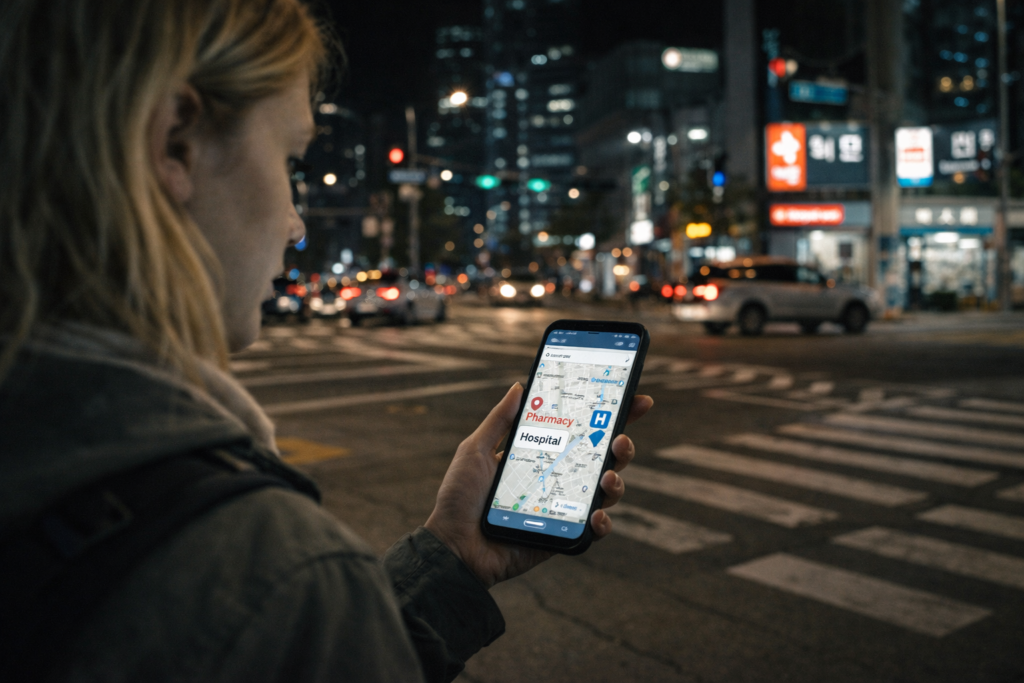
These are the most practical methods for foreign visitors.
1. Use the E-Gen emergency medical portal
The National Emergency Medical Center’s E-Gen portal is one of the most reliable official tools for finding emergency medical resources in Korea.[1] It is especially useful when you need verified, same-day information.
How to use it:
- Open the E-Gen site on your phone.
- Search by area or current location.
- Select pharmacy results.
- Check the phone number and hours before you go.
2. Use Pharm114 for holiday-duty pharmacies
The Korean Pharmaceutical Association operates Pharm114, the official holiday-duty pharmacy system.[5] It is commonly used to find pharmacies open on Sundays, public holidays, and certain evening hours.[6]
3. In Seoul, check public late-night pharmacies
If you are in Seoul, the city currently operates 39 public late-night pharmacies across all 25 districts, and they generally run from 10 PM to 1 AM.[4] This is one of the most useful options for travelers staying in Seoul neighborhoods outside major hospital zones.
4. Call 1339 or 1330
If you are too sick to search properly, or the websites feel confusing, call instead.
- 119 = emergency ambulance and urgent emergency response[2][3]
- 1339 = medical emergency information and infectious disease emergency line[2][3]
- 1330 = Korea Travel Hotline with multilingual support for travelers[2][3][5]
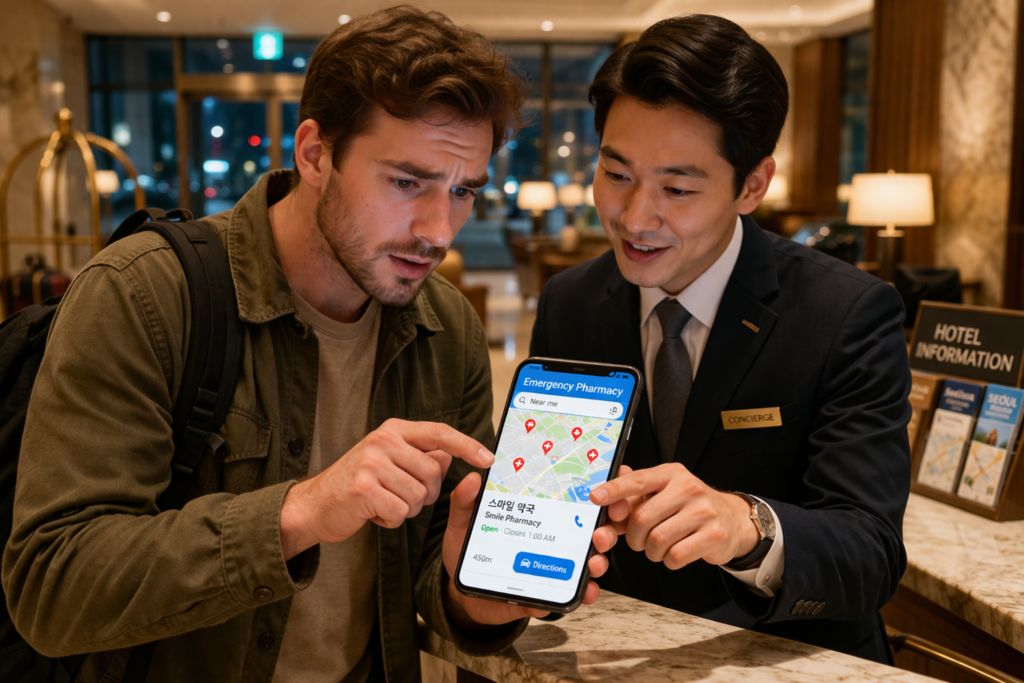
5. Ask your hotel front desk
Many hotels in Korea are used to helping international guests find a nearby pharmacy or hospital. If your symptoms are mild, the front desk may be the fastest shortcut.
My tip: Late at night, call before you walk. A pharmacy may still appear “open” online even when the pharmacist is about to close.
📋 Night Pharmacy vs Emergency Room vs Travel Hotline
| Option | Best For | Typical Use Time | Main Advantage | Watch Out For |
|---|---|---|---|---|
| Night / Holiday Pharmacy | Fever, cold, stomach issues, allergy, minor first aid | Evening, weekends, holidays, some late-night hours | Fast access to medicine and pharmacist advice | Not every pharmacy is open every night |
| Seoul Public Late-Night Pharmacy | Minor urgent symptoms in Seoul after normal business hours | Usually 10 PM to 1 AM | Reliable late-night option across Seoul districts | Seoul-focused service, not nationwide |
| Emergency Room | Severe pain, breathing trouble, injury, dehydration, serious reactions | 24/7 | Immediate medical treatment | Longer wait and higher cost for non-critical cases |
| 1339 | Medical emergency guidance | Emergency situations | Helps connect you with appropriate care | Not a replacement for an ambulance in life-threatening cases |
| 1330 Travel Hotline | Traveler support, interpretation help, general guidance | 24/7 | Useful multilingual support for visitors | Not emergency treatment itself |
💰 Time, Cost, and Convenience Benefits
Choosing the right option can save you both time and money during your trip.
For mild symptoms, visiting a pharmacy first is often the most efficient move. Instead of spending hours in an emergency room for a non-critical issue, you may be able to get pharmacist guidance and over-the-counter medicine much faster.
- Time saved: potentially 1 to 3+ hours compared with waiting at a busy emergency room for a minor issue
- Transport savings: walking to a nearby pharmacy can avoid unnecessary taxi or ambulance costs
- Trip protection: quick symptom relief can save a full day of sightseeing or travel plans
- Stress reduction: having backup numbers and pharmacy tools ready lowers panic during emergencies
In Seoul alone, public late-night pharmacies recorded 249,029 transactions in 2025. Of those, 79.5% were over-the-counter medicine purchases, showing how often people use these pharmacies for urgent but non-hospital-level needs.[4]
The most common late-night purchases in Seoul were:
- 30.4% pain, fever, and anti-inflammatory medicines
- 21.8% digestive medicines
- 10.6% respiratory medicines[4]
That pattern tells travelers something important: most late-night pharmacy visits are not dramatic emergencies. They are real problems, but often manageable with fast access to the right medicine and a pharmacist’s advice.
❓ Final Tips & FAQ
South Korea is a convenient country for travelers, but health problems feel bigger at night. The smart move is simple: know the difference between a pharmacy and an emergency room, save the right numbers, and check official pharmacy tools before you actually need them.
If you are traveling in Seoul or anywhere else in Korea, preparing just once can make a late-night illness much easier to handle.
FAQ 1. What is a Korean “night pharmacy”?
It usually means a pharmacy open later than regular hours, or a duty pharmacy operating at night, on weekends, or on public holidays.
FAQ 2. Is there a 24-hour pharmacy in Korea?
Some areas have very late pharmacies, but not every neighborhood has a true 24-hour option. In Seoul, public late-night pharmacies generally operate from 10 PM to 1 AM, so always verify the schedule first.[4]
FAQ 3. Can foreigners buy medicine at Korean pharmacies?
Yes. Foreign travelers can buy many over-the-counter medicines directly. For prescription medicines, you may need a valid Korean prescription or a medical consultation depending on the product.
FAQ 4. Which number should I call in a real emergency?
Call 119 for urgent medical emergencies. You can also use 1339 for medical emergency guidance and 1330 for multilingual travel help.[2][3][5]
FAQ 5. What should I bring to a pharmacy in Korea?
Bring your passport if available, a translation app, a photo of your usual medicine, your allergy information, and the Korean address of your accommodation.
SEO meta description suggestion: Learn how to find a night pharmacy in South Korea during emergencies. This guide explains yak-guk, late-night pharmacy tools, 119, 1339, and traveler-friendly tips for fast help.