
If you are traveling in Korea for the first time, booking an express bus can feel confusing. The KOBUS website is available in English, but some booking fields still look unfamiliar to international travelers. That is exactly where many people get stuck.
I have seen this happen often with visitors planning routes like Seoul to Busan, Seoul to Jeonju, or Seoul to Gyeongju. They know the official site is KOBUS, but they are not sure what to enter when the system asks for identity details, contact information, or payment verification.
This guide will help you understand the safest and most practical way to book a KOBUS ticket as a foreign traveler. You will learn what to prepare, how to reduce booking errors, when your passport number matters, and what to do if the online flow does not work smoothly.
For official route and service guidance, check the VisitKorea express bus information guide. If you live in Korea or want an official foreign-resident guide, the Seoul city guide for foreign residents also points travelers to KOBUS.
💡 1. 5 Key Things to Check Before You Book
1) Make sure your route is actually on KOBUS
KOBUS handles Korea’s express bus network. That is perfect for many major long-distance routes. But not every bus in Korea is on the same platform. Some routes may belong to a different intercity system.
Always search your route first. If you cannot find your departure or arrival terminal, the route may not be operated through KOBUS.
2) Prepare your passport exactly as shown on your travel document
Your name should match your passport. Do not shorten it casually. Do not switch the order unless the booking form clearly tells you to. When travel systems and terminal staff compare your reservation with your ID, even a small mismatch can slow things down.
My personal tip: I always keep a screenshot of the passport photo page and type the name exactly as printed. It prevents silly spelling mistakes when I am booking on mobile.
3) Use a card that works for international online payments
This sounds obvious, but it is one of the biggest pain points. Some overseas cards work fine. Some do not. If your card fails, it may not mean your route is unavailable. It may simply be a payment compatibility issue.
4) Double-check the terminal name, not just the city name
Korea has multiple terminals in the same metro area. Seoul is the best example. If you choose the wrong terminal, your ticket may still be valid for a completely different departure point.
5) Book earlier for weekends, holidays, and peak seasons
Premium seats and popular departure times sell quickly. This is especially true on Friday evenings, Sunday afternoons, and long holiday periods. If your schedule matters, do not wait until the last minute.
My personal tip: If I have a countryside trip on a Saturday morning, I try to lock in the ticket at least 2 to 4 days early. That simple habit has saved me more than once.
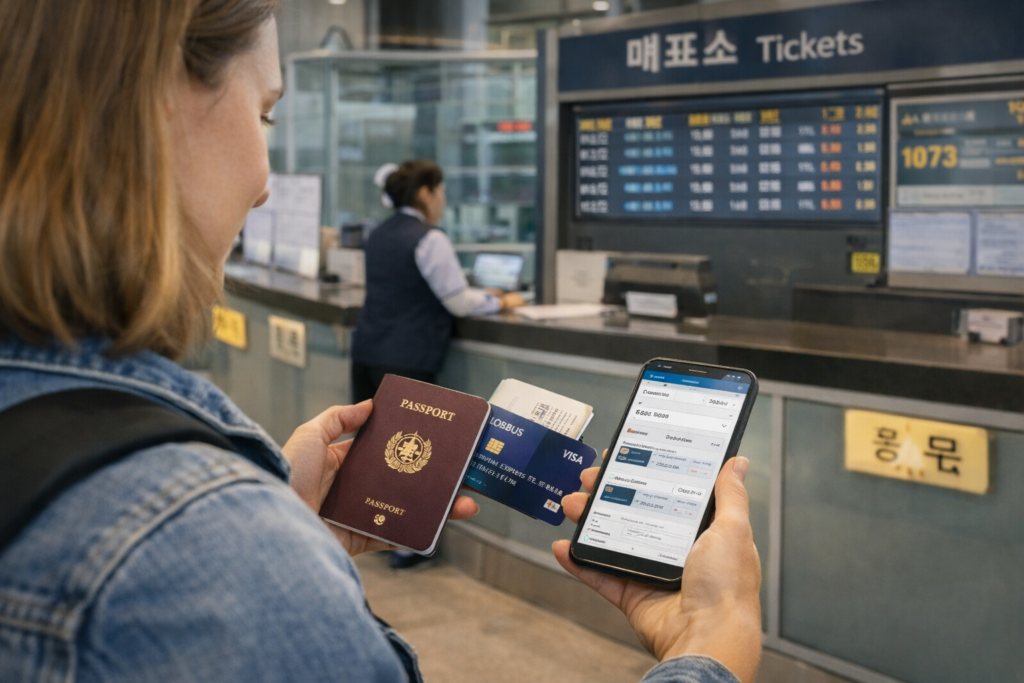
📊 2. Step-by-Step KOBUS Booking Process for Foreign Travelers
Option A: Book online through the KOBUS website
- Go to the KOBUS website and switch to English.
- Choose your departure terminal, arrival terminal, date, and number of passengers.
- Select a bus departure time and seat grade.
- Enter passenger details exactly as requested.
- Use your passport information consistently if the reservation requires identity matching.
- Complete payment with your card.
- Save the confirmation page, booking number, and payment details.
Here is the important part: international travelers often worry about the “passport number” step. In practice, what matters most is consistency. Use the same passport details you will carry on the travel day. If the website’s identity or contact fields feel unusually local, do not guess recklessly. Take screenshots, save your partial progress, and move to a backup option if needed.
Option B: Book at the terminal counter
If the website does not accept your card or the booking form looks unclear, the terminal counter is often the most stress-free solution. Bring your passport, know your destination in English and Korean if possible, and arrive early.
For many first-time travelers, this is actually the easiest method. It removes uncertainty around identity fields and payment verification.
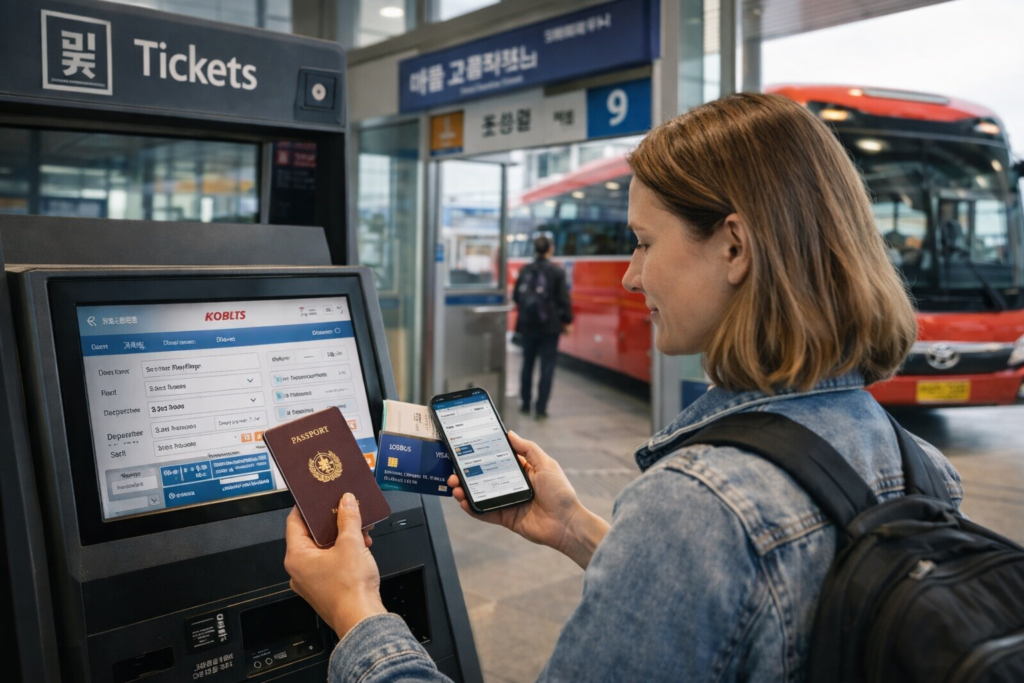
Option C: Use a kiosk at the bus terminal
Some terminals offer self-service kiosks with multilingual support. This is useful if you are already in Korea and want a same-day or next-day ticket. It is faster than waiting in line at busy hours, but not every kiosk is equally foreigner-friendly.
What to do if the system asks for details that seem Korean-specific
Do not panic. This is where many travelers get stuck. If a field appears to be for local verification and the English interface does not clearly explain it, your safest move is to stop before payment rather than risking a bad booking. Then use the terminal counter or a verified alternative sales channel for foreigners.
My personal tip: If a Korean transport site feels awkward in English, I do not keep retrying the same failed payment. I switch to a desktop browser once, then move to in-person booking if it still looks unreliable.
📌 3. Smart Booking Tips That Actually Work
Take screenshots of every step
Always capture the schedule, selected bus, payment page, and confirmation screen. If something goes wrong later, screenshots make it much easier to solve the issue at the terminal.
Keep your passport and payment card together on travel day
If staff need to verify your purchase, you will be glad you have both with you. This is a simple habit, but it reduces stress at boarding time.
Arrive 20 to 30 minutes early
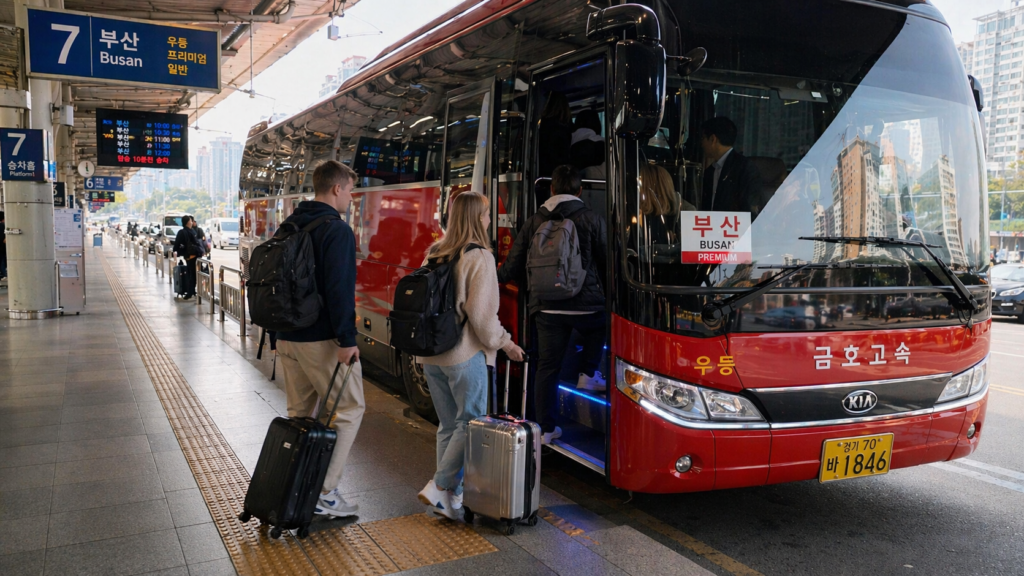
Korean express bus terminals are efficient, but first-time travelers still need a few minutes to find the right gate, platform, and boarding sign.
Translate your terminal names into Korean
Search the Korean names of both terminals and save them in your phone. This helps when asking staff for help.
Choose your seat class carefully
Standard class is affordable and practical. Premium or excellent class gives you more personal space and a more comfortable ride. On longer routes, paying a bit more can be worth it.
📋 4. KOBUS Booking Comparison Table
| Booking Method | Best For | Main Advantage | Main Risk | My Verdict |
|---|---|---|---|---|
| KOBUS Website | Confident travelers booking major routes | Fast and convenient | Possible payment or form confusion | Best when the route and payment work smoothly |
| Terminal Counter | First-time visitors | Human help with passport and route questions | Lines during busy periods | Safest option for beginners |
| Terminal Kiosk | Travelers already in Korea | Quick self-service booking | Language support may vary | Good backup choice |
| Third-Party Foreigner-Friendly Channel | Travelers with card or website issues | Simpler foreign-user flow | May add service limitations or less flexibility | Useful fallback when KOBUS is difficult |
💰 5. Time and Cost Benefits of Booking the Right Way
Booking your bus correctly is not just about convenience. It has real practical value.
- Time saved: 20 to 60 minutes by avoiding wrong terminals, failed payments, or last-minute counter confusion.
- Stress reduced: much lower risk of missing a sold-out departure on busy weekends.
- Budget control: express buses are often cheaper than KTX for many domestic routes.
- Comfort gain: upgrading to a better bus class on long routes can feel worth the extra cost compared with standing or transferring more often on local transport.
For budget-conscious travelers, the express bus is one of the best transport choices in Korea. You get nationwide coverage, simple terminal access, and predictable fares. That balance is why I still recommend buses for many routes outside the Seoul-to-Busan train-first mindset.
My personal tip: On medium-to-long trips, I compare the total journey, not just the ticket price. A bus that leaves from a terminal near my hotel can be cheaper overall than a train that requires extra subway transfers and luggage stress.
Final Thoughts
If you want the most realistic advice, here it is: yes, KOBUS is the official platform for Korea’s express bus network, but foreign travelers should prepare for a booking process that is not always perfectly intuitive. Your passport matters because your reservation details should match the ID you carry. But your actual success often depends just as much on terminal choice, payment compatibility, and how carefully you save your confirmation details.
If the website works smoothly, great. Book online and keep your records. If not, do not waste your energy fighting the system for an hour. Go to the terminal counter, bring your passport, and solve it the easy way. In Korea, that is often the smarter travel move.
❓ FAQ
1. Can I really book a KOBUS ticket as a foreign tourist?
Yes. KOBUS is the official express bus booking site used for many long-distance bus routes in Korea. The website has multilingual support, including English.
2. Do I always need to enter my passport number on KOBUS?
Not every public guide clearly explains the exact screen flow for foreign users. The practical rule is simple: keep your reservation details consistent with the passport you will carry on the travel day.
3. What if my foreign credit card does not work?
Try once more on a desktop browser. If it still fails, buy the ticket at the terminal counter or use a foreigner-friendly alternative booking channel.
4. Is it better to book online or in person?
Online is faster if everything works. In person is safer if you are unfamiliar with Korean terminals, local booking forms, or card verification steps.
5. How early should I arrive at the terminal?
I recommend arriving 20 to 30 minutes before departure, especially if it is your first time using that terminal.