

Yes. Tourists can get a Seoul Climate Card refund without a Korean bank account. Seoul specifically states that foreigners without a bank account in Korea can visit Tmoney headquarters for an in-person refund, and its Korean-language guidance describes this route as a cash refund.
The main restriction is timing: you must start the refund process while the pass is still eligible for refund. If you use a physical Climate Card, registration and the card-use-stop procedure also matter.
Quick answer: No Korean bank account does not automatically prevent a Climate Card refund. If a Korean bank transfer is not available, foreigners can use the Tmoney headquarters refund route. Eligible credit or debit card payments may also be handled through partial payment cancellation.
What the Climate Card Refund Rule Means for Tourists
The former prepaid 30-day Climate Card can no longer be recharged after August 31, 2026. The 1-, 2-, 3-, 5-, and 7-day short-term passes continue and are the Climate Card products most relevant to short-term visitors.
According to the Seoul Metropolitan Government Climate Card guide, the standard refund calculation is:
Refund = amount charged − recorded public-transport use − applicable refund fee
The normal refund fee is KRW 500. However, Seoul’s detailed refund guidance says the fee may be waived in certain cases, including a refund requested before the pass starts or when the resulting refund amount is below KRW 1,400.
For example, if a 7-day pass was charged with KRW 20,000 and the recorded transportation use before cancellation was KRW 8,000, the standard calculation with the KRW 500 fee would leave KRW 11,500.
If your recorded public-transport use has already reached or exceeded the amount charged to the pass, there may be no refundable amount even if time remains on the pass.
Can You Get a Refund Without a Korean Bank Account?
Yes. Seoul explicitly states that foreigners without a domestic Korean bank account can visit Tmoney headquarters for a refund. The current Korean-language Seoul guidance specifies that this route is a cash refund.
| Situation | Refund Route |
|---|---|
| You have an eligible Korean bank account | A bank-transfer refund may be available through the standard procedure. |
| You paid with an eligible credit or debit card | Seoul also lists partial cancellation of the original card payment as a refund method. |
| You are a foreigner without a Korean bank account | Seoul directs you to Tmoney headquarters for an in-person refund. |
| The pass has already expired | The normal refund is no longer available. |
| Your physical Climate Card was never registered | The standard physical-card refund is not available. |
If you paid with a foreign-issued credit or debit card, do not assume that every issuer or transaction will handle partial cancellation identically. International-card acceptance when buying a pass and successful refund processing are separate issues.
Refund the Pass Before It Expires
Seoul states that the refund request must be made within the permitted use period. Refunds are not available after the pass expires, including normal, lost, and defective-card cases.
Short-term Climate Card passes begin on the date they are charged. They are not 24-hour passes measured from the exact purchase time. A 1-day pass charged on a particular day is valid through the eligible final public-transport service for that service day.
If you already know you will stop using the pass before leaving Korea, check the expiration date before your last travel day rather than assuming the refund can be handled after departure.
How the Physical Climate Card Refund Process Works
1. Make sure the physical card was registered
Physical Climate Cards must be registered through Tmoney Card & Pay for the standard refund service. Seoul states that an unregistered physical card is not eligible for a normal refund.
Registration is separate from buying, charging, and using the card at subway gates, so this is easy for short-term visitors to overlook.
2. Stop the card at a supported subway machine
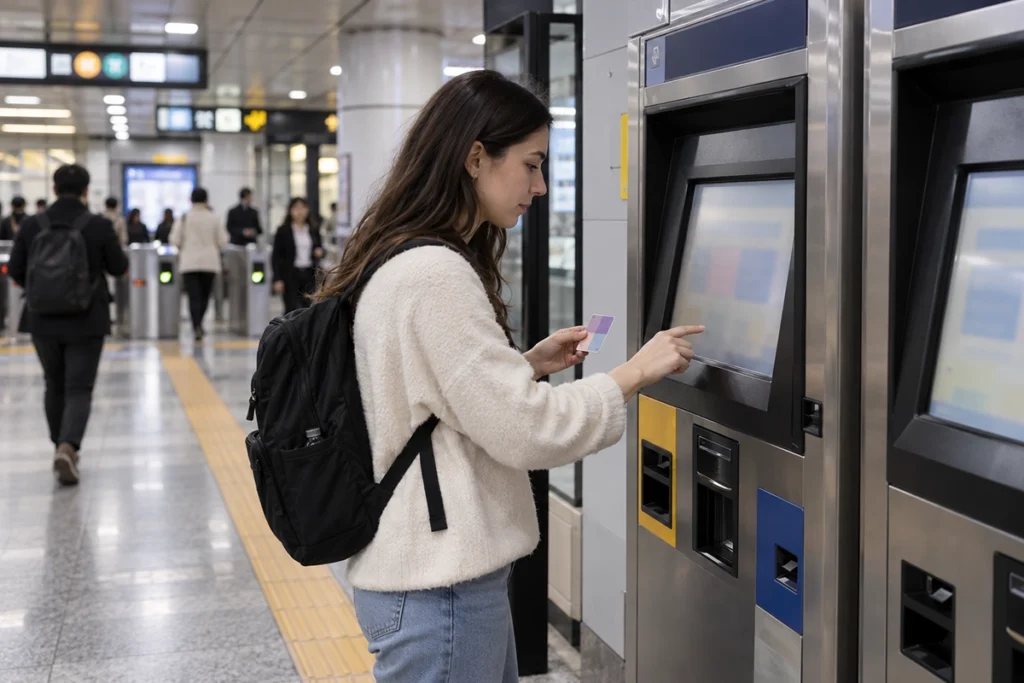
For the standard physical-card refund process, Seoul instructs the user to process a card-use stop at a supported subway charging machine before completing the refund application.
Current Seoul guidance lists supported charging equipment on Seoul Metro Lines 1–8, Line 9, the Ui-Sinseol Line, the Sillim Line, and other participating locations. Once the card is stopped for refund processing, the stop cannot simply be reversed.
3. Complete the standard online application when applicable
For the normal physical-card procedure, Seoul allows the Tmoney Card & Pay refund application to be completed within 15 days after the pass expiration date, provided the required card-use stop was processed in time.
This additional online application period does not mean you can wait until an already expired pass to begin the cancellation process. The important action is to deal with the card while it is still within the eligible refund period.
Using the Tmoney Headquarters Route Without a Korean Account
For foreigners who cannot receive a Korean bank transfer, Seoul provides the Tmoney headquarters route.
Tmoney currently lists its headquarters at 110 Huam-ro, Jung-gu, Seoul, Seoul City Tower. Seoul Station Exit 10 connects to Seoul City Tower. You can check the official Tmoney headquarters directions before visiting.
Tmoney lists its customer-service number as 1644-0088. Seoul does not publish a detailed document checklist specifically for short-term foreign visitors using the headquarters cash-refund route, so contacting Tmoney before making a special trip is sensible if your card is damaged, lost, unregistered, or connected to an unusual payment transaction.
The KRW 3,000 Physical Card Price Is Separate
The physical Climate Card itself costs KRW 3,000. This card purchase price is separate from the short-term pass loaded onto it.
Seoul states that the physical card price is normally not refunded. Defective cards are handled under separate rules, so a refund of the unused portion of a pass does not normally include the KRW 3,000 card price.
Climate Card Refunds Are Different From T-money Balance Refunds
An ordinary T-money card stores a monetary balance that decreases as fares are charged. A Climate Card is a time-based transit pass and follows a different cancellation and refund calculation.
If you actually have an ordinary T-money card rather than a Climate Card, see the guide to using and refunding a T-money card in Seoul instead of following the Climate Card procedure.
If you are considering a refund because your Climate Card suddenly stopped working at a station, first check the pass validity, service area, and card-reading problem. The guide to what to check when a Seoul Climate Card does not work at the subway gate may help you determine whether the pass actually needs to be cancelled.
What to Do If You Are Leaving Korea Soon
- Check the Climate Card expiration date.
- If you use a physical card, confirm that it was registered.
- Check whether an eligible card-payment cancellation is available.
- If you need the standard physical-card refund, process the required card-use stop before the refund deadline.
- If you have no Korean bank account, use the Tmoney headquarters route and contact Tmoney first if your situation is unusual.
The key point is simple: a tourist does not need a Korean bank account in every case to receive a Seoul Climate Card refund. What matters most is using the correct refund route and acting before the pass is no longer eligible.