
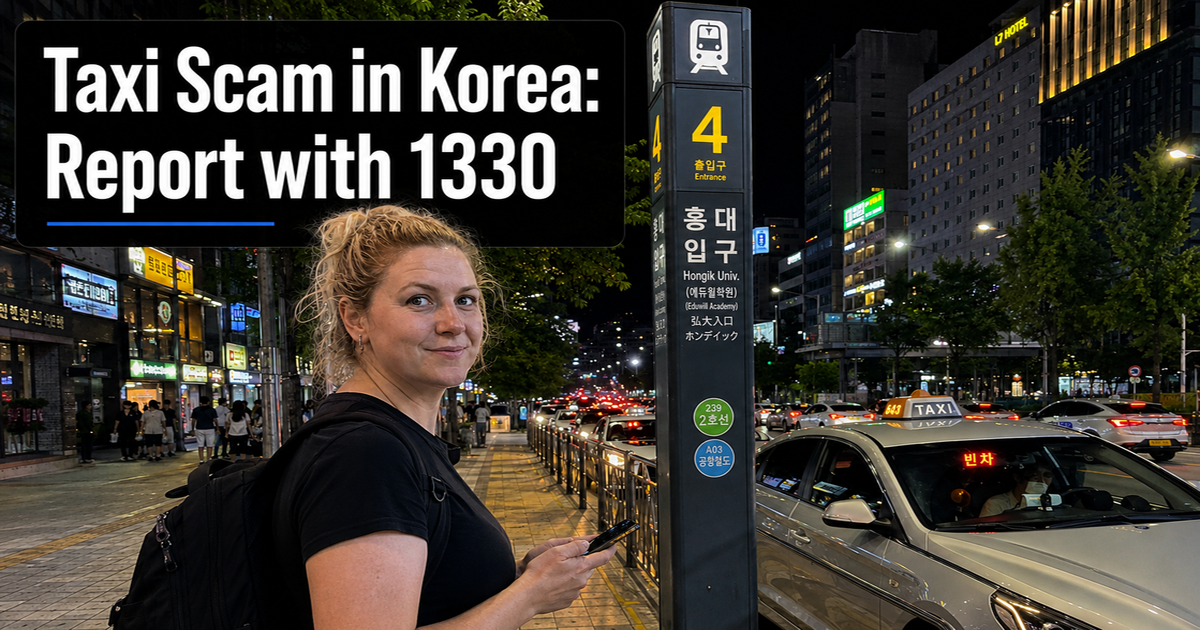
Last checked: August 2, 2026. Taxi fares, complaint channels and local rules can differ by city, so use the official links below for the latest information.
If you suspect a taxi overcharge or unfair taxi ride in Korea, focus on two things first: get to a safe place and save the ride details. Do not stay in a confrontation simply to collect more evidence.
For tourists who need help reporting a problem, the Korea Tourism Organization’s 1330 Travel Helpline & Complaint Center is a useful nationwide starting point. In Seoul, you can also report taxi problems directly through the 02-120 Dasan Call Center or the city’s multilingual Taxi QR Complaint System. If you are being threatened, assaulted, prevented from leaving, or are otherwise in immediate danger, call the police at 112.
Quick answer: Save the full taxi plate number, receipt or app record, payment record, route, pickup and drop-off points, date and time. Use 1330 for tourist complaint assistance, 02-120 Dasan Call Center or Taxi QR system for Seoul taxi complaints, and 112 when there is an immediate safety threat.
First Check Whether the Fare Was Actually Unfair
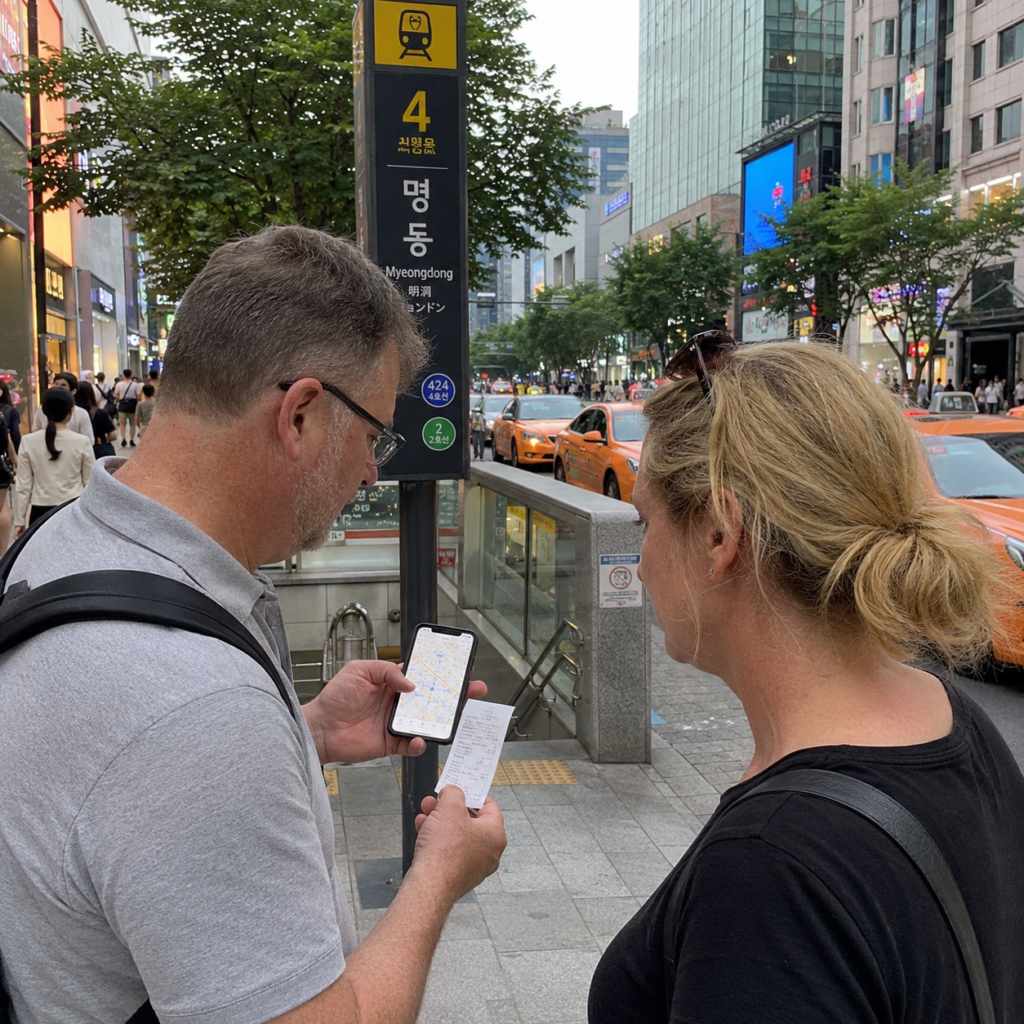
An expensive taxi ride is not automatically a scam. Traffic, late-night surcharges, travel outside city limits, toll roads, vehicle type and an approved fixed or flexible fare plan can all change the final amount.
For Seoul specifically, the official taxi fare rules currently include late-night surcharges of 20% or 40% depending on the time, an outside-city surcharge in applicable situations and separate toll charges. International taxis and some brand or large-vehicle services can also use approved fare structures that differ from an ordinary sedan taxi.
You can check the current rules on the Seoul Metropolitan Government taxi fare page.
For ordinary Seoul taxis, the city states that fares should normally be charged by the meter. However, separately approved fare plans can be exceptions, so a fixed amount is not automatically illegal simply because it differs from a normal meter fare.
Situations Worth Reporting or Asking About
- The driver did not use the meter when the ride should have been metered.
- The final amount did not match the meter or confirmed app fare.
- An unexplained extra charge was added after arrival.
- You believe an incorrect late-night or outside-city surcharge was applied.
- The driver took an unexplained route that appears inconsistent with the trip.
- You were refused service or experienced other unfair taxi behavior.
If you are uncertain whether a surcharge was legitimate, you do not have to accuse the driver of fraud. Save the details and ask 1330, 02-120 or the relevant local authority to check the fare.
Save These Details Before You Report
The strongest complaint is usually a factual record of one identifiable ride. Save what you can without extending or escalating a confrontation.
- Full license plate number: Photograph it after leaving the vehicle if doing so is safe.
- Taxi receipt: Keep the paper or electronic receipt.
- App booking record: Save the driver, vehicle, pickup, destination and fare information.
- Payment record: Save the card notification or payment history.
- Pickup and drop-off locations: Use specific addresses, hotel names or numbered station exits.
- Date and time: Record the time in Korea Standard Time.
- Route: Save a map screenshot showing the trip or expected route.
- What happened: Write one factual sentence while you still remember the details.
The full vehicle number is particularly important in Seoul. The Seoul Metropolitan Government states that the entire license plate number is needed when making a taxi complaint through the 02-120 Dasan Call Center.
If you need help checking the Korean address, route or station exit afterward, our Naver Map vs KakaoMap guide explains how to verify locations and routes in Korea.
1330, 02-120, QR or 112: Which One Should You Use?
| Situation | Where to start | What it is for |
|---|---|---|
| Tourist complaint anywhere in Korea | 1330 | Tourism assistance, interpretation and tourist complaint guidance |
| Seoul taxi overcharge, meter problem, refusal or service complaint | 02-120 Dasan Call Center | Direct Seoul taxi complaint channel |
| Seoul taxi complaint using a phone browser | Taxi QR Complaint System | Multilingual reporting for issues including overcharging and meter problems |
| Threat, violence or immediate danger | 112 | Police emergency response |
| Medical, fire or rescue emergency | 119 | Emergency medical, fire and rescue services |
1330 and 02-120 are complaint and assistance channels; they are not substitutes for 112 when personal safety is at immediate risk.
How to Report the Problem Through 1330
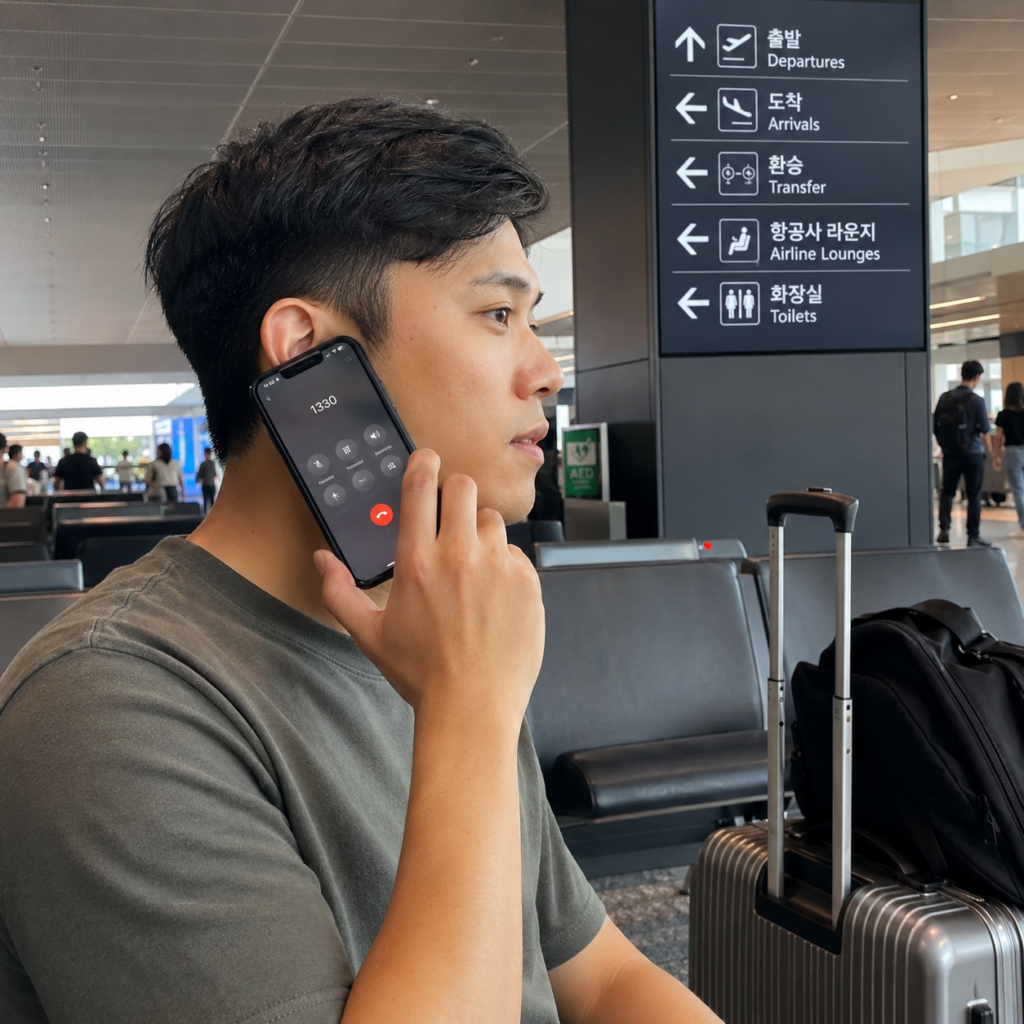
The Korea Tourism Organization operates the 1330 Travel Helpline & Complaint Center for domestic and international travelers. You can dial 1330 inside Korea or +82-2-1330 from overseas.
The service can help with tourism information, interpretation and tourist complaints. The Korea Tourism Organization also operates an online Tourist Complaint Center where complaints can be submitted and later transferred to the relevant authority for investigation and response.
Check the current options on the official 1330 Travel Helpline page or the Korea Tourism Organization Tourist Complaint Center.
What to Tell 1330
Start with a short factual summary rather than a long conclusion about whether the driver committed a crime.
“Hello. I am a tourist in Korea and I want to report a possible taxi overcharge. I have the full plate number, payment record, pickup and drop-off locations, route and time. Can you help me file the complaint or tell me the correct authority?”
Then provide the information requested by the counselor. If you used a taxi app, keep the reservation history open because it may contain the most useful identifying information.
How to Report a Seoul Taxi Directly
Option 1: 02-120 Dasan Call Center
Seoul’s official taxi guide directs passengers with taxi complaints to the 02-120 Dasan Call Center. The current English guidance lists foreign-language telephone support and states that the full license plate number is required for a taxi report.
You can review the latest fare and complaint information on the official Seoul taxi guide.
Option 2: Seoul Taxi QR Complaint System
Seoul also operates a multilingual QR complaint system specifically for taxi problems. The city says it can be used for complaints including overcharging, not using the meter and passenger refusal.
The system was introduced to make on-site reporting easier for foreign passengers, and Seoul has placed QR materials inside taxis and at major visitor locations. You can access the current system through the Seoul Taxi QR Complaint System information page.
Seoul has also been improving paper receipts so that foreign passengers can more easily identify the final fare, trip times and whether certain surcharges were applied. Keep the receipt if you receive one.
What to Do If You Are Still in the Taxi
If the issue is only a fare disagreement and you feel safe, short Korean phrases can help clarify what you want.
| Situation | Korean | Meaning |
|---|---|---|
| The meter is off | 미터기 켜 주세요. | Please turn on the meter. |
| You need a receipt | 영수증 주세요. | Please give me a receipt. |
| You want to pay by card | 카드로 결제할게요. | I will pay by card. |
| You want to get out | 여기서 내릴게요. | I will get off here. |
Do not keep arguing just to prove that you are right. If the interaction becomes threatening, ask to stop in a safe public area if possible and call 112 when you are in immediate danger.
If you are unsure of the location, move toward a hotel lobby, convenience store, airport information desk, subway station or another staffed public place.
If You Paid Cash or Have No Receipt
A cash payment without a receipt gives you less transaction evidence, but you can still save other details. Write down the approximate fare, route, time, pickup and drop-off points and full plate number as soon as possible.
If you booked through an app, the booking history may still identify the vehicle even if the final payment was made directly to the driver. Your phone’s map history and photos can also help establish where you were and when.
When filing the complaint, clearly state which evidence you do and do not have. Do not invent a fare, plate number or route detail to make the report look stronger.
Can You Get the Money Back?
Neither 1330 nor 02-120 should be treated as an instant refund service. A complaint may need to be forwarded, reviewed and investigated before you receive a response.
If you used a taxi app, report the ride through the app as well. The platform may hold driver, vehicle, route and fare records that are useful when reviewing the incident.
If you paid by card and believe the charged amount was improper, keep the receipt and contact your card issuer to ask whether its dispute process applies. If you authorized the ride and payment, describe the problem accurately as a fare dispute or suspected overcharge rather than claiming that the card transaction itself was unauthorized.
Whether any refund or card dispute succeeds depends on the circumstances, evidence, taxi operator, local authority and card issuer. A complaint number or written response can be useful supporting documentation, but it does not guarantee reimbursement.
How to Reduce the Risk Next Time
A small digital record makes both the ride and any later complaint easier to manage.
- Check the destination and approximate route before boarding.
- Show the driver the Korean address when possible.
- For an ordinary metered ride, check that the meter is operating.
- Keep the taxi or app receipt after payment.
- Match the license plate shown in the app before entering an app-dispatched vehicle.
- Do not pay twice if an app already charged the fare automatically.
- Use designated taxi stands at airports.
- Check whether an apparent fixed fare is an official airport, International Taxi or pre-booked service before assuming it is improper.
At Incheon Airport
Incheon International Airport specifically warns travelers about illegal solicitation and overcharging by call vans posing as taxis and recommends using designated taxi stands.
If you are traveling with several people or a large amount of luggage, pre-booking an appropriate vehicle can also make the fare structure and pickup point clearer. Our guide to how to book a large taxi in Seoul compares app-dispatched large vehicles and official airport options.
You can also check the official Incheon Airport taxi guide before choosing a vehicle at the airport.
Consider Public Transportation When It Is Practical
A taxi is useful for luggage, late-night travel and difficult door-to-door routes, but it is not necessary for every journey in Seoul. For many daytime trips, the subway or bus gives you a predictable fare and a clear route.
Our Seoul public transportation guide explains when the subway, bus, airport transportation or taxi is the more practical choice.
Taxi Complaint Checklist
Copy this into your notes app if you need to make a report:
- Date:
- Time:
- Pickup location:
- Drop-off location:
- Full taxi plate number:
- Taxi type or app:
- Fare charged:
- Payment method:
- Receipt available: Yes / No
- App booking record available: Yes / No
- Route screenshot available: Yes / No
- What happened in one factual sentence:
Keep the description specific. “The meter showed KRW ___ but I was charged KRW ___” is more useful than simply writing “the driver scammed me.”
Frequently Asked Questions
Should I call 1330 or 02-120 for a taxi problem in Seoul?
Either may be useful, but they have different roles. 1330 is a nationwide tourist assistance and complaint service. For a Seoul taxi complaint, Seoul also provides the 02-120 Dasan Call Center and its multilingual Taxi QR Complaint System.
When should I call the police at 112?
Call 112 when there is an immediate safety or crime concern, such as threats, violence or being prevented from leaving safely. An ordinary fare disagreement after the ride has ended can usually be handled through a taxi or tourism complaint channel instead.
Can I report a taxi problem after leaving Korea?
Yes. The Korea Tourism Organization lists +82-2-1330 for callers outside Korea and also provides an online Tourist Complaint Center. Keep your ride evidence because it becomes more difficult to identify a vehicle after you leave the country if you do not have the plate number or booking record.
Can I report the taxi if I do not have a receipt?
You can still ask 1330 or the relevant authority what options are available. A full plate number, app record, payment history, route, pickup and drop-off points and exact time may still help identify the ride.
Does a high late-night fare automatically mean I was overcharged?
No. Legal late-night, outside-city and toll charges can make a taxi substantially more expensive. Check the local fare rules and the type of taxi before deciding whether the amount was improper.
Final Takeaway
If a taxi fare in Korea looks wrong, do not make the confrontation bigger just to collect evidence. Get somewhere safe, save the full plate number, receipt or app history, payment record, route, date and time, and then use the complaint channel that fits the situation.
For tourists anywhere in Korea, 1330 is a practical place to ask for help with a tourism complaint. In Seoul, 02-120 and the multilingual Taxi QR Complaint System provide direct taxi-reporting options. If personal safety is immediately at risk, use 112 instead of waiting for a complaint process.
A report does not guarantee a refund or penalty, but accurate evidence gives the relevant authority a much clearer case to review.