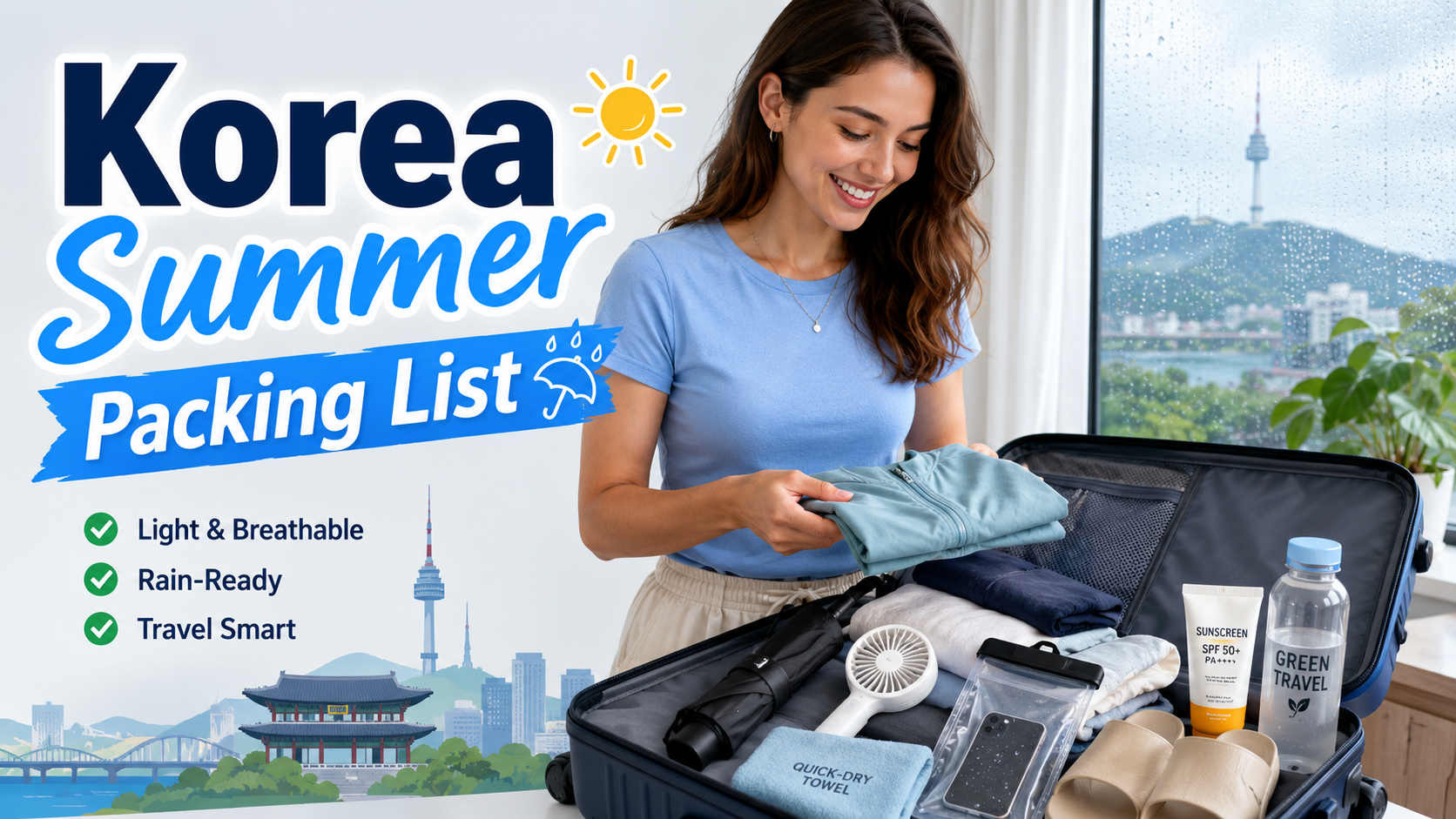
Planning a summer trip to Korea sounds exciting until you remember two things: the humidity is real, and rain can show up fast. One minute you are walking through a beautiful street in Seoul, and the next minute your shirt is stuck to your back and your shoes are soaked. I have made that mistake before. I packed for “summer vacation,” but not for Korean summer weather. Big difference.
That is exactly why this guide exists. This is a practical, real-world Korea summer travel packing list for humidity and rain, written in a natural way for travelers who want to stay comfortable, move light, and avoid buying emergency items at convenience stores every other day. If you want to feel prepared without overpacking, this post will help.
💡 1) The 5 Core Rules for Choosing What to Pack
A Korea summer packing list should not be based on temperature alone. The real challenge is the combination of heat, humidity, subway walking, indoor-outdoor temperature changes, and sudden rain. These are the five rules I now follow every single time.
1. Choose quick-dry fabrics over “cute but heavy” clothes
Cotton can feel fine in dry weather, but in Korea’s humid summer it often stays damp longer than you want. That means sweat lingers, rain sticks around, and you feel uncomfortable all day. Lightweight quick-dry shirts, airy pants, and moisture-wicking inner layers make a huge difference.
2. Prioritize shoes that can survive rain
This sounds obvious, but many travelers still bring stylish sneakers that absorb water like a sponge. If your shoes get wet on day one, the whole trip becomes annoying. Bring sandals with grip, water-friendly sneakers, or one pair that dries fast overnight.
My personal rule: if I would be upset wearing it in a surprise downpour, it does not go in my suitcase.
3. Think in layers, not bulk
Outdoors can feel hot and sticky. Indoors can feel surprisingly cool because air conditioning is everywhere in malls, cafés, and trains. A thin outer layer or compact cardigan is more useful than carrying thick clothing.
4. Pack for movement, not just photos
Summer in Korea often means a lot of walking. Side streets, subway transfers, markets, palace grounds, convenience store stops, and sudden sheltering from rain all add up. Comfortable clothing usually wins over “perfect outfit planning.”
5. Bring small items that reduce friction
The best summer packing list is not only about clothes. It is about the small things that save your day: a folding umbrella, anti-chafe balm, mini towel, portable fan, spare socks, zip pouch for electronics, and a waterproof tote. These are the items that keep travel smooth.
I used to underestimate spare socks. Then I got caught in summer rain, spent half the day in wet shoes, and finally understood why one extra pair can feel luxurious.
📊 2) Recommended Packing Items: What I Would Actually Bring
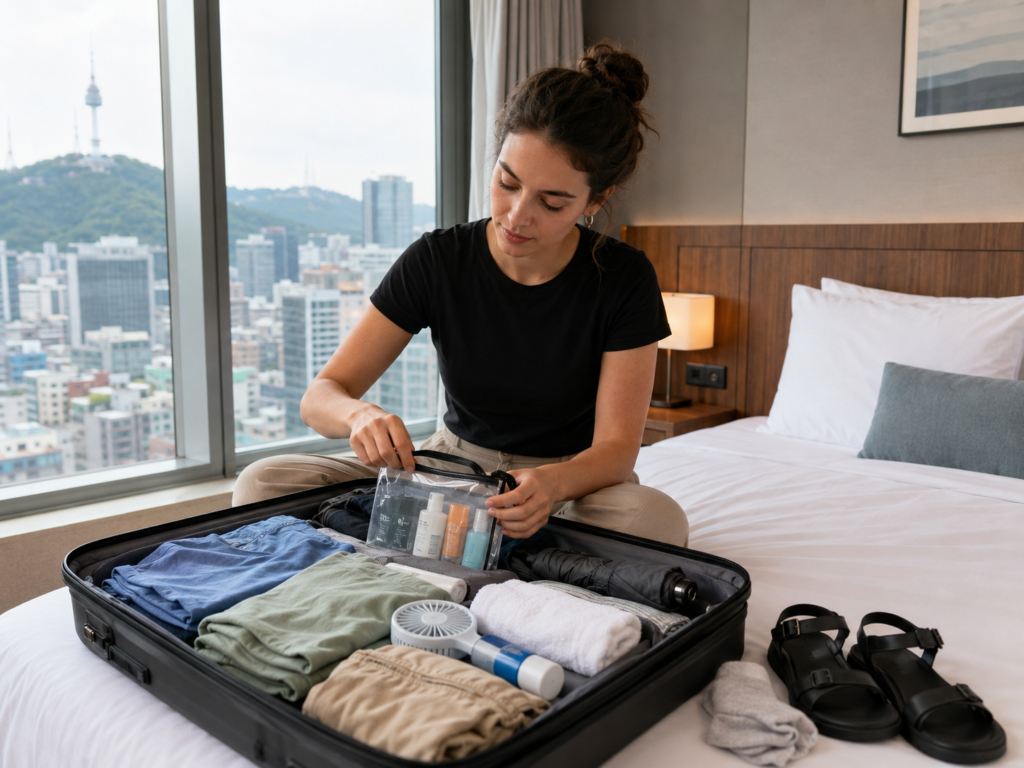
Below are the most useful categories for a Korea summer travel packing list for humidity and rain. These are not random packing suggestions. They are the items I would realistically use on a city trip, a food-focused trip, or a mixed itinerary with Seoul, Busan, or Jeju.
1. Breathable tops and fast-drying bottoms
Pack 3 to 5 lightweight tops depending on your trip length. I prefer tops that do not cling easily when it gets humid. For bottoms, loose shorts, light trousers, or wrinkle-resistant skirts work better than anything heavy. Dark colors can hide sweat marks, but lighter colors can feel cooler under direct sun.
2. A compact umbrella and a light rain layer
Korea’s summer can include rainy stretches and sudden showers, especially during the monsoon period. The Korea Meteorological Administration provides current weather, short-range forecasts, and severe weather updates, which is helpful before day trips or intercity travel. You can check the Korea weather forecast and rain alerts before heading out.
A compact umbrella is usually more practical than a full raincoat in cities, but I still like carrying a very light waterproof shell on travel days. It doubles as wind protection and works well on ferries, coastal walks, or evening outings.
3. Water-friendly footwear
Bring one main pair of comfortable walking shoes and make sure they can handle wet streets. If your itinerary includes beach areas, riverside parks, or heavy walking in summer rain, a second pair of sandals can save the trip. I try to avoid shoes that take more than a full day to dry.
4. Sweat-management essentials
This category matters more than most travelers expect. Pack a mini towel, deodorant, pocket tissues, a small handkerchief, and maybe a cooling wipe or facial blotting sheets. None of these items are glamorous, but they help you stay fresh during long transit days and midday heat.
5. Tech and bag protection items
Humidity and sudden rain are annoying for phones, chargers, and cameras. A zip pouch, dry bag insert, or simple waterproof organizer helps a lot. A crossbody bag with a zipper is more practical than an open tote on rainy days. I also like carrying a foldable reusable bag for wet clothes or convenience store snacks.
One of my favorite travel tricks is packing a thin plastic or waterproof laundry pouch. It weighs almost nothing, but it keeps wet umbrellas, damp socks, or sweaty shirts from ruining everything else in the bag.
📌 3) Practical Packing Strategy That Works in Real Life
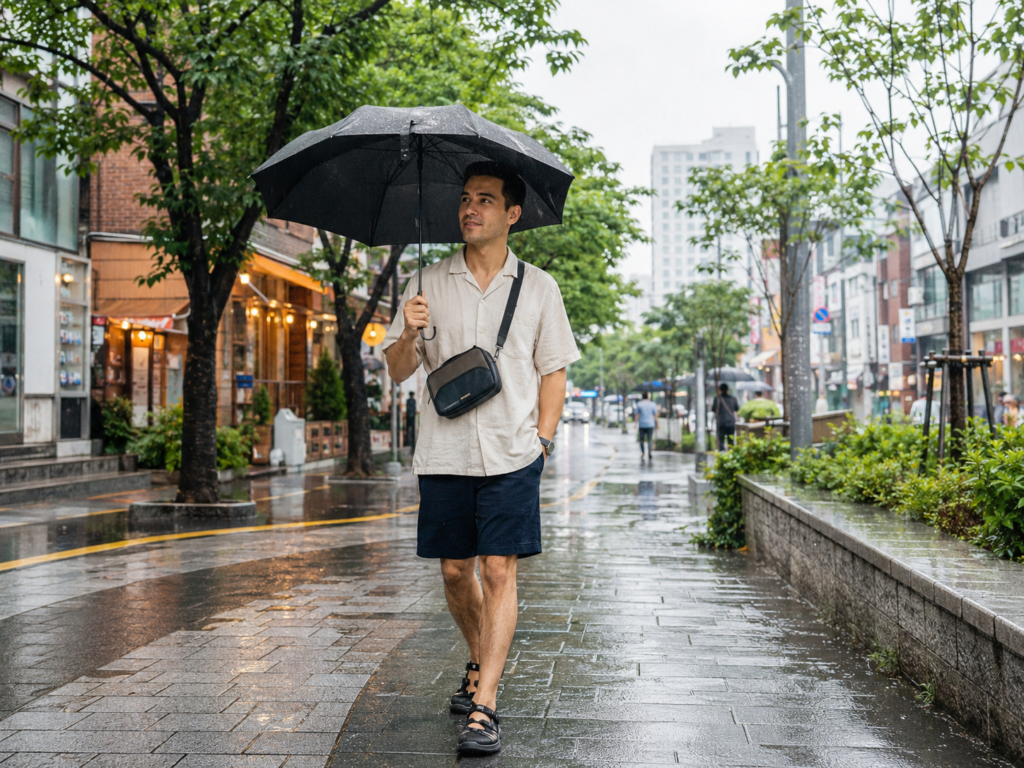
Let’s make this even more useful. Instead of packing by outfit, pack by situation. This is the method that helped me stop overpacking while still feeling ready for Korea in summer.
Build your suitcase around 3 travel scenarios
- Hot sightseeing day: breathable outfit, cap, sunglasses, mini towel, water bottle
- Rainy city day: compact umbrella, quick-dry clothes, waterproof pouch, spare socks
- Indoor-heavy day: light layer for strong air conditioning, comfortable shoes, small crossbody bag
When I plan this way, I stop packing “just in case” clothes that never leave the suitcase. It also makes getting dressed faster every morning, especially when the weather keeps changing.
Use the 5-4-3 rule for shorter trips
For a one-week summer trip, a simple version works well:
- 5 tops
- 4 bottoms or outfit combinations
- 3 pairs of footwear/sock strategies depending on your style and itinerary
That does not mean three bulky pairs of shoes for everyone. For me, it usually means one main walking shoe, one easy sandal, and extra socks or insoles as backup.
Check local trip inspiration before final packing
If your route includes beaches, night markets, mountain viewpoints, or coastal towns, your packing should shift a little. The Korea Tourism Organization’s official site is useful for checking destinations and seasonal travel ideas. Before my last summer route, I used official Korea travel information and destination ideas to decide whether I needed more city clothes or more outdoor-friendly items.
📋 4) Quick Comparison Table
| Item | Best For | Why It Helps | Packing Priority |
|---|---|---|---|
| Quick-dry T-shirt | Hot, humid days | Dries faster and feels lighter | Very high |
| Compact umbrella | Sudden rain | Easy to carry every day | Very high |
| Water-friendly sandals | Wet streets, beach areas | Dries fast and stays comfortable | High |
| Mini towel | Sweat and humidity | Keeps you fresher on the move | High |
| Zip waterproof pouch | Phone, charger, passport | Protects valuables from rain | High |
| Light outer layer | Cold indoor AC | Adds comfort without bulk | Medium |
💰 5) Comfort and Cost Benefits of Packing the Right Way
Packing smart for Korea’s humid and rainy summer is not only about convenience. It can save real money and energy.
- You avoid emergency purchases: Buying an umbrella, extra shirt, socks, or replacement tote on the go can easily add up to ₩20,000 to ₩60,000 over a trip.
- You reduce laundry stress: Quick-dry items can air-dry overnight, which may save time and small laundry costs.
- You stay more comfortable: That means fewer breaks just to cool down, change clothes, or escape the rain.
- You move faster: A lighter, smarter bag can save your shoulders and make subway transfers much easier.
In my experience, the best return on packing is simple: one well-packed bag can make a humid summer trip feel organized instead of chaotic. That difference is hard to measure exactly, but you feel it every single day.
✅ Final Thoughts
A good Korea summer travel packing list for humidity and rain is not about bringing more. It is about bringing better. Focus on breathable clothing, rain-ready essentials, smart footwear, and a few small comfort items that solve real travel problems. That is the combination that works.
If you are visiting Korea in summer for the first time, here is the easiest way to remember it: pack light, pack quick-dry, and pack for surprise weather. Do that, and your trip will feel a lot smoother from day one.
❓ FAQ
What should I wear in Korea during summer?
Lightweight, breathable, quick-dry clothing is usually best. Choose outfits that stay comfortable in heat and humidity, and always have one rain-ready option.
Do I really need an umbrella in Korea in summer?
Yes, I strongly recommend one. Summer showers can arrive quickly, and a compact umbrella is one of the highest-value items in your bag.
Are sandals okay for Korea in summer?
Yes, as long as they are comfortable for walking and have decent grip. Wet pavement and long walking days are common, so choose function over style alone.
How many outfits do I need for a 5 to 7 day trip?
Usually 4 to 5 tops, 2 to 4 bottoms, underwear for each day, extra socks, and one light outer layer will cover most trips well if you mix and match.
Is it easy to buy missing items in Korea?
Yes, many basics are easy to find, especially in cities. But buying things during your trip usually costs more time and money than packing the right essentials from the start.
You Might Also Like:Is Korea Expensive for Americans in 2026?