
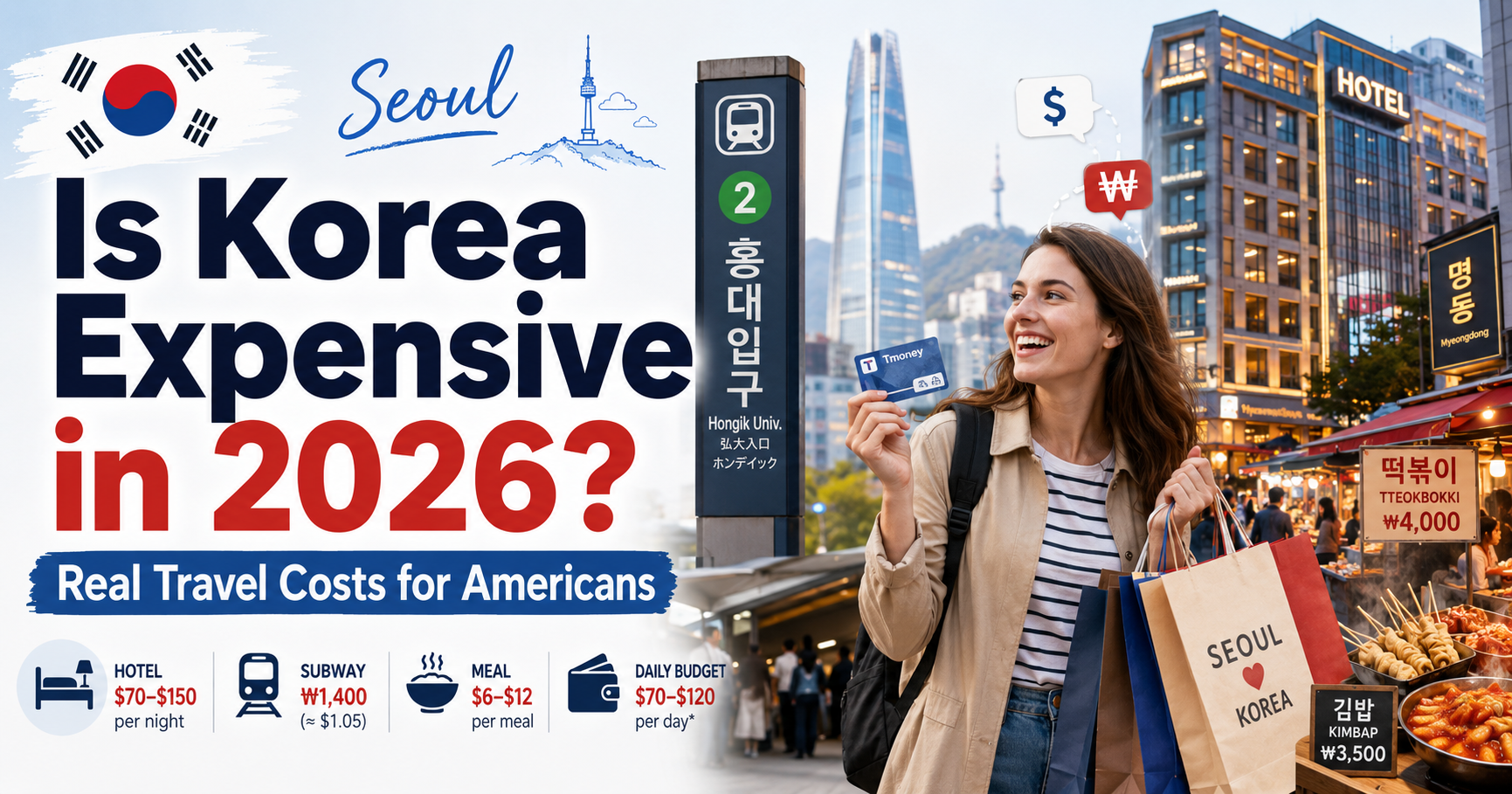
If you are planning your first Korea trip this year, this is probably the question sitting in your head the whole time: is Korea expensive for Americans in 2026?
Honestly, after checking prices carefully and comparing them with what many Americans already pay at home, my answer is this: Korea is not cheap-cheap, but it is still very manageable. In many parts of daily travel, it can actually feel easier on the wallet than a big U.S. city. The surprise is that food and public transportation are usually the good-value part, while hotels in central Seoul, trendy cafes, and shopping can add up faster than people expect.
I always think Korea gives a very specific kind of value. You may not feel like everything is a bargain, but you often feel that your money goes further. The subway is smooth, meals can still be satisfying without destroying your budget, and tipping culture is basically not part of the everyday routine. That alone feels refreshing for many American travelers.
So if you are wondering whether Korea is “too expensive” in 2026, this article will help you see the real picture, not the dramatic one.
💡 1. The 5 biggest things that decide whether Korea feels expensive
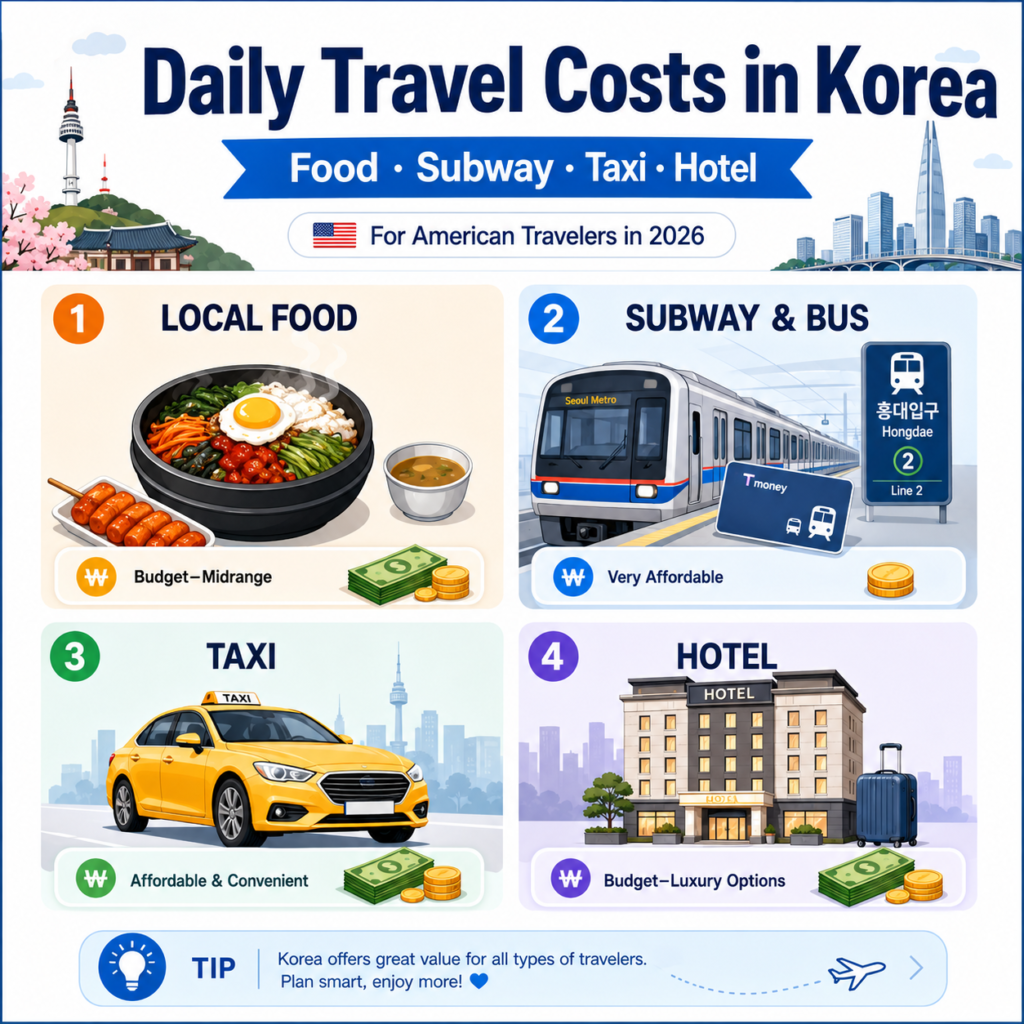
1) Where you stay matters more than people think
This is the part that changes your total budget the most. In 2026, Seoul hotel prices are not “budget Asia” in the old-fashioned sense. If you want to stay in Myeongdong, Hongdae, Gangnam, or near Seoul Station, the room rate can quickly become the biggest daily expense. That is why two people can visit Korea in the same week and come back with totally different opinions about the cost.
My honest feeling: in Korea, accommodation decides the mood of your budget. Once your hotel is under control, the rest of the trip often feels much lighter.
2) Daily transportation is still one of Korea’s strongest points
This is where many Americans feel immediate relief. Subways and buses are usually efficient, clean, and predictable. Compared with using ride-share apps or taxis all day in the U.S., Seoul transport feels very reasonable. Even short taxi rides are often less painful than what many travelers expect, although late-night rides and longer cross-city rides will still add up.
3) Local food can be kind to your budget
If you eat Korean food the way many locals do, Korea often feels fair rather than expensive. Casual meals, kimbap shops, soup restaurants, student-area eateries, and simple lunch spots can keep your food budget under control. The trip becomes more expensive when you move into premium cafes, imported brunch places, hotel breakfasts, and famous barbecue spots every day.
4) Shopping is where many trips quietly become expensive
Olive Young, skincare, fashion, stationery, cute character goods, and convenience-store “just one more thing” spending can turn into a real budget leak. Korea can feel affordable all day, then suddenly expensive at night when you check your card history.
5) Your U.S. city changes your perspective
If you are coming from New York, San Francisco, Seattle, Boston, or Los Angeles, Korea may feel surprisingly reasonable in daily life. If you are comparing Korea with a smaller or lower-cost American city, Seoul might feel more mid-range than cheap. This is why people online often disagree so much.
📊 2. So, is Korea expensive for Americans in 2026?
My real answer: Korea is moderately priced, but often good value for Americans.
For most American visitors in 2026, Korea is not as cheap as many people imagine before coming, but it is also not brutally expensive for everyday travel. The weak won has helped soften day-to-day spending for U.S. travelers, but inflation in Korea has still pushed some prices up, especially in areas like hotels, coffee, and certain city-center experiences.
In practical terms, this is how it often feels:
- Public transportation: cheap to fair
- Local meals: fair to good value
- Cafes and dessert culture: can feel pricey fast
- Hotels in Seoul: the biggest budget pressure point
- Taxis: reasonable for short rides, not for using all day
- Shopping: dangerous in the nicest possible way
If you travel Korea in a simple, everyday way, it often feels easier than a major U.S. city. If you travel Korea through boutique hotels, pretty cafes, and shopping bags, it stops feeling cheap very quickly.
📌 3. Real travel cost examples for Americans in 2026
Budget traveler
If you stay in a guesthouse or simple hostel, eat casual Korean meals, use the subway, and keep shopping under control, Korea can still be very doable. This kind of traveler usually focuses on neighborhoods, street food, convenience stores, free views, city walks, and low-cost sightseeing.
Typical daily feel: careful but comfortable, not luxurious.
Rough range: about $50 to $90 per day excluding flights, depending on your room and travel style.
Mid-range traveler
This is probably where most American travelers land. You stay in a clean private room or mid-range hotel, enjoy a mix of Korean restaurants and cafes, take public transportation, add one or two taxis, and do normal sightseeing without trying too hard to save every dollar.
Typical daily feel: comfortable, balanced, realistic.
Rough range: about $110 to $190 per day excluding flights.
Comfort or style-focused traveler
If you want central Seoul hotels, frequent taxis, beauty shopping, polished cafes, premium Korean barbecue, and extra convenience, Korea can absolutely become expensive. Not impossible, just noticeably more urban and premium in feel.
Typical daily feel: easy, polished, convenient.
Rough range: $220+ per day, sometimes much more in peak periods.
🚇 4. What things actually cost on the ground
Let’s make this more real.
Transportation
Seoul public transportation is one of the best money savers. Single subway tickets cost more than regular transit-card fares, and the city also promotes options like the Climate Card for travelers who expect to ride a lot. If you move around the city mainly by subway and bus, your transportation budget can stay quite light compared with many U.S. cities.
Taxis are also easier to stomach than some Americans expect. In Seoul, the regular taxi base fare is 4,800 won. For quick rides, that often feels acceptable. But if you use taxis constantly, especially late at night, the total rises fast.
Food
This is the part I personally find the most comforting in Korea. A simple Korean meal can still feel satisfying without being a budget disaster. Casual local meals often land in a range that feels reasonable for Americans in 2026, while western-style brunch, influencer cafes, and “nice” dessert stops can make one afternoon surprisingly expensive.
I always tell friends this: in Korea, you save money by eating like a normal person nearby, not by chasing every trendy place on social media.
Coffee and cafes
Korea’s cafe culture is lovely, but this is where many travelers get caught. One drink is fine. Two drinks plus a dessert plus a photogenic cafe in a popular area, and suddenly your “light break” costs as much as a full meal. This happens a lot in Seoul.
Hotels
Hotels are the most unpredictable part. In broad terms, Seoul can still offer decent value, but central neighborhoods are no longer the kind of place where Americans should assume everything is cheap. If your room is the nice kind and your location is excellent, that convenience will show up clearly in the final bill.
📋 5. Quick comparison table
| Category | How Korea Feels for Americans in 2026 | My Take |
|---|---|---|
| Subway & bus | Affordable | One of Korea’s best-value travel categories |
| Taxi | Fair | Fine for short rides, not ideal as your main transport every day |
| Local food | Good value | Very manageable if you eat simple Korean meals |
| Cafes & desserts | Moderate to pricey | Small spending that quietly grows big |
| Hotels in Seoul | Moderate to expensive | Usually the main reason people say Korea felt expensive |
| Shopping | Very variable | Easy to overspend without noticing |
💰 6. How much money should Americans budget for Korea in 2026?
For a realistic trip, I would think about Korea like this:
- Careful budget: enough for a simple room, casual food, transit, and light sightseeing
- Comfortable mid-range: enough for a private room, nice meals, cafes, transport, and a few paid activities
- Style-focused trip: enough for central hotels, shopping, beauty purchases, and convenience-heavy travel
If you are American and used to current U.S. city prices, Korea often feels better than expensive, but not exactly cheap. I think that is the most honest sentence I can give you.
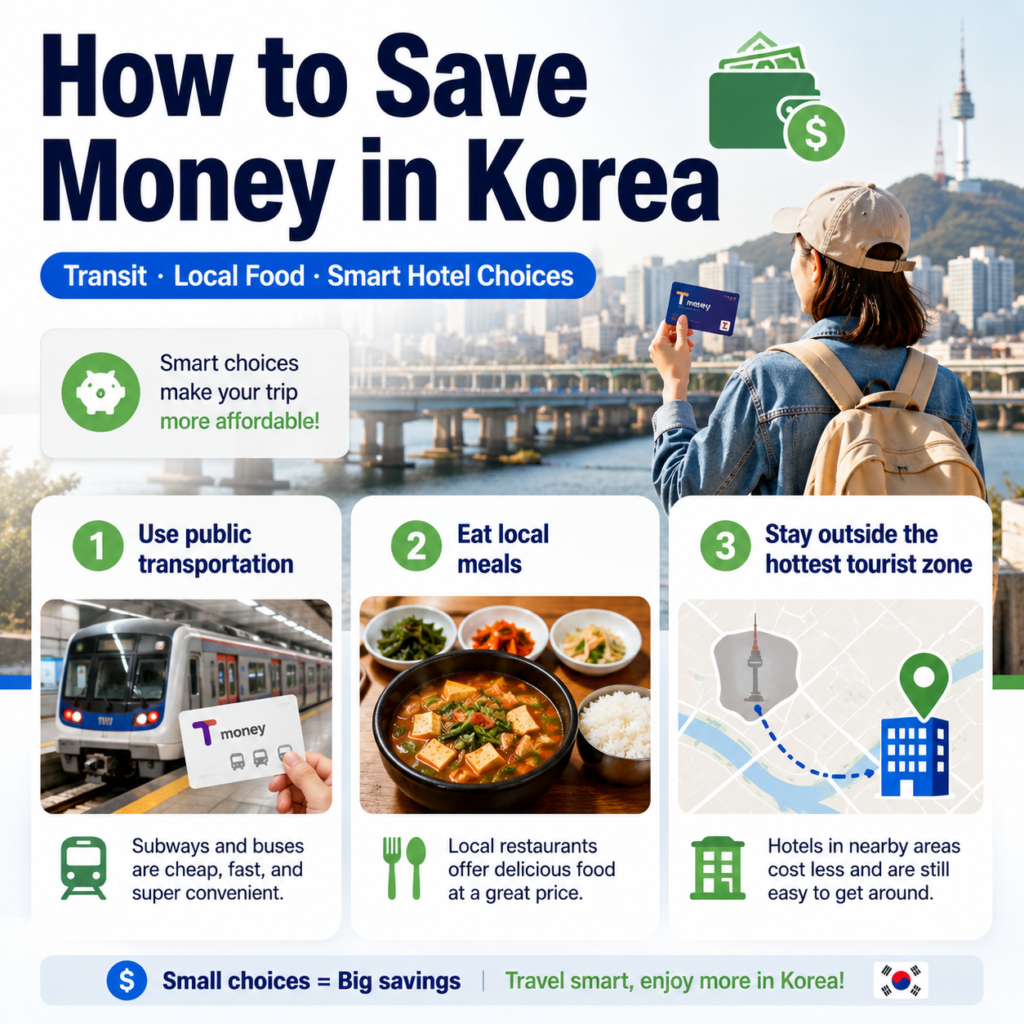
🧠 7. Practical ways to keep Korea affordable without ruining the trip
1. Spend more time choosing your hotel than your restaurant list
This saves more money than almost anything else.
2. Use public transportation as your default
Seoul is built for it. This is one of the easiest wins.
3. Mix trendy cafes with ordinary meals
Do not make every stop an aesthetic stop. Your budget will thank you.
4. Stay a little outside the hottest zone
One or two subway stops away can make a big difference in room price.
5. Set a shopping number before you arrive
Korea is full of small temptations. A spending cap helps more than people think.
✅ Final answer
Is Korea expensive for Americans in 2026? Not in the way many people fear.
Korea in 2026 feels moderately priced, often efficient, and usually good value for American travelers. Daily transportation is one of the easiest parts of the budget. Local food can still be gentle on your wallet. The parts that make Korea feel expensive are usually accommodation, cafe culture, beauty shopping, and convenience-heavy travel choices.
So no, Korea is not “cheap” in a dreamy outdated way. But for many Americans, it still feels more balanced than many major U.S. cities. And personally, that balance is exactly why Korea remains such a satisfying place to visit.
🙋 FAQ
Q1. Is Seoul more expensive than the rest of Korea?
A. Yes, usually. Seoul is the place where hotel prices, trendy cafes, and shopping temptations hit hardest. Other cities can feel more relaxed on the budget.
Q2. Is food in Korea expensive for Americans?
A. Local food often feels fair or even affordable. The trip gets pricier when you focus heavily on premium cafes, imported food, or popular tourist restaurants every day.
Q3. Is public transportation in Korea cheap?
A. Compared with daily transport costs in many U.S. cities, yes, it usually feels very reasonable and efficient.
Q4. Do Americans need to budget a lot for taxis in Korea?
A. Not necessarily. Taxis are useful for short rides, but using them constantly will still raise your total travel cost quickly.
Q5. What makes Korea feel expensive the fastest?
A. Central Seoul hotels, shopping, and cafe hopping. Those three together change the budget more than most travelers expect.
Helpful official resources
You Might Also Like:7 Smart Things Americans Should Know Before Booking Korean Skin Clinics