

Getting sick while traveling can ruin even the best Korea itinerary. One bad meal, sudden stomach cramps, repeated bathroom trips, and the next thing you know, you feel weak, dizzy, and completely drained.
The good news is this: in Korea, neighborhood pharmacies are easy to find, and pharmacists are often very helpful with common travel stomach issues. But many travelers do not know what to ask for, which medicine is usually suitable for traveler’s diarrhea, and when simple fatigue is actually a sign of dehydration.
In this guide, I will walk you through the best over-the-counter options to ask about in a Korean pharmacy, what each one does, what to avoid, and when you should stop self-treating and go to a clinic or hospital instead.
💡 1. What to Check Before Choosing OTC Medicine in Korea
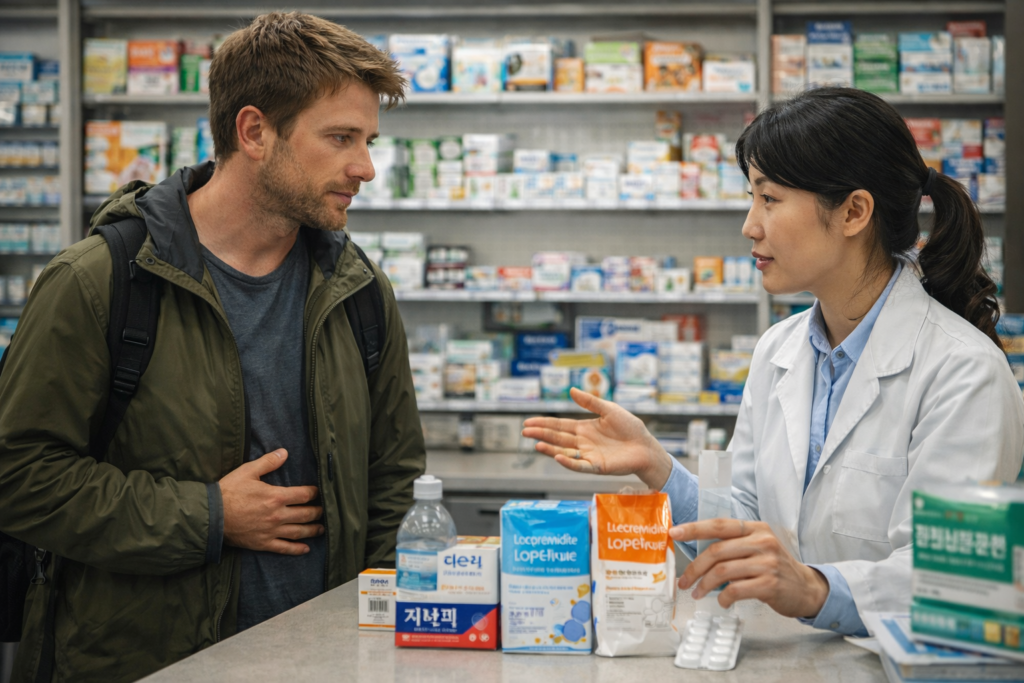
Before you buy anything, focus on the cause and severity of your symptoms. In my experience, this is where many travelers make a mistake. They only ask for “something strong” instead of matching the medicine to the symptom.
1) Check for dehydration first
If you have diarrhea and feel tired, weak, dizzy, or have dark urine, the biggest issue may not be the diarrhea itself. It may be fluid and electrolyte loss. In many mild cases, rehydration matters more than a stronger pill.
My tip: When I feel “travel fatigue” after diarrhea, I do not start with random vitamins. I start with electrolyte replacement first. That usually makes the fastest difference.
2) Look for red-flag symptoms
Do not rely only on OTC medicine if you have a high fever, bloody diarrhea, severe vomiting, confusion, intense abdominal pain, or symptoms lasting several days. Those signs may need medical treatment rather than self-care.
3) Know whether you need symptom control or recovery support
Some medicines slow bowel movement. Others replace lost fluid. Others support gut recovery. The best choice depends on whether your main problem is:
- frequent loose stool,
- cramping and urgency,
- dehydration and fatigue,
- or stomach upset after food exposure.
4) Ask by active ingredient, not by brand name
This matters a lot in Korea. Brand names vary, but pharmacists understand active ingredients better. The easiest way is to ask for the ingredient or the medicine type.
5) Consider your travel schedule
If you need quick symptom control before a train ride, a day trip, or a long flight, you may want an anti-diarrheal option. But if you are staying in your hotel and recovering, fluids, rest, and gut support may be the better first move.
My tip: I always keep a screenshot with simple phrases like “loperamide,” “oral rehydration salts,” and “probiotic for diarrhea.” It saves time at small pharmacies.
📊 2. Best OTC Medicine Types for Traveler’s Diarrhea and Fatigue in Korea
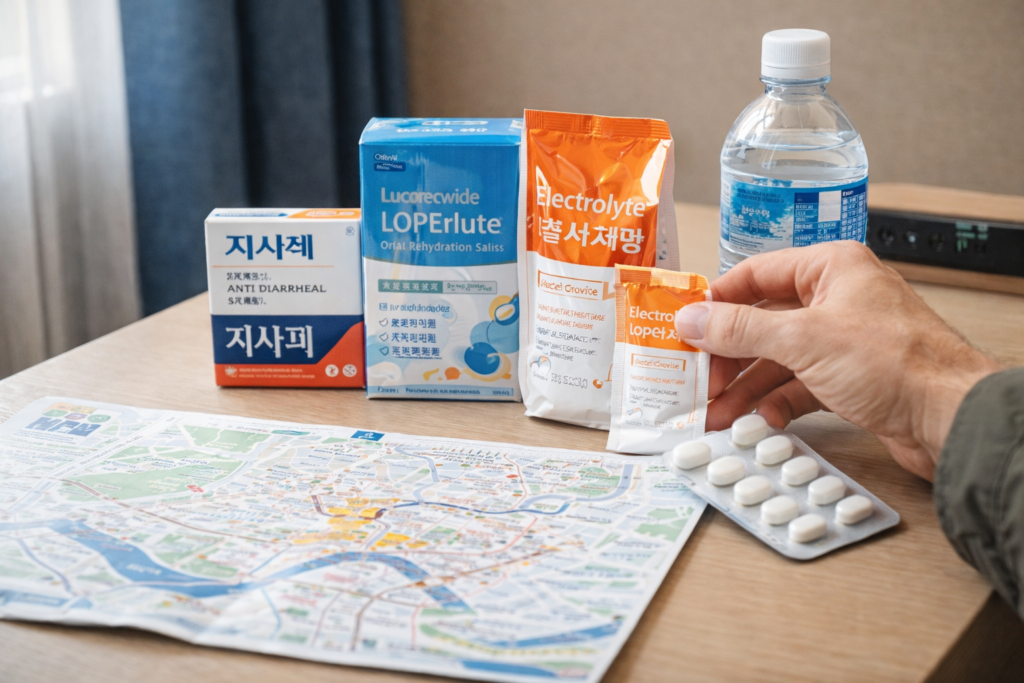
Here are the most practical medicine categories to ask about at a Korean pharmacy.
1) Loperamide-based anti-diarrheal medicine
This is often the most useful OTC option when you need fast control of non-bloody diarrhea. It helps reduce bowel movement frequency and can be especially useful during transit days.
It is usually best for mild to moderate traveler’s diarrhea without fever or blood in stool. It is not the right choice when an infection is more serious or invasive.
What to ask:
- “Do you have loperamide?”
- “지사제 있어요?” (Do you have anti-diarrheal medicine?)
- “로페라마이드 성분 있나요?” (Do you have loperamide ingredient?)
2) Oral rehydration salts or electrolyte replacement
This is the most overlooked but often the most important option. If diarrhea is making you feel weak, lightheaded, drained, or headachy, electrolyte loss may be the real reason. Oral rehydration products help replace water, sodium, and other lost minerals.
For travelers with diarrhea plus fatigue, this is often the first thing I would prioritize at the pharmacy.
What to ask:
- “Do you have oral rehydration salts?”
- “전해질 보충 음료나 가루 있어요?” (Do you have electrolyte drinks or powder?)
- “경구수분보충 제품 있나요?” (Do you have oral rehydration products?)
My tip: If a pharmacist offers both a simple anti-diarrheal and an electrolyte product, I usually buy both. One controls symptoms. The other helps me feel normal again.
3) Probiotics for gut recovery
Probiotics are commonly recommended in Korea for stomach imbalance and bowel recovery. They are not usually the fastest fix for urgent diarrhea, but they can be helpful when your gut still feels off after the worst phase passes.
This is a practical add-on if you have lingering digestive discomfort, bloating, or unstable stools after food-related stomach trouble.
What to ask:
- “Can you recommend a probiotic for diarrhea recovery?”
- “설사 후 유산균 추천해주세요.” (Please recommend a probiotic after diarrhea.)
4) Gentle stomach support products
In some pharmacies, the pharmacist may suggest digestive support products, gut-soothing powders, or multi-symptom stomach medicine depending on whether you also have cramping, bloating, or indigestion. These can be useful, but they are usually secondary to hydration and symptom control.
5) Simple rest support for fatigue
If your fatigue is caused by diarrhea, buying “fatigue medicine” is usually not the main solution. In many cases, the real fix is:
- rehydration,
- light meals,
- temporary symptom control,
- and rest.
A vitamin drink may feel helpful, but it should not replace electrolyte support if you are dehydrated.
📌 3. Practical Strategy for Using a Korean Pharmacy

Step 1: Explain your symptoms clearly
Say something simple and direct:
- “I have traveler’s diarrhea and feel weak.”
- “I have diarrhea, no blood, no high fever.”
- “I think I’m dehydrated and tired.”
Step 2: Ask for the right category
If you need quick control, ask for an anti-diarrheal. If you feel weak and dry, ask for oral rehydration or electrolytes. If your gut is unstable after improvement, ask for probiotics.
Step 3: Avoid self-treatment when warning signs appear
Go to a clinic or hospital if:
- you have a fever and bloody stool,
- you cannot keep fluids down,
- you feel confused or extremely weak,
- you are urinating very little,
- or your symptoms continue for days without improvement.
Step 4: Eat strategically
Stick to bland, easy foods for a short time. Think porridge, rice, toast, bananas, soup, and simple crackers. Avoid alcohol, greasy food, very spicy food, and too much coffee until your stomach settles.
Step 5: Keep a pharmacy phrase list on your phone
Useful phrases:
- 지사제 = anti-diarrheal medicine
- 로페라마이드 = loperamide
- 경구수분보충 = oral rehydration
- 전해질 = electrolytes
- 유산균 = probiotics
- 설사 = diarrhea
- 탈수 = dehydration
📋 4. Quick Comparison Table
| Option | Best For | Main Benefit | Important Caution |
|---|---|---|---|
| Loperamide | Urgent symptom control for non-bloody diarrhea | Reduces stool frequency fast | Avoid self-use for bloody diarrhea or high fever |
| Oral rehydration salts / electrolyte drink | Fatigue, weakness, dizziness, dehydration | Replaces fluid and minerals | Still seek care if severe dehydration signs appear |
| Probiotics | Gut recovery after acute diarrhea | Supports digestive balance | Usually not the fastest rescue option |
| General stomach support products | Mild upset, cramping, indigestion | Symptom relief | Choose based on pharmacist advice |
💰 5. Cost and Benefit Breakdown
One reason I like using Korean pharmacies for mild travel stomach issues is efficiency. For common symptoms, you can often get help quickly without losing half a day at a hospital.
- Time saved: potentially 1 to 3 hours compared with searching for a clinic for mild symptoms
- Trip value saved: controlling diarrhea early may help you avoid canceling a train day, food tour, or hotel outing
- Recovery value: electrolyte replacement can improve weakness and dehydration symptoms much faster than plain water alone
- Budget value: OTC pharmacy support is usually far more affordable than emergency treatment for mild cases
In real travel terms, the biggest gain is simple: you recover faster, spend less, and get back to your itinerary sooner.
✅ Final Thoughts
For most travelers in Korea, the best OTC approach for traveler’s diarrhea and fatigue is not just “the strongest pill.” It is the right combination of:
- fast symptom control when needed,
- serious attention to hydration,
- gut recovery support,
- and knowing when to stop self-treatment.
If I had to keep it simple, my personal order would be this:
- Check for dehydration and danger signs.
- Ask about oral rehydration / electrolytes.
- Ask about loperamide for non-bloody urgent diarrhea.
- Add probiotics if your stomach still feels unstable later.
That is the smartest pharmacy strategy for most mild travel-related diarrhea cases in Korea.
❓ FAQ
1) What is the best OTC medicine for traveler’s diarrhea in Korea?
For many adults with mild to moderate non-bloody diarrhea, a pharmacist may recommend an anti-diarrheal such as a loperamide-based product. But if you also feel weak or dizzy, electrolyte replacement may be just as important.
2) What should I ask for at a Korean pharmacy?
The easiest requests are: loperamide, anti-diarrheal medicine, oral rehydration salts, electrolyte drink or powder, and probiotics.
3) Is fatigue normal with traveler’s diarrhea?
Yes, it can happen. Fatigue often comes from dehydration and electrolyte loss, not just from the stomach infection itself.
4) When should I avoid anti-diarrheal medicine?
Be careful with self-treatment if you have bloody diarrhea, high fever, severe abdominal pain, or signs of serious dehydration. In those situations, medical care is safer than trying to manage it alone.
Usually, hydration comes first. If fatigue is caused by fluid loss, vitamins alone will not fix the main problem. Rehydration and rest are the priority.