
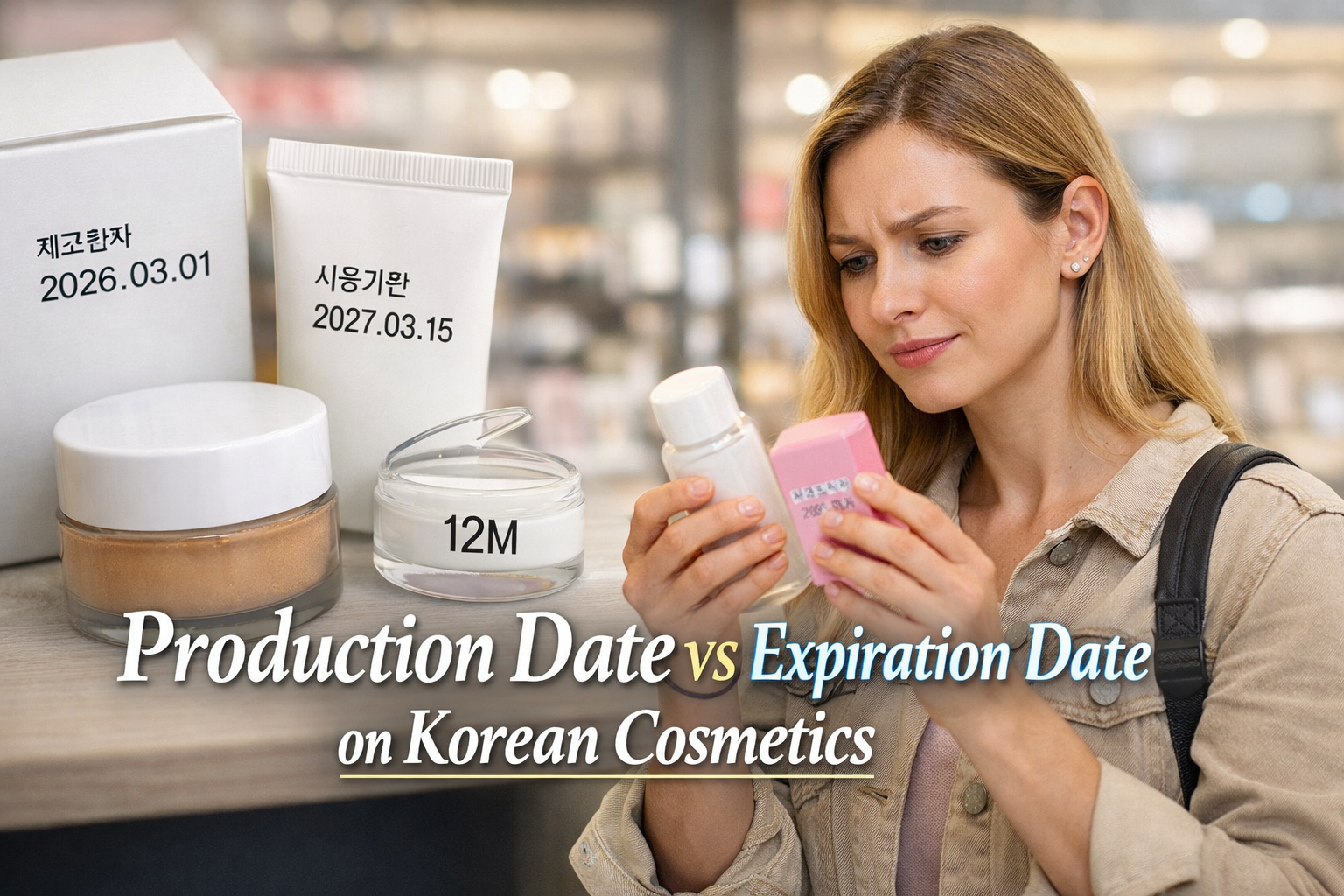
If you have ever picked up a Korean toner, sunscreen, or cushion compact and felt confused by the tiny printed numbers, you are not alone. Many shoppers see a date on K-beauty packaging and assume it is the expiration date. In reality, it may be the production date, the use-by date, or the period after opening. That small difference matters. A lot.
When I first started buying Korean skincare, I made the same mistake. I saw a fresh-looking date on the box, thought it meant the product would expire then, and almost threw away a brand-new ampoule. Later, I learned that Korean cosmetics often use different label formats than Western brands. Once you know the key Korean words and symbols, reading the package becomes easy.
In this guide, I will show you exactly how to tell the difference between a manufacturing label and an expiration label on Korean cosmetics. You will also learn which symbols matter, how to avoid old stock, and how to shop smarter when buying K-beauty online or in stores.
💡 5 Key Things to Check Before You Trust a Korean Cosmetics Date
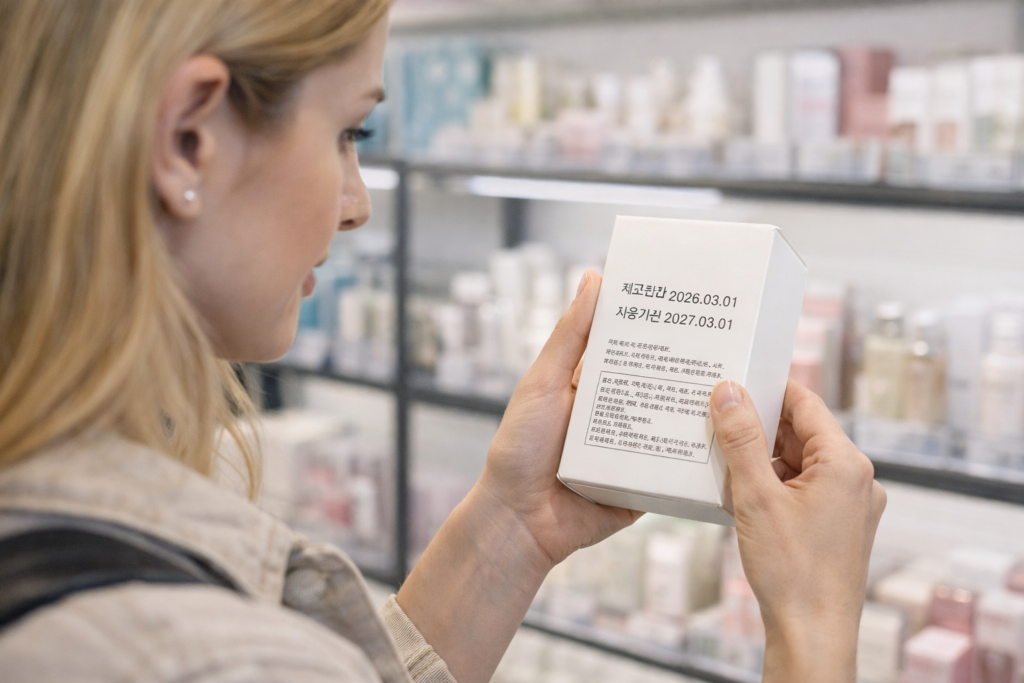
Not every printed date means the same thing. Before using or buying a Korean beauty product, check these five points first.
1. Look for the Korean keyword next to the date
This is the fastest and most reliable method. Korean cosmetics often include a label word right before the date.
- 제조 or 제조일자 = manufacturing date / production date
- 사용기한 = expiration date / use-by date
- 개봉 후 사용기간 = period after opening
If the date appears beside 제조일자, that does not mean the product expires on that day. It simply tells you when it was made.
My personal rule: I never judge a Korean product by numbers alone. I always look for the Korean word printed next to the date first.
2. Check whether the date format is YYYY.MM.DD
Many Korean brands print dates in the order year-month-day. For example:
2026.04.13 = April 13, 2026
This seems simple, but it still causes mistakes. Shoppers in the U.S. or Europe sometimes read it as month-day-year. That can make a fresh product look expired or vice versa.
3. Find out whether the product shows a direct use-by date or an opening-period symbol
Some cosmetics show a full date. Others show a small open-jar icon such as 12M or 6M. That means the product should be used within 12 months or 6 months after opening, not after manufacturing.
This matters most for serums, mascaras, sunscreen sticks, and cream products that are opened often.
4. Pay attention to product type
Not all cosmetics age the same way. A powder blush may stay stable longer than a vitamin C serum. Eye-area products and preservative-sensitive formulas usually need more caution.
5. Inspect storage and seller quality, not just the printed date
Even when the date looks fine, heat, humidity, and poor storage can reduce product quality. This is especially important when buying from unofficial marketplaces or resale listings.
📊 Production Date vs. Expiration Date vs. PAO Symbol
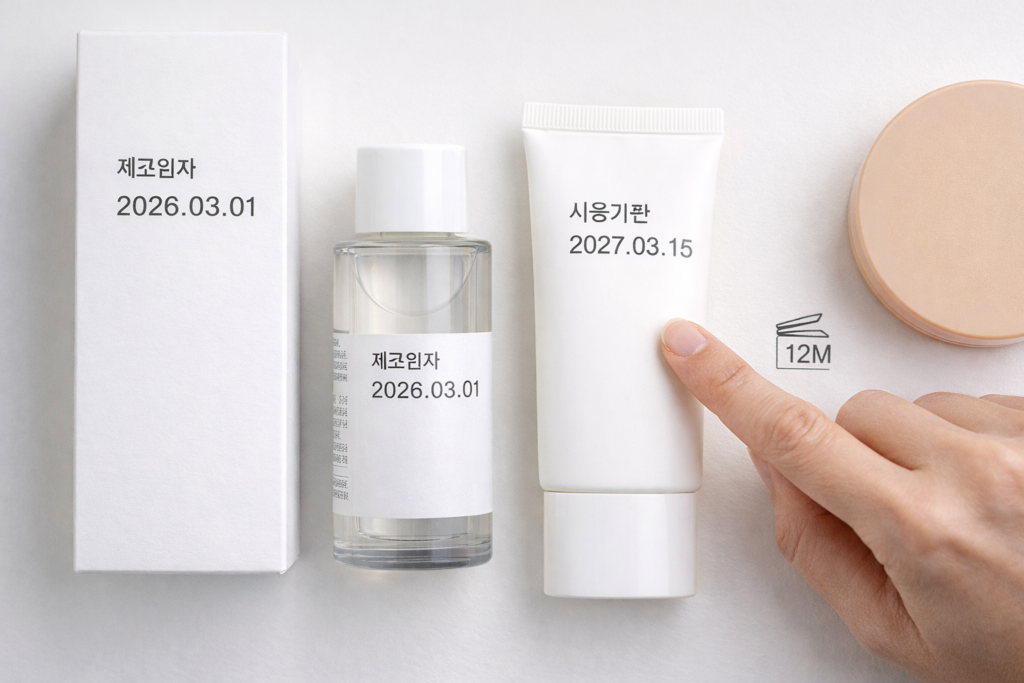
Now let’s break down the three label types that confuse buyers the most.
1. Production Date
This is the date the product was manufactured. In Korean, you may see 제조 or 제조일자. Example:
제조일자 2026.03.01 = Manufactured on March 1, 2026.
This date helps you estimate freshness. It does not automatically tell you how long the product stays safe to use.
When I buy backup skincare during Korean sale seasons, I prefer the newest manufacturing date possible. It gives me more flexibility before opening.
2. Expiration Date / Use-By Date
This is the last date the unopened product should be used under proper storage conditions. In Korean, the most common term is 사용기한.
Example:
사용기한 2027.03.01 = Use by March 1, 2027.
If a box says 까지 after a date, that usually means “until.” So the brand is telling you the product is valid until that printed date.
3. Period After Opening (PAO)
This is the little open-jar symbol with a number like 12M, 6M, or 24M. It tells you how long the product is considered safe after you open it.
Examples:
- 12M = use within 12 months after opening
- 6M = use within 6 months after opening
This is common on products with a longer unopened shelf life. It is especially useful when the product does not show a simple expiration sentence on the front label.
Read FDA cosmetic shelf life guidance
📌 Practical Tips to Read Korean Manufacturing Labels Fast
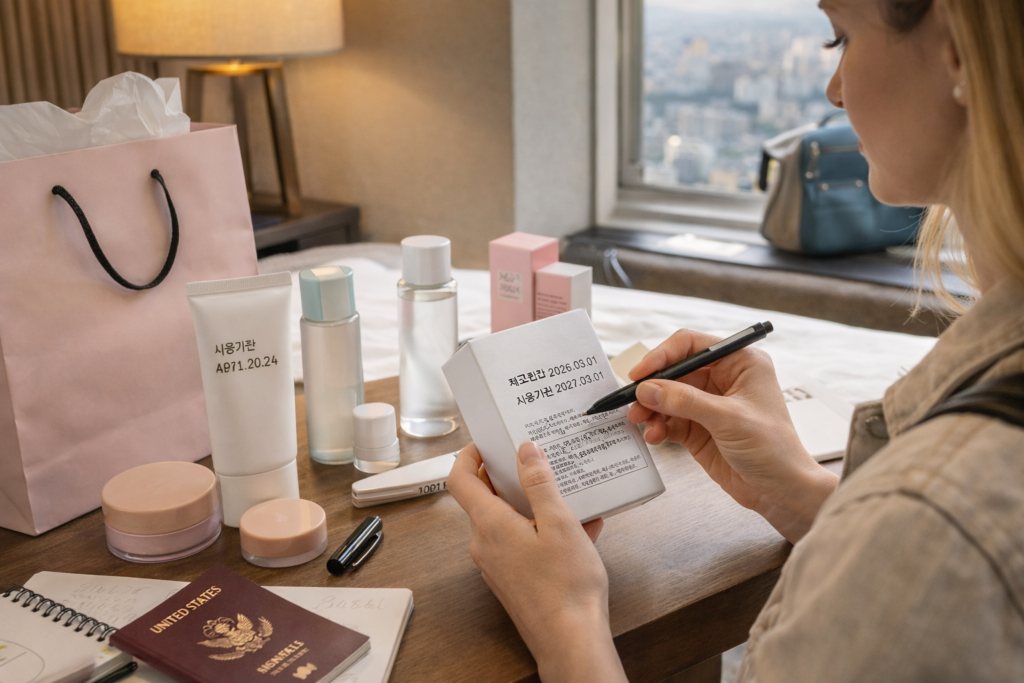
Here is the simple method I use every time I check a Korean beauty product.
Step 1. Find the printed number block
Look on the bottom of the bottle, back of the box, tube crimp, or outer seal. Korean brands often print the date in dark ink or emboss it lightly.
Step 2. Read the Korean text before the date
This is the key step.
- If it says 제조일자, it is the production date.
- If it says 사용기한, it is the expiration date.
- If you see an open-jar icon like 12M, count from the opening date.
Step 3. Check whether the product is still sealed
An unopened cream with a future use-by date is different from a product that was opened six months ago. Once opened, air, fingers, and humidity all affect stability.
Step 4. Use extra caution with active ingredients
Retinol, vitamin C, exfoliating acids, and sunscreen formulas are more sensitive than basic cleansers or powders. Even before the official expiration date, old stock may perform less effectively.
I write the opening month on the bottom of my serums with a thin marker. It sounds simple, but it stops me from guessing later.
Step 5. Watch out for batch numbers
A batch code is not the same as a date. Some shoppers confuse lot numbers with expiration labels. If you see a random mix of letters and numbers without Korean date words, it may be a manufacturing batch code instead of a usable date.
비교 Table: How to Decode Korean Cosmetic Dates at a Glance
| Label Type | Korean Term / Symbol | What It Means | Example | What You Should Do |
|---|---|---|---|---|
| Production Date | 제조 / 제조일자 | Date the product was made | 2026.03.01 | Use it to judge freshness, not expiry |
| Expiration Date | 사용기한 | Last safe date for unopened use | 사용기한 2027.03.01 | Do not use after this date |
| Period After Opening | Open-jar icon, 6M / 12M | Safe use period after opening | 12M | Count from the day you open it |
| Batch Code | Mixed letters/numbers | Traceability code for production run | AB1234X | Do not mistake it for a date |
💰 Why Reading Korean Cosmetics Dates Correctly Saves Money and Protects Your Skin
Understanding Korean manufacturing labels gives you real benefits.
- You avoid throwing away usable products too early. Misreading a production date as an expiration date can waste 100% of a product’s value.
- You lower the risk of using old or unstable formulas. This matters most for sunscreen, mascara, retinol, and vitamin C.
- You shop smarter during sales. A discounted product with an older manufacturing date may not be a bargain if you cannot finish it in time.
- You reduce skincare irritation risk. Degraded formulas can change in smell, color, texture, and performance.
In practical terms, reading the label correctly can save you the cost of replacing a serum, sunscreen, or foundation too early. For frequent skincare buyers, that can easily mean saving the price of 3 to 5 products per year.
For example, if you accidentally discard four still-usable K-beauty products worth $18 each, that is $72 lost. On the other hand, if you keep expired actives or eye products too long, the cost may show up as breakouts, irritation, wasted routines, or a dermatology visit. A 10-second label check is worth it.
✨ Final Takeaway
Here is the easiest way to remember it:
- 제조일자 = when it was made
- 사용기한 = use before this date
- 6M / 12M jar symbol = use within that many months after opening
That one distinction can completely change how you buy, store, and use Korean cosmetics. Once you get used to these three label types, K-beauty packaging becomes much easier to understand. I still check every box carefully, especially when buying backups or limited-edition products online. It has saved me money, reduced waste, and helped me keep only fresh products in my skincare drawer.
❓ FAQ
1. Is the printed date on Korean cosmetics usually the expiration date?
Not always. It may be the manufacturing date, the expiration date, or the period-after-opening symbol. You need to check the Korean word next to it.
2. What does 사용기한 mean on Korean skincare?
사용기한 means the product’s use-by or expiration date.
3. What does 제조일자 mean?
제조일자 means manufacturing date or production date.
4. What does 12M mean on a Korean cosmetic bottle?
It means the product should generally be used within 12 months after opening.
5. Can I still use a Korean cosmetic after the expiration date?
It is better not to. Even if the product looks normal, the brand’s labeled use period has passed. This is especially risky for sunscreen, mascara, and active skincare.
Related Post