

Last checked: August 2, 2026. Emergency numbers, language services and public-health guidance can change, so use the official links below for the latest information.
If you need an ambulance, rescue or urgent emergency response in Korea, call 119. The number 1339 is not Korea’s ambulance number. It is the Korea Disease Control and Prevention Agency (KDCA) Call Center for infectious-disease information, travel vaccinations, prevention guidance and infectious-disease reporting.
For foreign travelers, the easiest rule is to separate emergency response from public-health information. Use 119 when someone needs emergency responders or an ambulance. Use 1339 for KDCA infectious-disease guidance, and note that KDCA’s English page currently directs foreign-language users to the Immigration Contact Center at 1345 for multilingual assistance.
Quick answer: Call 119 for an ambulance, fire, rescue or urgent medical emergency in Korea. Use 1339 for infectious-disease information, travel vaccination guidance, prevention and reporting questions. If you do not speak Korean during a 119 emergency call, say “English please” or “Interpreter please.”
First, Know This: 1339 Is Not the Ambulance Number
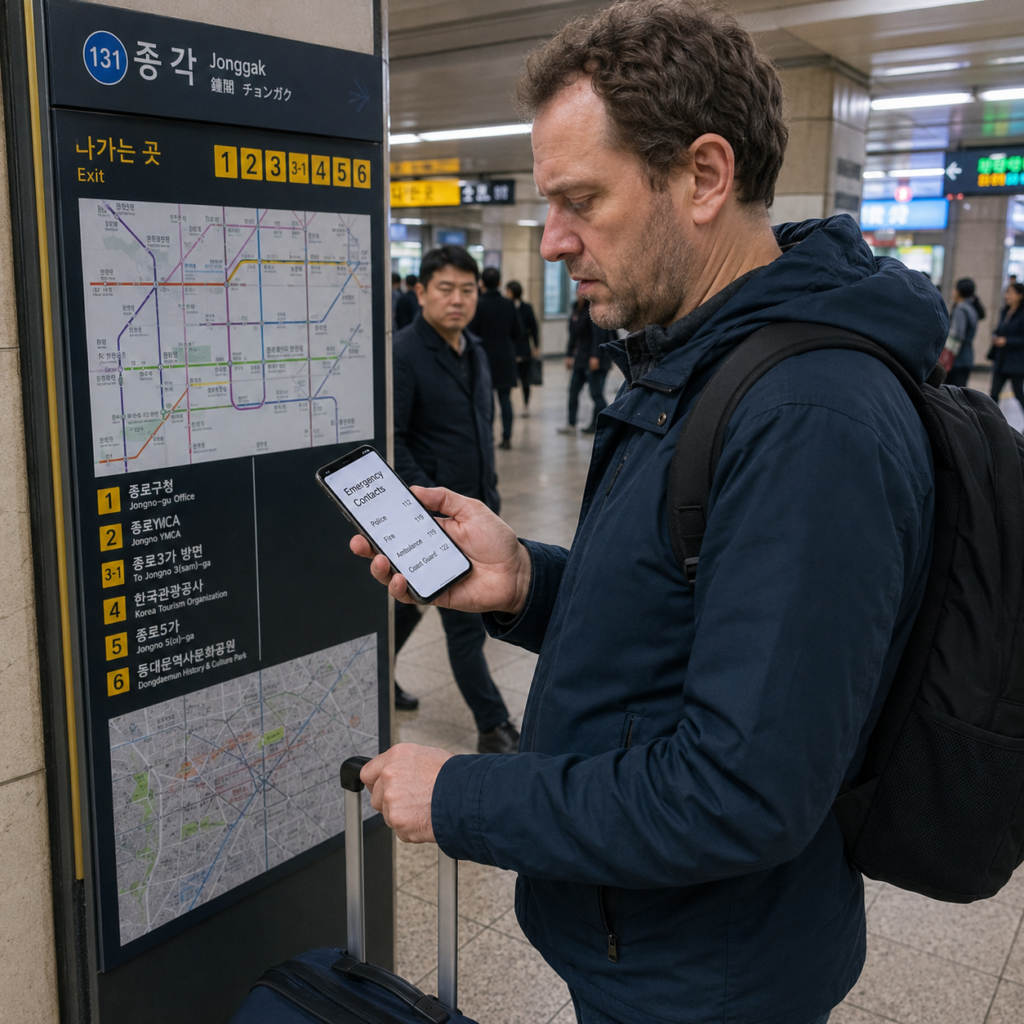
The Korea Disease Control and Prevention Agency operates the 1339 Call Center. According to KDCA, its role includes information about major infectious diseases, diseases that may affect overseas travelers, travel vaccinations, prevention and the reporting process for notifiable infectious diseases.
You can review the current service directly on the official KDCA Call Center page.
If you believe someone needs an ambulance or immediate emergency assistance, do not wait for 1339 to decide what to do. Call 119.
119 vs 1339 vs 1345: Which Number Should You Use?
| Situation | Number | Purpose |
|---|---|---|
| Ambulance, fire, rescue or urgent medical emergency | 119 | Emergency response and ambulance dispatch |
| Police emergency or immediate threat to personal safety | 112 | Police emergency response |
| Infectious-disease, travel vaccination, prevention or reporting information | 1339 | KDCA public-health and infectious-disease guidance |
| Tourism information, interpretation or tourist assistance | 1330 | Korea Travel Helpline |
| Immigration information and multilingual assistance referenced by KDCA | 1345 | Immigration Contact Center |
These numbers are not interchangeable. In particular, 1339 and 1345 are not substitutes for 119 when emergency responders or an ambulance are needed.
5 Essential Facts About 1339 in Korea
1. 1339 Is a KDCA Infectious-Disease Call Center
1339 provides public-health information rather than general ambulance dispatch. KDCA lists major infectious diseases, overseas travel-related infections, travel vaccinations, prevention and infectious-disease reporting among the center’s services.
This distinction matters because older or incomplete information online may still cause travelers to associate 1339 with general emergency medical assistance. For an emergency requiring immediate response, use 119 instead.
2. Call 119 When You Need Emergency Help
Korea’s official tourism guidance identifies 119 as the number for fire and ambulance emergencies. If you do not speak Korean, the Korea Tourism Organization currently advises callers to say “English please” or “Interpreter please” after the call connects so that interpretation can be arranged.
You can check the current guidance on the official VISITKOREA disaster safety page.
When speaking with the operator, give your location as clearly as possible and briefly explain what is happening. A nearby building, hotel name, subway station and exit number can help identify where you are.
3. KDCA Directs Foreign-Language Users to 1345
KDCA’s English Call Center page currently tells foreign users to contact 1345, the Immigration Contact Center, for multilingual assistance. KDCA also publishes the current service-hour and language information on that page.
1345 is not an ambulance or emergency-response number. If someone needs urgent emergency help, use 119 first.
4. 1339 Operates 24 Hours a Day
KDCA currently states that the 1339 Call Center operates 24 hours a day, 365 days a year. Its services are toll-free within Korea, while international rates are charged when calling from outside Korea.
If all lines are busy, KDCA also lists a callback service on its official Call Center page.
5. Travelers Outside Korea Need the International Number
The short code 1339 is for use within Korea. KDCA currently lists the following numbers for callers outside Korea:
- +82-2-2633-1339
- +82-2-2163-5945
These numbers can be useful when you need KDCA information about an infectious disease, travel vaccination or public-health guidance before traveling. For general entry paperwork and other pre-arrival preparation, our South Korea travel requirements guide covers the broader arrival process.
What to Prepare Before Calling 119
During an emergency call, your location is more immediately useful than travel paperwork. Give the operator the clearest location information you have.
- Hotel, guesthouse or building name
- Street address if available
- Floor and room number
- Nearest subway station and exit number
- Nearby recognizable building or landmark
- A short explanation of what happened
If Korean addresses are difficult to check, keep the Korean version of your hotel or accommodation address saved on your phone. Our Naver Map vs KakaoMap guide explains how local map apps can help with Korean addresses, subway exits and exact building locations.
Do not delay an emergency call while trying to collect every detail. Give the information you already have and follow the operator’s instructions.
Useful English and Korean Phrases
You do not need to speak fluent Korean before calling 119. The most useful English phrases are the ones currently recommended in Korea’s official visitor safety guidance:
- English please.
- Interpreter please.
If you want to keep a few Korean phrases in your phone notes, these can also be useful:
| Korean | Meaning |
|---|---|
| 응급 상황입니다. | This is an emergency. |
| 구급차가 필요합니다. | I need an ambulance. |
| 병원이 필요합니다. | I need a hospital. |
| 도와주세요. | Please help me. |
If there is an emergency, do not spend time trying to pronounce every Korean sentence perfectly. Call 119, state your location and ask for English or an interpreter.
How to Find a Hospital, Emergency Room or Pharmacy
If you need emergency assistance, call 119. If the situation does not require emergency dispatch and you are trying to locate a medical facility, Korea also has an official emergency medical information service called E-Gen.
E-Gen provides information about emergency rooms, hospitals, clinics and pharmacies. If the interface appears in Korean, you may need your browser’s translation feature or assistance to navigate it.
You can use the official E-Gen emergency medical portal to check medical facilities. Opening status and availability can change, so confirm current information before traveling to a facility when the situation is not an emergency.
Do not use a travel article to decide whether a specific symptom is medically serious. If you believe urgent medical help is needed, call 119 and follow the emergency operator’s instructions.
What About 1330?
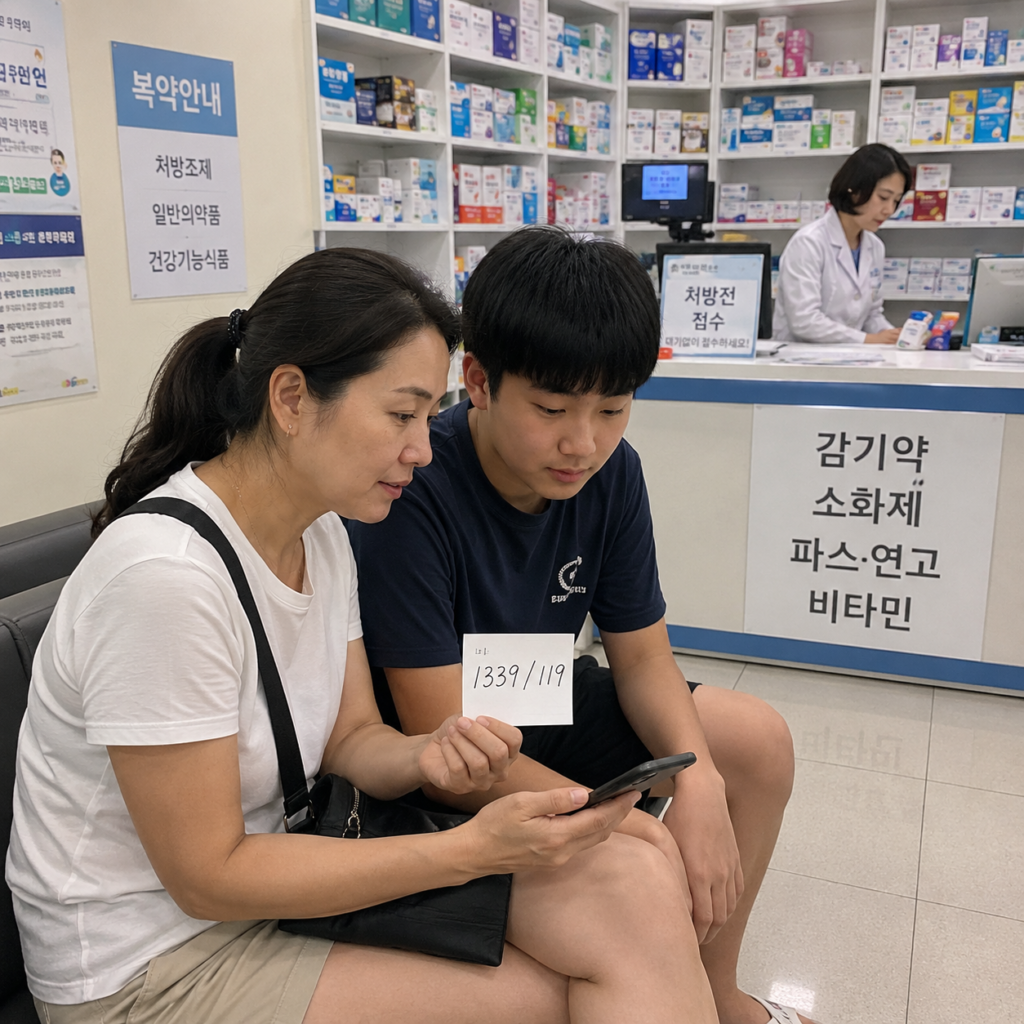
1330 is the Korea Travel Helpline. It provides tourism information, interpretation and other traveler assistance, but it is not the ambulance number.
If an emergency requires police, fire, rescue or medical responders, use 112 or 119 directly instead of waiting for a general tourism service to handle the situation.
Prepare Your Phone Before the Trip
Save important numbers before arriving in Korea rather than searching for them under stress:
- 119 — Fire, rescue and ambulance
- 112 — Police emergency
- 1339 — KDCA infectious-disease and public-health information
- 1330 — Korea Travel Helpline
- 1345 — Immigration Contact Center
Also save your accommodation address in both Korean and English, and keep a screenshot available in case mobile data is temporarily unavailable.
If you are still deciding how to keep your phone connected in Korea, our eSIM vs physical SIM vs roaming guide explains the differences between data-only plans, Korean numbers and home-carrier roaming.
Frequently Asked Questions
Is 1339 Korea’s ambulance number?
No. 1339 is the Korea Disease Control and Prevention Agency Call Center. For an ambulance, fire, rescue or urgent medical emergency, call 119.
Can a foreign traveler use 119 with English interpretation?
Yes. Korea’s official tourism guidance says callers who do not speak Korean can say “English please” or “Interpreter please” after connecting to 119 so that professional interpretation can be arranged.
What is 1345?
1345 is the Immigration Contact Center. KDCA’s English Call Center page currently directs foreign-language users to 1345 for multilingual assistance. It is not an ambulance or emergency-response number.
How do I find an emergency room or pharmacy in Korea?
Korea’s E-Gen emergency medical portal provides information about emergency rooms, hospitals and pharmacies. If you need immediate emergency assistance, call 119 instead of relying only on an online search.
Can I call 1339 from outside Korea?
KDCA currently lists +82-2-2633-1339 and +82-2-2163-5945 for calls from overseas. International calling charges may apply.
Final Takeaway
The safest way to remember Korea’s medical and public-health numbers is simple: 119 is for emergency response; 1339 is for KDCA infectious-disease and public-health information.
If you do not speak Korean during a 119 call, say “English please” or “Interpreter please.” Keep your accommodation address and nearby location details saved on your phone so you can tell the operator where help is needed.
For non-emergency medical-facility searches, use official resources such as E-Gen rather than relying on an old list of hospitals or opening hours. For infectious-disease, travel vaccination, prevention or reporting questions, check the current KDCA 1339 guidance.
This article provides general travel safety information and does not replace medical diagnosis or treatment. If you need urgent medical assistance in Korea, call 119.