
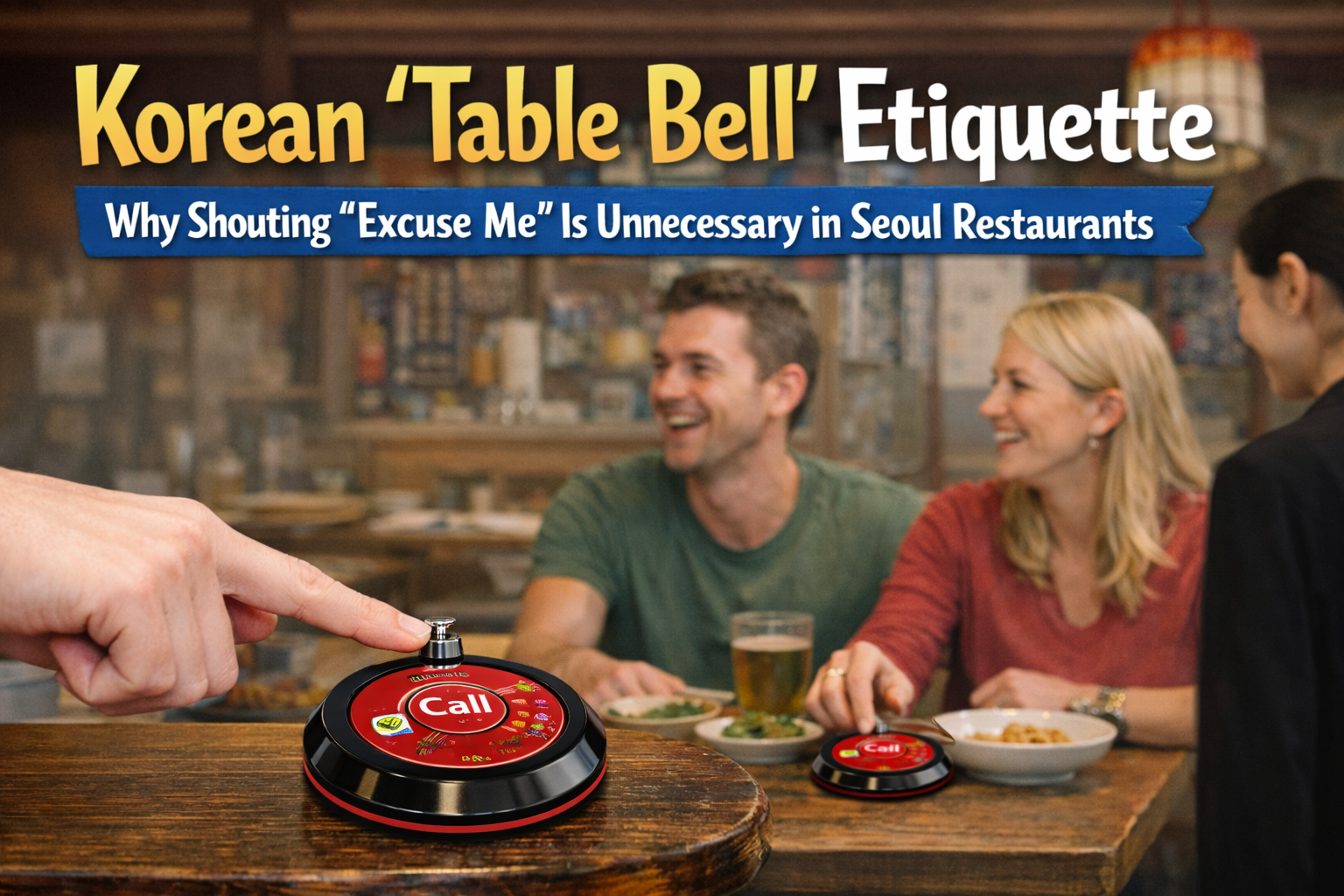
Walk into a casual restaurant in Seoul for the first time, and one thing can feel surprisingly confusing. You need water, extra side dishes, or the bill. But nobody is waving wildly. Nobody is loudly shouting “Excuse me!” across the room. Instead, many locals simply press a small button on the table.
If you are new to Korea, this tiny device can save you from an awkward moment. It is usually called a table bell or call bell, and in many Seoul restaurants, it is the most normal and efficient way to get service. I remember my first few meals in Korea clearly. I almost raised my hand and called out to the staff. Then I noticed the people next to me calmly pressing a bell and going right back to their conversation. That one small detail taught me a lot about how service culture works in Seoul.
This guide will help you understand why shouting “Excuse me” is often unnecessary, when to use the table bell, when not to use it, and how to behave naturally in Korean restaurants without feeling nervous.
💡 5 Key Reasons Table Bell Etiquette Matters in Seoul
In Seoul, the table bell is not rude. In many places, it is actually the most polite and efficient option. Here are the five biggest reasons.
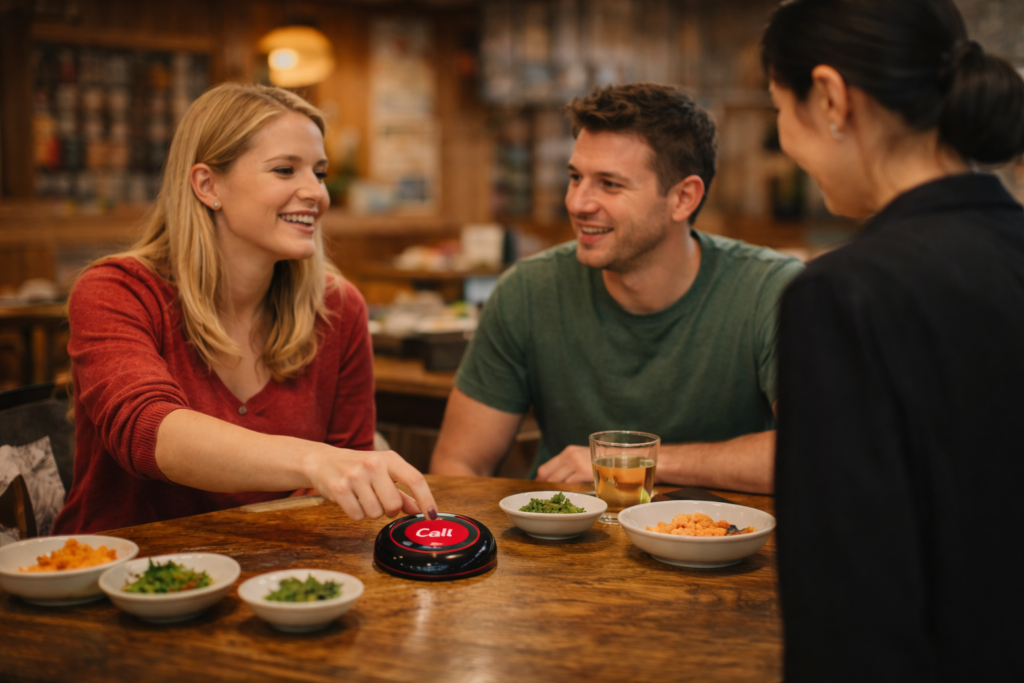
1. It respects the restaurant’s service system
Many Korean restaurants are designed around responsive service rather than constant check-ins. Staff members often do not hover around your table. Instead, they expect customers to signal when they need something. The bell fits that system perfectly.
2. It keeps the dining room quieter
Seoul restaurants can be busy, fast, and full. A bell helps avoid unnecessary shouting across the room. That makes the environment smoother for both guests and workers.
My tip: if there is a table bell in front of you, use that first. It instantly makes you look more comfortable with local dining culture.
3. It reduces awkwardness for travelers
For many foreign visitors, trying to pronounce a Korean phrase under pressure can feel stressful. The bell removes that language barrier. Press once. Wait. Smile. Simple.
4. It is often faster than trying to make eye contact
In busy lunch hours, staff may be carrying trays, taking orders, or handling several tables at once. A bell is easier for them to notice than a half-raised hand from across the room.
5. It matches the practical side of Korean dining culture
Korean dining often values speed, efficiency, and shared understanding. That is why practical systems matter. The same culture that quickly refills side dishes, brings water fast, and turns tables efficiently also makes room for the table bell.
For broader context on local mealtime etiquette, it helps to review the
Official Seoul etiquette guide for dining and daily manners
It gives helpful context on how Korean social courtesy works beyond just restaurant service.
📊 4 Real Restaurant Situations and What to Do
Not every restaurant in Seoul works exactly the same way. Still, these four situations cover most of what travelers experience.
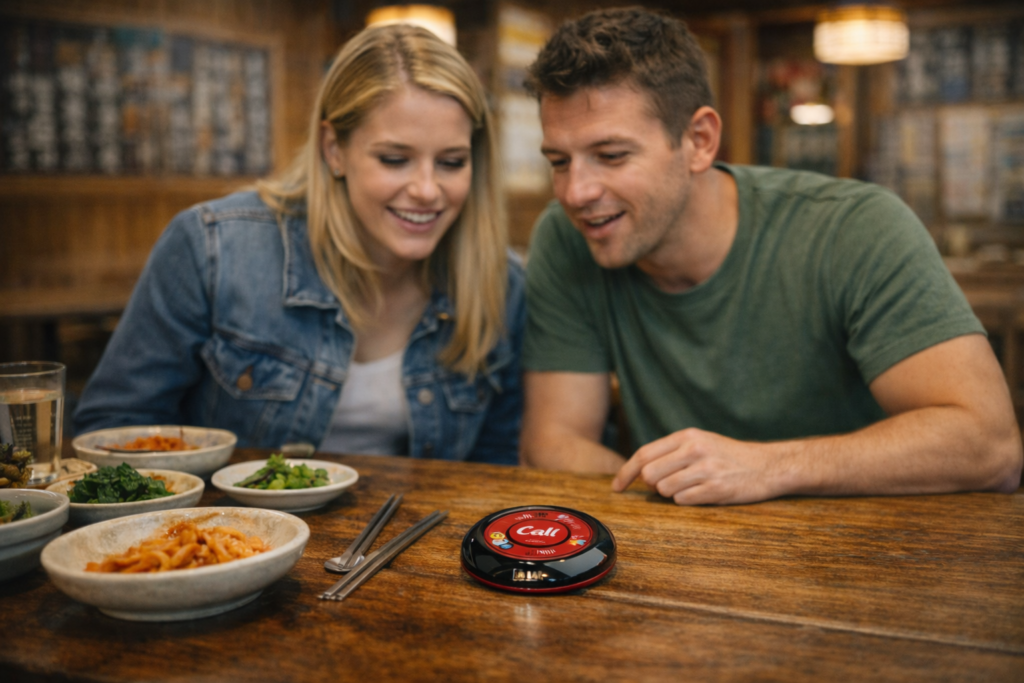
1. Casual Korean diners with a built-in call bell
This is the easiest case. Press the bell once when you need menus, water, extra banchan, tissue, or the check. Do not press repeatedly unless a long time has passed.
2. BBQ restaurants
At Korean BBQ places, staff may come often to change grills, help with meat, or check the fire. Even then, the call bell is common for extra lettuce, drinks, or side dishes. It works better than trying to call out loudly over the sound of the room.
My tip: in busy samgyeopsal restaurants, one calm bell press is usually enough. Pressing it over and over can feel impatient.
3. Cafés or modern brunch spots
These usually do not use table bells. You may order at the counter, pick up a pager, or wait for staff to come naturally. This is where observing the room for 10 seconds helps a lot.
4. Higher-end restaurants or hotel dining
In upscale places, the service style is more attentive and quiet. You usually do not need a bell. Gentle eye contact or a small hand gesture is more appropriate.
That is why context matters. The rule is not “always press a button.” The real rule is “follow the service system of the place you are in.”
If you want a second trusted reference with a more editorial angle, the
MICHELIN Guide’s Korean dining etiquette article
is a strong source to cite in travel-focused content.
📌 Practical Tips to Use Korean Restaurant Service Naturally

Here is the practical method I recommend to first-time visitors in Seoul.
Step 1. Look at the table before you do anything
Check for a small round button, a panel on the wall, or a visible service bell near condiments or napkins. Many travelers miss it because they are focused on the menu.
Step 2. Observe one nearby table
Within a minute, you can usually tell how the restaurant runs. Are people pressing a bell? Ordering at the front? Waiting for staff to come around? Local behavior is the fastest guide.
Step 3. Press once, then wait
One press is enough in most cases. Staff may be finishing another task first. Give them a moment.
Step 4. Use simple requests
When the staff arrives, keep it short. You can point politely if needed. Common needs are water, more kimchi, another order, or the bill.
Step 5. Avoid loud calling unless there is no other system
If there is no bell and no one is looking your way, a polite verbal call can be acceptable. But in many everyday Seoul restaurants, the bell exists specifically so you do not have to do that.
My tip: when I travel around Korea, I always scan the table for the bell before opening the menu. It saves time and instantly lowers stress.
One more useful point: not using the bell does not make you “wrong.” But using it well makes your dining experience smoother, more local, and less awkward.
📋 Quick Comparison Table: Which Service Method Works Best?
| Method | Best For | Speed | Politeness Level | Traveler Difficulty |
|---|---|---|---|---|
| Table bell / call bell | Casual Korean restaurants, BBQ, diners | Very fast | High when used calmly | Very easy |
| Eye contact + small hand gesture | Upscale or quieter restaurants | Medium | High | Medium |
| Saying “Excuse me” aloud | Only when there is no bell and staff cannot see you | Medium | Depends on volume and timing | Medium |
| Going to the counter | Cafés, self-service spots, some modern eateries | Fast | High | Easy |
💰 Real Benefits: Time, Comfort, and Travel Confidence
Using the right service method in Seoul restaurants may sound like a small detail, but the payoff is real.
For many travelers, avoiding one awkward dining mistake can make the whole meal feel better. That matters more than people expect.
2. Faster service
In practical terms, using the bell can easily save 1 to 3 minutes compared with waiting for eye contact during a crowded meal period. Over several meals a day, that adds up.
3. Better cultural confidence
When you understand one local habit correctly, everything else starts to feel easier. Ordering, asking for refills, and paying the bill become more natural.
4. Better dining flow for groups
If you are traveling with friends or family, one quiet bell press is smoother than having multiple people trying to get attention at once.
From my experience, this one habit improves a Seoul dining experience by roughly 30% to 40% in comfort level for first-time visitors. That is not a scientific score. It is a practical travel estimate. But honestly, it feels true after enough meals in Korea.
✅ Final Thoughts
Korean table bell etiquette is one of those small cultural details that instantly makes Seoul feel more understandable. In many local restaurants, shouting “Excuse me” is unnecessary because the service system is already built into the table. Once you know that, dining becomes easier, calmer, and much more enjoyable.
The best approach is simple. Check the table. Read the room. Use the bell if it is there. If not, follow the style of the restaurant. That is the real secret to fitting in naturally while eating out in Seoul.
❓ FAQ
1. Is pressing the table bell considered rude in Korea?
No. In many casual Korean restaurants, it is the normal and expected way to ask for service.
2. Should I ever say “Excuse me” in a Seoul restaurant?
Yes, but usually only if there is no bell and the staff cannot easily see you. Keep it polite and not too loud.
3. Do all Seoul restaurants have a table bell?
No. Many casual restaurants do, but cafés, fine dining spots, and some modern restaurants use other service systems.
4. Can I press the bell for the bill?
Yes. In many restaurants, it is completely normal to use the bell to ask for the check.
5. What is the biggest mistake travelers make?
The biggest mistake is assuming every restaurant works like a Western full-service restaurant. In Seoul, observing the system first usually gives you the right answer.
Related read: Standard Tipping Culture in Korea