

Finding a public trash can in Seoul can be surprisingly difficult when you are carrying an empty coffee cup or street-food wrapper. Start with managed places such as larger subway stations, malls, public facilities, attractions, and clearly marked park waste areas.
Do not expect a bin on every corner. Availability varies by district and facility, so carrying a small bag for cups and wrappers is one of the easiest ways to avoid frustration.
Quick answer
Your most practical places to check are larger subway station concourses, malls and department stores, museums and attractions, staffed public facilities, and clearly marked waste areas in parks or event zones. Not every station entrance, bus stop, or park section has a public bin.
- Carry small trash temporarily: keep a clean spare bag or reusable pouch in your daypack.
- Follow the labels: use general-waste or recycling openings only when the category is clear.
- Do not use residential bags: bags waiting outside homes and businesses are not public disposal points.
- Respect store rules: use a cafe or convenience-store bin only when it is clearly provided for customers.
Why Seoul can feel clean while bins are hard to spot
Korea’s waste system emphasizes separation and paid disposal. The volume-based waste fee system has operated nationwide since 1995, requiring general waste to be placed in designated paid bags while recyclable materials are separated.
You can read the official English explanation in the Ministry of Environment’s volume-based waste fee notice.
For travelers, this means that public bins are not simply places to throw every type of waste together. Overflow, incorrect sorting, food residue, and household dumping all make public-bin management more complicated.
The most useful habit is to plan before trash becomes a problem. Finish a drink near a managed facility when practical, keep a small bag in your daypack, and check for a proper bin before leaving a park, mall, museum, or station area.
Where to check for a public trash can
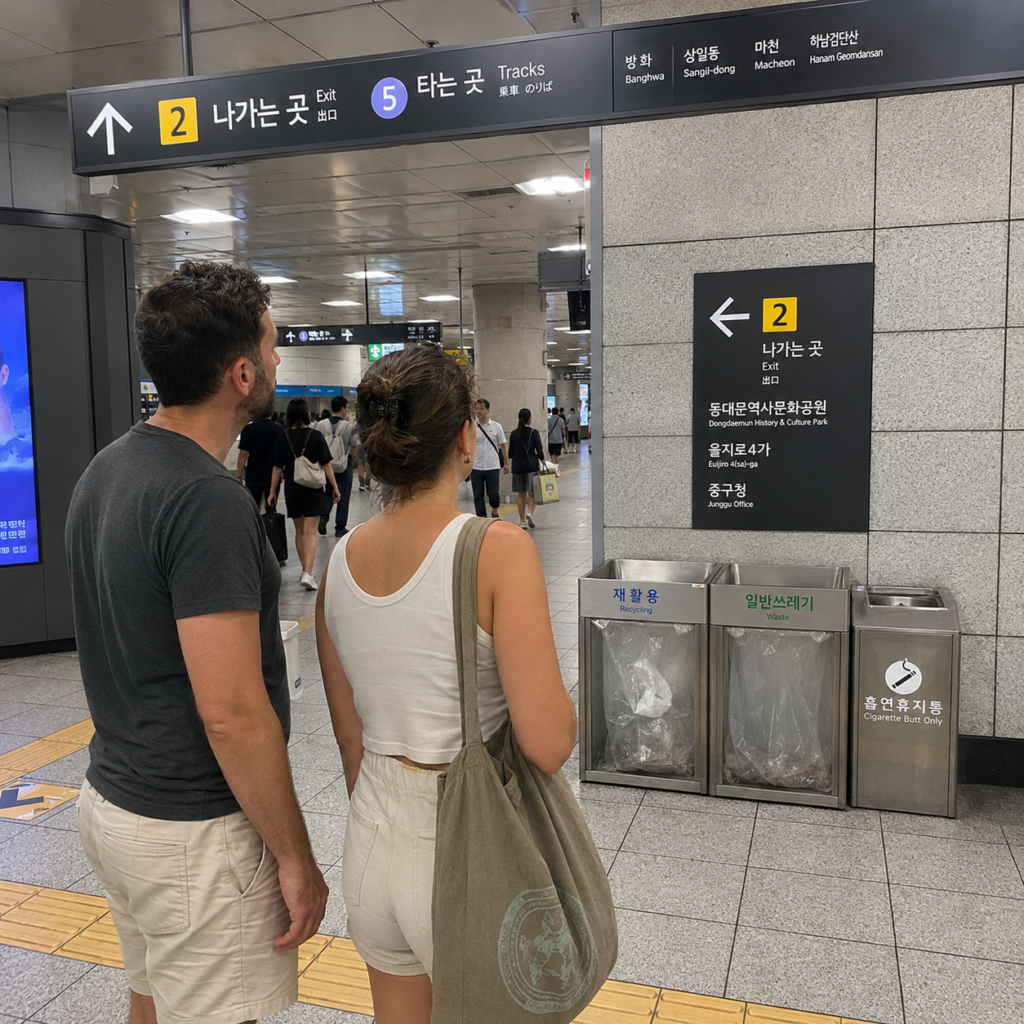
Bin locations change, and no type of location guarantees that a public bin will be available. The following places are reasonable starting points.
| Where to check | What to look for |
|---|---|
| Larger subway stations | Check concourses, waiting areas, restrooms, and station-linked shopping areas. Do not assume every entrance or platform has a bin. |
| Malls and department stores | Look near food courts, restrooms, and designated waste-return areas. |
| Museums and major attractions | Use clearly marked indoor or controlled disposal points provided for visitors. |
| Parks and public plazas | Check near restrooms, convenience facilities, picnic areas, and event zones, and follow local signs. |
| High-traffic bus stops and streets | Some have street bins, but availability varies. Look for a clearly marked bin rather than leaving waste beside the shelter. |
Seoul introduced a data-based system in 2026 to help select locations for public facilities, including street trash bins. The official Seoul public facility location announcement explains that placement can be based on local data rather than intuition alone.
What to do with coffee cups and drink containers
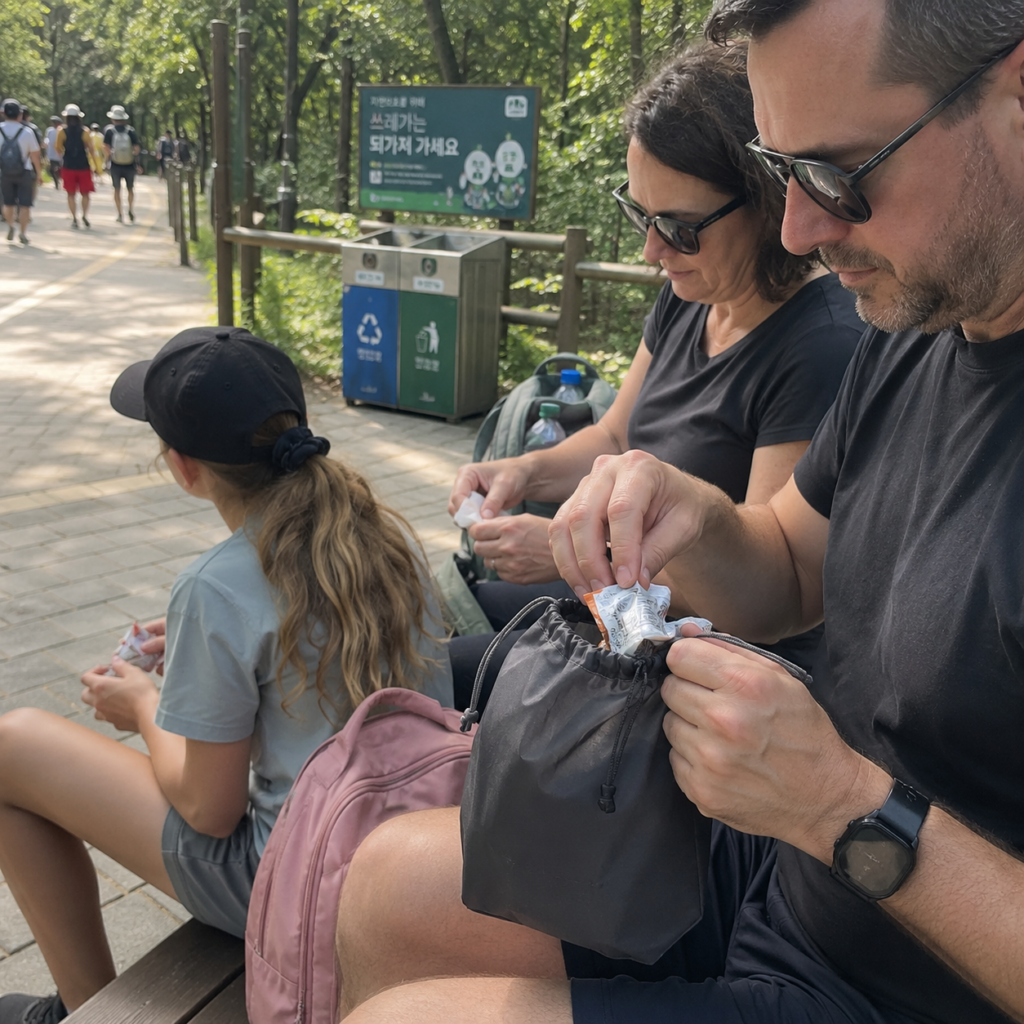
Empty takeaway cups are among the most common items travelers carry while looking for a bin. Keep the lid and straw contained so they do not leak inside your bag.
Empty leftover liquid only at a sink or liquid-collection point where disposal is clearly permitted. Do not pour drinks into planters, station floors, street drains, or the bottom of a recycling bin.
If a waste station has separate openings for liquid, cups, lids, cans, or plastic bottles, follow the labels. When the correct category is unclear, keep the item until you find a more clearly marked disposal point or can ask a member of staff.
How to handle wrappers, skewers, and street-food waste
Greasy paper, sauce-covered packaging, used napkins, and food-stained containers may not belong with clean recyclables. Wrap messy items securely and keep them separate from your passport, electronics, and clean clothing.
When eating at a market stall, ask where to return skewers, trays, cups, or packaging before walking away. A vendor may have a dedicated container or return system that is easier to use than a public street bin.
Clean cans and bottles can go into recycling when the bin is clearly labeled for them. Do not force food-covered packaging or liquids into a recycling opening simply because it is the only bin you can see.
Convenience stores and cafes are not universal public bins
Some convenience stores provide a small customer bin near the entrance, microwave, or drink area. Others provide no bin at all. Store policies and available space vary.
Use a store bin only when it is clearly provided for customers, preferably for packaging from items purchased there. Follow any sign or staff instruction, and do not enter with a full bag of unrelated outdoor trash.
Cafes may provide a return counter for their cups, trays, and food packaging. That does not necessarily mean they accept street-food waste or cups purchased from another business.
For more advice about shared spaces, read how to handle valuables in a Seoul cafe.
Do not use residential trash bags or collection piles
On residential and commercial streets, you may see tied waste bags placed outside buildings during designated collection hours. These are not public disposal points for travelers.
Waste rules can differ by district, building, and item. The official Yeongdeungpo-gu garbage disposal and recycling guide, for example, explains designated bags, disposal times, locations, sorting requirements, and possible fines for violations.
If you are staying in an apartment, guesthouse, or short-term rental, ask the host or building manager where to place general waste, recycling, and food waste. Do not copy a neighboring building’s routine without checking.
Why a bin may be difficult to recognize
Public bins in Seoul do not all have the same shape. Some are narrow, built into a waste station, or divided into small openings for general waste and recyclables. Others are placed beside a bus shelter, restroom, or facility entrance rather than in the middle of the sidewalk.
Useful Korean labels include:
- 쓰레기통: trash can
- 일반쓰레기: general waste
- 재활용: recycling
- 캔: cans
- 플라스틱: plastic
- 종이: paper
Icons and openings can be more useful than color alone. Read the label rather than assuming that every bin of the same color accepts the same material.
Some places ask you to take your trash away
Temporary events and some public facilities may explicitly ask visitors to carry their waste out. For example, Seoul’s Outdoor Library guidance has stated that certain lounge areas have no trash cans and that visitors should take their trash with them.
Follow the signs at the specific venue. Do not assume that a clean public area must have a hidden bin nearby.
A simple trash plan for a day in Seoul
- Pack one small bag. Use it for dry wrappers or a sealed empty cup until you find a proper bin.
- Use managed stops. Check at a station, mall, museum, attraction, park facility, or hotel during your route.
- Return market items. Ask the stall where to place skewers, trays, and cups.
- Separate only when clear. Follow labels for cans, bottles, plastic, paper, and general waste.
- Keep residential waste separate. Never add your trash to bags waiting outside homes or businesses.
For a Hangang picnic, begin separating bottles, cans, and general waste before packing up. Use the collection area and instructions provided in that section of the park rather than assuming the nearest pile of bags is public.
What not to do
- Do not leave cups on benches, walls, subway ledges, or bus-stop seats.
- Do not place outside trash in a store bin unless it is clearly intended for customer use.
- Do not add travel waste to residential or business collection bags.
- Do not pour liquids or sauces into recycling bins.
- Do not leave trash beside a full bin.
- Do not assume that every event, park, or station has a disposal point.
Frequently asked questions
Can I throw trash away in a Seoul subway station?
Some stations have waste bins or collection points, but not every entrance, concourse, or platform has one. Check the managed areas of a larger station and carry the item with you if no appropriate bin is visible.
Where should I throw away an empty coffee cup?
First check the return area of the cafe where you bought it. Otherwise, look for a clearly marked cup or general-waste bin at a station, mall, public facility, attraction, or park.
Can I use a convenience-store trash can?
Only when the store clearly provides one for customers. It is best used for packaging from items purchased there, and you should follow posted signs or staff instructions.
What should I do when I cannot find any bin?
Seal the item in your own small bag and carry it until you reach a suitable managed facility. Carrying small waste temporarily is preferable to leaving it beside a bench, residential bag, or full bin.
Final takeaway
Public trash cans in Seoul are available, but their locations are not evenly distributed and no single type of place guarantees one. Think in terms of managed disposal points rather than expecting a bin on every street corner.
Carry a small bag, follow the labels, return food-stall items where requested, and keep your waste away from residential collection bags. Once you plan one disposal stop ahead, empty cups and wrappers become a minor inconvenience instead of the main problem of your afternoon.
You might also like: How to Read Korean Washing Machine Buttons