
Checked on July 19, 2026. Bus procedures, routes, and payment rules can vary by city and may change.
If a bus passed you in Korea, it does not automatically mean the driver ignored a tourist. You may have been waiting at the wrong stop or in the wrong direction, the route may not serve that exact stop, the bus may have been full or out of service, or the driver may not have seen that you intended to board.
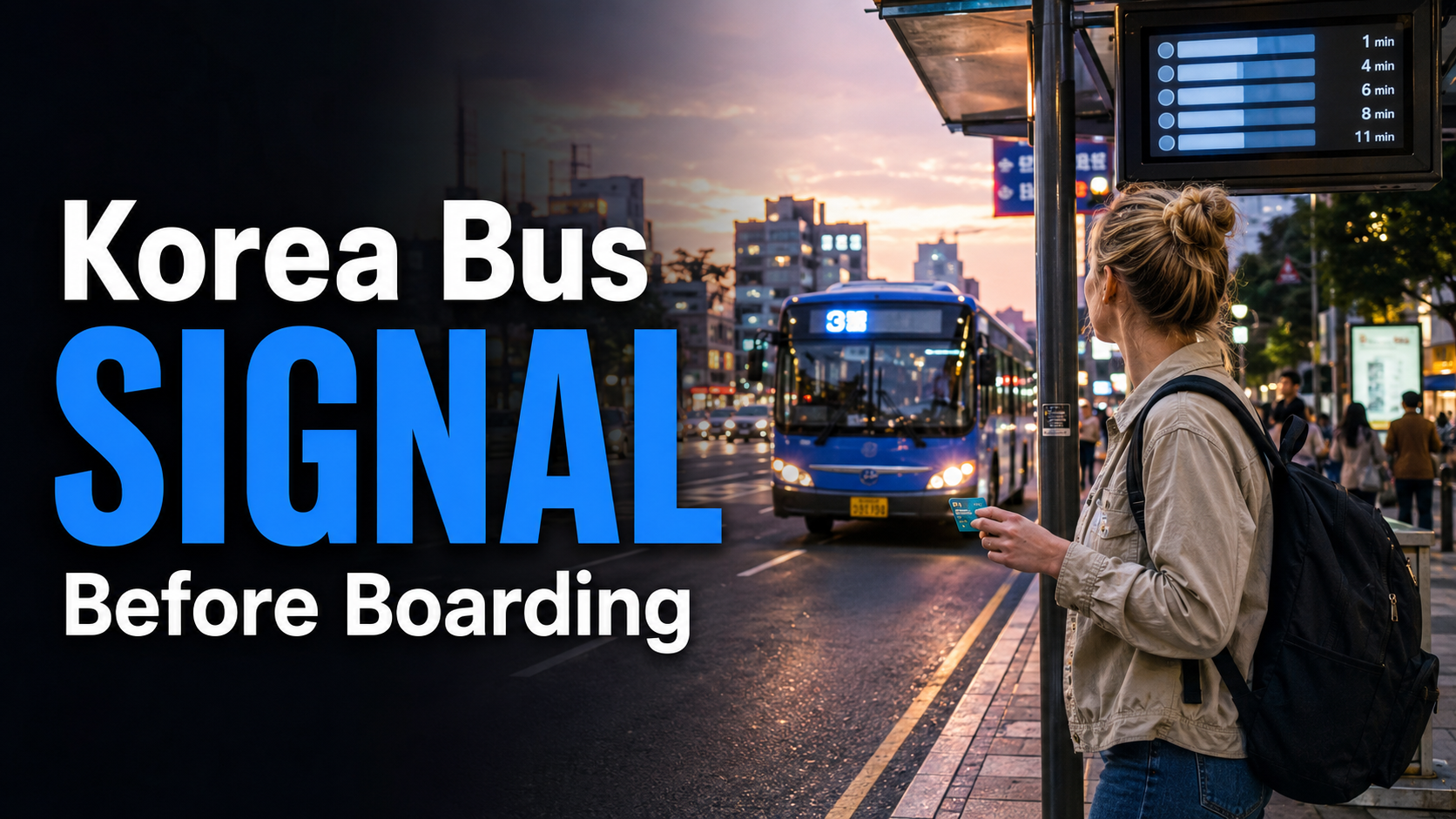
The safest response is to check the route number, stand at the marked boarding area, face the approaching bus, and make yourself visible. At a crowded stop, a small hand signal can help communicate that you want that bus, but it is a practical gesture rather than a nationwide boarding requirement.
Quick answer
Confirm that your route number is listed at the stop, wait where the front door can safely reach the curb, and look toward the approaching bus. If several routes use the same stop, raise one hand briefly to make your intention clear. Never step into the roadway or bus lane.
Why a Bus May Pass Your Stop in Korea
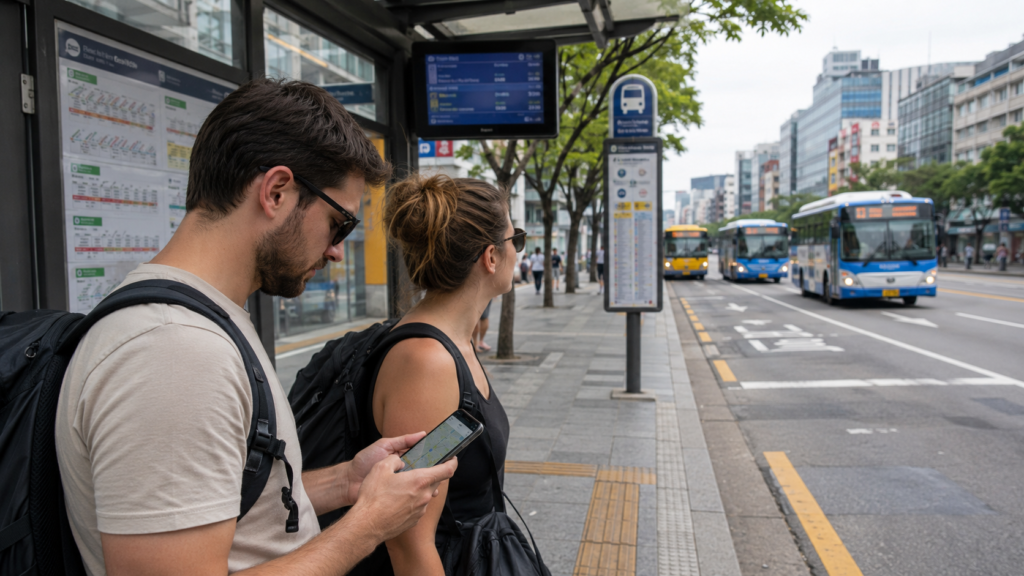
A bus can pass for several reasons, and the cause is not always obvious from the sidewalk. Before assuming the driver deliberately ignored you, check the route, stop, direction, and destination display.
| Possible reason | What to check |
|---|---|
| You were waiting inside or behind the shelter | Move to the marked boarding area where the driver can see you. |
| The stop serves several routes | Check the bus number before moving forward or signaling. |
| You were on the opposite side of the road | Confirm the destination direction in a map app or on the stop display. |
| The route does not stop there | Make sure the exact route number appears on the stop sign or digital board. |
| The bus was full, out of service, or ending its route | Check the destination display and wait for the next scheduled bus. |
A bus may travel along the same road without serving every stop. The route number must be listed at the stop where you are waiting. Stops on opposite sides of the road may have similar names but serve different directions.
How to Make It Clear You Want the Bus

There is no need to wave both arms or chase the bus. The goal is simply to stand where the driver expects passengers to board and make your intention visible before the bus reaches the stop.
- Check the route number while the bus is still approaching.
- Move from the bench or shelter to the marked boarding area.
- Face the bus rather than looking down at your phone.
- At a crowded stop, raise one hand briefly if your intention may be unclear.
- Stay behind the curb and never step into the bus lane.
A hand signal is most useful at stops where several routes arrive together. It does not replace checking that the route serves the stop, and it does not guarantee that a full or out-of-service bus will stop.
If you notice your bus too late, do not run beside it or enter traffic. Wait for the next bus and use the extra time to confirm the stop name and direction.
How to Board and Pay Without Delaying the Line
On Seoul city buses, passengers normally board through the front door and exit through the rear door. Many other Korean city buses use the same flow, but local procedures can vary.
Prepare your transportation card before the bus arrives, step on after the doorway is clear, and tap the reader near the driver.
Check the reader display or confirmation sound. If an error appears, move slightly aside so other passengers can pass, then try the card again or show the reader message to the driver.
Travelers commonly use rechargeable transportation cards such as Tmoney or EZL. For card purchase, cash reloads, tap-in and tap-out, and refund basics, read our guide to using a T-money card in Seoul.
You can also review the current card options in the official VISITKOREA transportation card guide.
If several people are using one card
If several passengers are paying with one transportation card, tell the driver the number of passengers before tapping. For tourists who plan to transfer between buses or subways, using one card per person is usually simpler because transfer rules can vary by city.
Move away from the front door
After tapping, move farther into the bus instead of stopping beside the driver. Hold a rail or strap as soon as possible because the bus may begin moving before you reach a seat.
If you have a suitcase, keep it close to your body and avoid blocking the front door, aisle, card reader, or rear exit.
How to Get Off the Bus Correctly
Before your stop, press one of the stop buttons attached to the poles, windows, or seat backs. Press the bell before the bus reaches the stop rather than waiting until the doors are about to open.
Prepare your card and move carefully toward the rear door. Tap the card reader before leaving, especially if you plan to transfer to another bus or subway. Transfer discounts, time limits, and fare rules vary by city.
You can confirm the standard Seoul procedure on the Seoul Metropolitan Government public transportation guide.
Use a Map App Before the Bus Arrives
A map app can help you check the bus number, stop name, direction, estimated arrival time, and where to get off. Before leaving a hotel, café, or attraction, confirm the exact route number, the boarding stop, and the destination direction.
Kakao Map provides public transportation routes and push notifications for getting on and off. You can review these functions on the official Kakao Map service page.
For a fuller comparison of route search, English support, and bus-stop details, read our Naver Map vs KakaoMap guide for Korea travel.
When the app shows that your bus is one or two stops away, stop scrolling and move to the boarding area. At a busy stop, continuing to look down at your phone can make it harder to notice the bus and harder for the driver to see that you intend to board.
What to Say or Do If You Are Confused
You do not need a long conversation with the driver. Show your destination on your phone and use a short question.
- 이 버스 홍대 가요? — Does this bus go to Hongdae?
- 여기 맞아요? — Is this the right place?
- 감사합니다. — Thank you.
Replace “Hongdae” with the Korean name of your destination. Saving the Korean stop name or address on your phone is more useful than relying only on an English place name.
If you are lost, need interpretation, or want to report a serious tourism-related problem, the Korea Tourism Organization operates the 1330 Travel Helpline. Check the available contact methods on the official 1330 Travel Helpline page.
Quick Korean Bus Checklist
- Confirm the exact route number.
- Check the direction and stop name.
- Stand at the visible boarding area.
- Use a small hand signal only when your intention may be unclear.
- Board through the front door.
- Tap your transportation card.
- Move inside and hold a rail.
- Press the stop bell before your stop.
- Tap your card before leaving.
- Exit through the rear door.
You may not know exactly why one bus passed, but checking the route, standing at the correct boarding point, and making yourself visible will reduce the chance of missing the next one. Once you understand the boarding and tap-in process, buses become a useful way to reach neighborhoods that are farther from subway stations.