

Last checked: August 3, 2026. Exchange rates, transportation fares, admission prices, tax-refund rules and travel prices can change. Use the dated official references below and your actual bookings rather than treating any example in this guide as a fixed trip price.
Korea is not automatically cheap or expensive for American travelers in 2026. Public transportation and major cultural attractions can be inexpensive, while accommodation, shopping, nightlife, premium dining, private tours and cosmetic or medical services can raise the total quickly.
The most useful way to plan is not to copy a generic daily average. Start with the final price of your actual accommodation, then add a realistic food allowance, transportation, attraction tickets and separate limits for shopping and other optional spending.
Quick answer: Check the current KRW-to-USD exchange rate, use the final tax-inclusive price of your real accommodation booking, build food spending from menus you actually expect to use, use official transportation and attraction prices where possible, and keep shopping, nightlife, tours and beauty services separate from your essential daily budget.
How the 2026 Exchange Rate Affects American Travelers
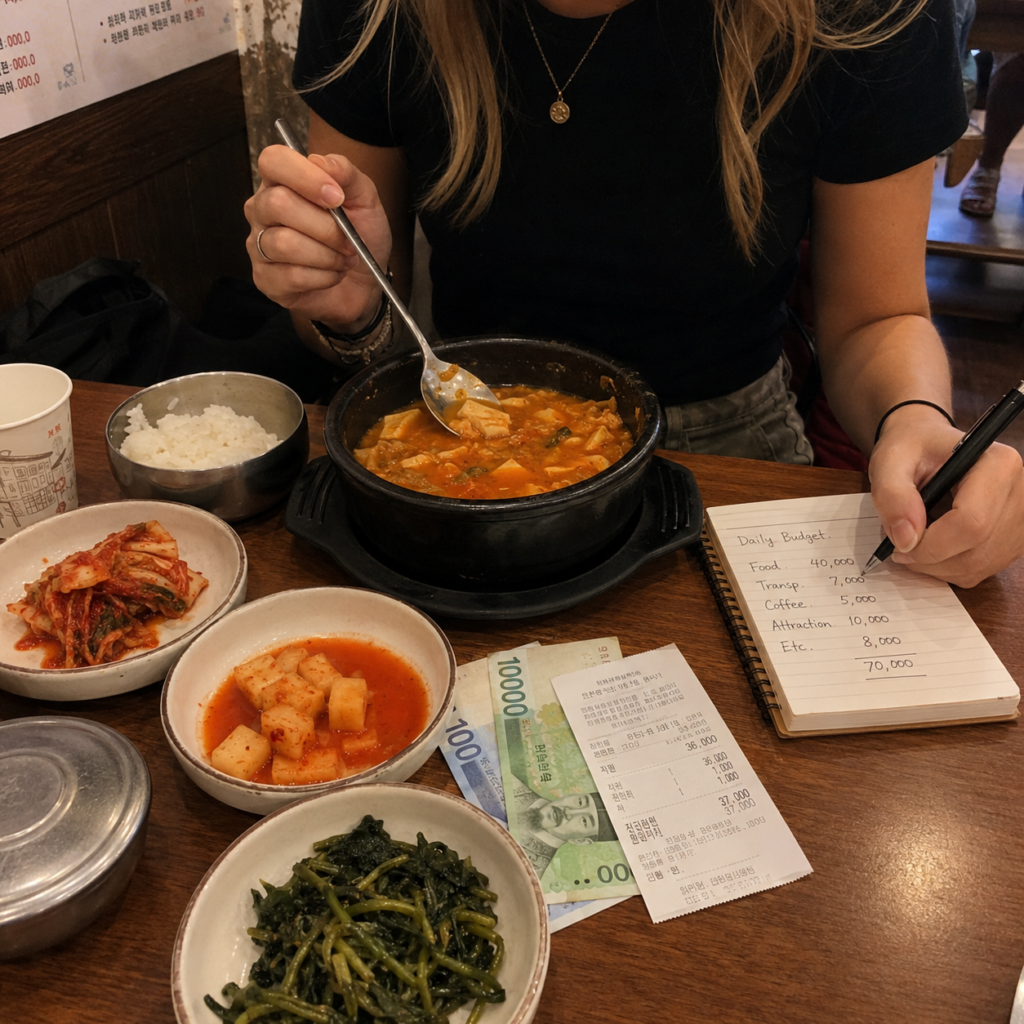
The won-to-dollar exchange rate can noticeably change how Korean prices feel to an American traveler. Federal Reserve H.10 data lists KRW 1,460.76 per U.S. dollar for July 24, 2026.
You can check the latest available figures in the Federal Reserve historical exchange-rate data for the South Korean won.
| Korean Won | Approximate USD at the July 24, 2026 Reference Rate |
|---|---|
| KRW 5,000 | About USD 3.42 |
| KRW 10,000 | About USD 6.85 |
| KRW 15,000 | About USD 10.27 |
| KRW 50,000 | About USD 34.23 |
| KRW 100,000 | About USD 68.46 |
| KRW 150,000 | About USD 102.69 |
These are reference conversions, not guaranteed card or cash-exchange rates. Your card issuer, ATM operator or currency-conversion provider may use a different rate or charge additional fees.
When a card terminal or ATM offers to convert the transaction into U.S. dollars, review the exchange rate and fees rather than assuming that seeing the price in dollars makes it cheaper.
Build Your Korea Budget from Real Bookings
There is no reliable daily cost that applies to every American visiting Korea. Two travelers on the same dates can spend very different amounts because of accommodation, room sharing, restaurants, shopping, taxis and paid activities.
Build the budget in separate categories:
| Budget Category | What to Enter |
|---|---|
| Accommodation | The final nightly price including required taxes and fees, divided by the number of travelers sharing the room. |
| Food and drinks | A daily limit based on current menus at restaurants, cafés and other places you expect to visit. |
| Transportation | Planned subway and bus trips plus a separate taxi allowance. |
| Attractions | Current official prices for palaces, museums, performances, tours or activities. |
| Shopping | A separate maximum amount rather than money left over from the food budget. |
| Optional activities | Nightlife, private tours, beauty services, concerts and other non-essential spending. |
A Hypothetical Seoul Budget Example
Suppose a solo traveler has already booked a tax-inclusive room for KRW 140,000, sets a KRW 45,000 food-and-drink limit, takes four separate subway journeys that each stay within the adult base fare, and visits Gyeongbokgung Palace.
- Accommodation: KRW 140,000
- Food and drinks: KRW 45,000
- Four base-fare subway journeys: KRW 6,200
- Gyeongbokgung Palace: KRW 3,000
- Illustrative total before shopping: KRW 194,200
At the dated July 24 Federal Reserve reference rate, KRW 194,200 is roughly USD 133. This is not an average Seoul daily cost. The room and food figures above are hypothetical and should be replaced with your actual booking and planned spending.
Accommodation Can Change the Budget More Than Small Daily Expenses
Accommodation prices can change by neighborhood, date, room occupancy, cancellation terms, taxes, concerts, festivals, weekends and how early you book. A broad hotel price range becomes outdated quickly and may not match the dates you are actually traveling.
Compare the final stay total rather than only the first nightly number shown in a search result. Check whether the displayed amount includes required taxes, the correct number of guests and any extras you care about such as breakfast or luggage storage.
Location also has a cost. A hotel near a station you will use frequently may reduce taxi spending and travel time, while a cheaper room far from your itinerary can create additional transportation costs.
Food Can Fit Many Different Budgets
There is no single useful “Korean meal price.” A casual neighborhood restaurant, market stall, bakery, convenience store, café, premium barbecue restaurant, hotel restaurant and cocktail bar serve very different budgets.
Before traveling, check current menus at several places near your hotel and at restaurants already on your itinerary. Include coffee, desserts, drinks and late-night snacks instead of budgeting only for lunch and dinner.
VISITKOREA states that tipping is generally not required or expected at ordinary Korean restaurants. Its guide to Korean food and restaurant dining also describes self-service systems used by some businesses.
Restaurant policies still vary. Do not assume that every extra menu item, refill, set option or special side dish is free unless the menu or staff confirms it.
Public Transportation Is One of the Easier Costs to Predict
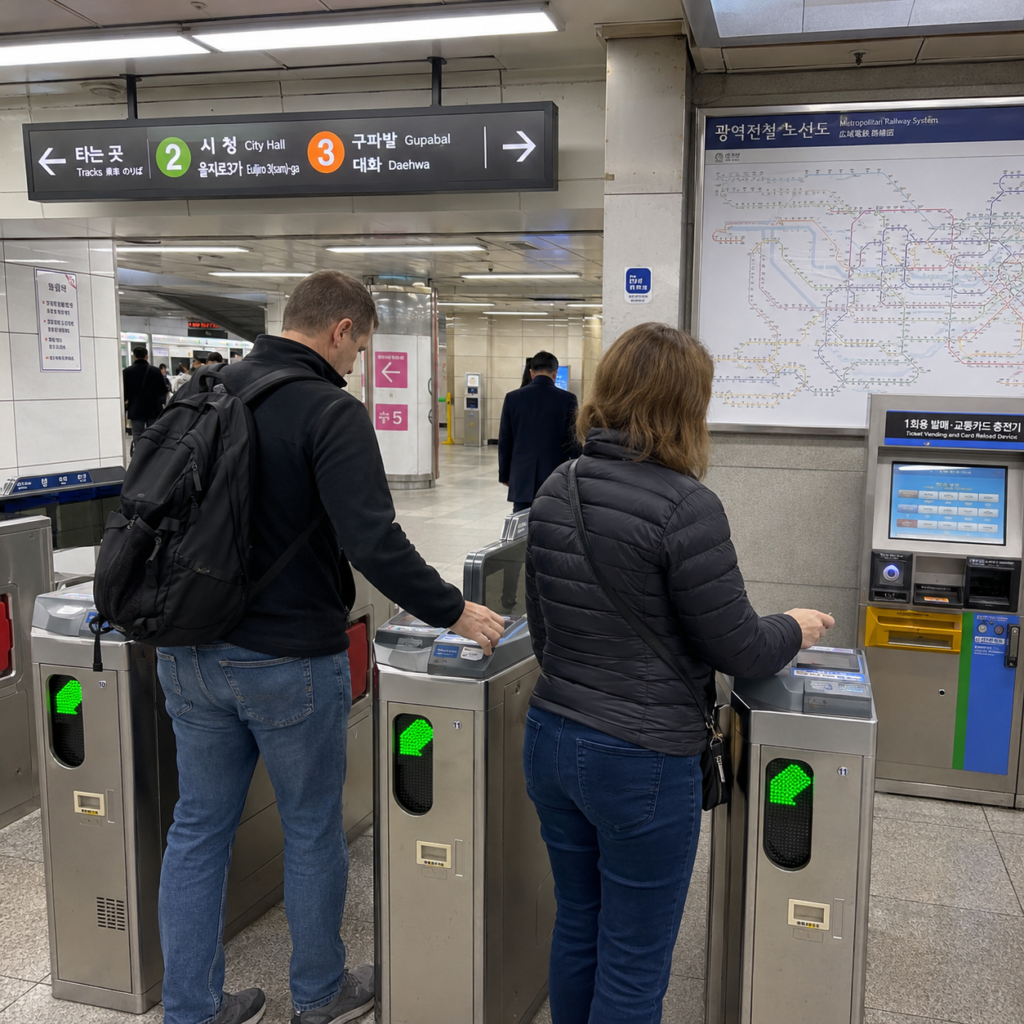
Seoul’s official subway fare page currently lists the adult base fare at KRW 1,550 with a transportation card and KRW 1,650 for a single-ride ticket. Additional distance charges can apply.
Check the current Seoul Metropolitan Government subway fare information shortly before the trip because fares and conditions can change.
Public transportation makes ordinary sightseeing spending relatively easy to plan compared with repeated taxi rides. Keep a separate taxi allowance for luggage, late-night travel, mobility needs or routes where a taxi provides meaningful convenience.
For purchase, cash reloads, gate taps, bus exit taps and transfer basics, read our guide to using a T-money card in Seoul.
Many Major Cultural Attractions Have Modest Admission Fees
Some palaces, museums, parks, neighborhoods, markets and riverside areas can be visited for a relatively small admission fee or no admission fee at all. This makes it possible to combine expensive activities with low-cost sightseeing days.
For example, the official adult individual admission fee for Gyeongbokgung Palace is currently KRW 3,000. Check the official Gyeongbokgung admission information for current prices and free-admission conditions.
Private tours, theme parks, concerts, professional photo sessions, ski trips, cooking classes and similar activities should be budgeted separately instead of being hidden inside a general sightseeing estimate.
Shopping Is Easy to Underestimate
Shopping can expand a Korea budget quickly because many individual purchases feel inexpensive. Cosmetics, skincare, stationery, character goods, clothing, snacks, souvenirs and photo booths can add up over several days.
Set a shopping ceiling before entering large beauty or retail stores and keep it separate from food and transportation money. Compare the final price of the exact product or set rather than assuming that a Korean sale price is automatically cheaper than the U.S. price.
If beauty shopping is part of the trip, our Olive Young in Korea guide explains how to set a total budget, compare sets, check luggage limits and review tax-refund conditions before checkout.
Check Tourist Tax-Refund Eligibility Before Paying
Eligible foreign visitors may receive a tax refund on qualifying purchases at participating stores when the applicable requirements are met. Do not assume that every store, product or transaction qualifies.
The current VISITKOREA tax-refund guide explains eligibility, participating stores, purchase requirements and refund procedures.
Look for the tax-refund sign and keep the receipt and required documents until you have completed the applicable process.
Where Korea Travel Budgets Often Grow Unexpectedly
- Hotels: peak dates, weekends, taxes and late booking can increase the final total.
- Cafés and desserts: several small stops can add the equivalent of another meal.
- Taxis: traffic, late-night conditions and repeated cross-city trips add up.
- Shopping: inexpensive individual purchases can become a large total.
- Nightlife: drinks, admission or cover charges, food and the trip home belong in one budget.
- Private tours and events: ticket prices should stay outside your basic daily living budget.
- Beauty and medical services: an advertised entry price may not equal the final consultation or treatment cost.
If a skin-clinic appointment is part of your itinerary, treat it as a separate medical or cosmetic expense rather than an ordinary sightseeing cost. Our guide to what Americans should check before booking a skin clinic in Seoul covers provider verification, treatment plans, total costs and follow-up considerations.
How to Keep a Korea Trip Affordable
- Start with accommodation. Compare the final room total and transportation needs rather than only the neighborhood name.
- Use public transportation for normal sightseeing. Save taxis for situations where the extra convenience is worth the cost.
- Build food spending from actual menus. Include coffee, desserts, drinks and snacks.
- Separate shopping from essential expenses. Decide the maximum before entering stores.
- Mix paid and low-cost activities. A palace, park, market or neighborhood day can balance a more expensive tour or event.
- Keep optional services outside the basic daily budget. Nightlife, concerts, private tours and beauty treatments should each have their own allowance.
- Prepare more than one payment method. A failed card should not force you to abandon your planned budget.
If an overseas card stops working, our guide to what to do if your credit card is declined in Korea explains terminal problems, DCC, issuer checks and payment backups.
Frequently Asked Questions
How much should an American budget per day in Seoul?
There is no reliable universal figure. Start with the final tax-inclusive accommodation cost per person, then add your planned food allowance, transportation, admission fees and a separate amount for shopping or nightlife.
Is food in Korea cheaper than in the United States?
Some casual meals may feel inexpensive to American visitors, while premium meat, hotel dining, trendy brunch, desserts, cocktails and tourist-area restaurants can be expensive. Compare current menu prices for the type of restaurants you actually plan to use.
Is Seoul public transportation expensive?
The current official adult subway base fare is KRW 1,550 when using a transportation card. Additional distance charges can apply, but subway and bus spending is generally easier to estimate than accommodation, shopping or taxis.
Do I need to tip in Korea?
Tipping is generally not required or expected at ordinary Korean restaurants. Follow any clearly stated service charge or individual business policy when one applies.
Should I carry cash in Korea?
Credit cards are widely accepted at many hotels, department stores and general shops, but individual merchants or terminals may not accept a particular foreign-issued card. A modest Korean-won backup can be useful for transportation-card reloads, markets, small purchases or an unexpected payment problem.
If you plan to withdraw won after arrival, our guide to what to do when a Korean ATM rejects your foreign card explains Global ATM markings, network support, issuer settings and withdrawal fees.
Can tourists receive tax refunds when shopping in Korea?
Eligible visitors can receive refunds on qualifying purchases at participating stores when the applicable conditions are met. Check the store’s tax-refund participation, minimum purchase requirement, receipt, product condition and departure rules instead of assuming that every purchase qualifies.
Final Takeaway
Korea is not automatically cheap or expensive for Americans in 2026. Public transportation and many cultural attractions can be relatively inexpensive, while accommodation, shopping, taxis, nightlife, private activities and beauty services create much larger differences between travelers.
Use a current dated exchange-rate reference, start with the final price of your real accommodation booking and separate necessary daily costs from optional spending. That gives you a more useful budget than copying a single average daily figure from another traveler.
Prices, exchange rates, fares, admission fees and tax-refund rules can change. Confirm time-sensitive information through the linked official sources before traveling.