
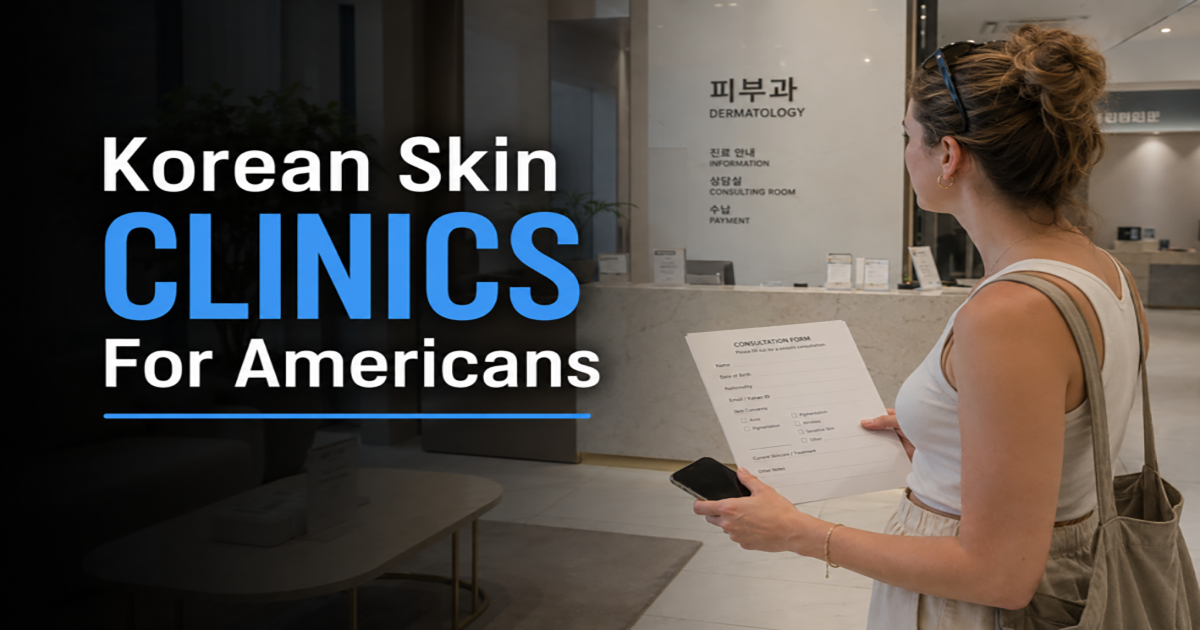
Seoul has many clinics that market cosmetic skin treatments to international visitors, but an English booking page and a low package price do not replace medical screening, informed consent, or follow-up care.
Before booking lasers, injectables, radiofrequency treatments, skin boosters, acne procedures, or other medical aesthetic services, verify the institution, the treating clinician, the exact treatment plan, the full cost, and what will happen if you need help after leaving Korea.
Quick answer
- Check whether the clinic is listed as a registered institution serving foreign patients.
- Ask for the treating doctor’s name and medical specialty.
- Do not agree to a package until the clinician explains why each procedure is appropriate.
- Request written risks, aftercare instructions, and an emergency contact in English.
- Leave enough time for procedure-specific monitoring or follow-up before departure.
- Confirm the complete price, deposit, cancellation policy, and possible follow-up costs.
- Do not assume that U.S. insurance or travel insurance will cover the procedure or complications.
1. Verify the medical institution
Start by checking the Medical Korea registered hospitals and clinics directory. Korea operates a registration system for medical institutions that attract foreign patients, and registered institutions are required to carry medical malpractice liability insurance.
Registration is a useful first check, but it does not guarantee a particular result or confirm that every treating doctor is a board-certified dermatologist. You still need to verify the clinician, treatment, consent process, and aftercare plan separately.
Make sure you are booking a medical institution rather than a non-medical beauty salon. Procedures involving injections, prescription medication, medical lasers, numbing, wounds, or other medical decisions should have a clearly identified licensed clinician responsible for the care.
2. Confirm who will consult and treat you

Ask for the treating doctor’s name and specialty before paying a large deposit. Confirm who will assess your skin, recommend the procedure, perform it, and respond if a complication develops.
- Is the treating doctor a board-certified dermatologist, plastic surgeon, or another licensed physician?
- Will the doctor examine me before the final treatment decision?
- Which parts are performed by the doctor, nurse, assistant, or skin-care staff?
- Will the English-speaking person be a medical interpreter, coordinator, or salesperson?
The VISITKOREA overview of Korean dermatology clinics explains Korea’s dermatology specialist training system. Do not assume that a clinic name or advertisement proves the specialty of the individual doctor who will treat you.
3. Treat packages as advertisements, not medical plans
Packages may use names such as glow, lifting, pores, acne, anti-aging, or glass skin. These labels can make comparison easier, but they do not explain whether every included procedure is appropriate for your skin, medical history, or travel schedule.
Ask the doctor to explain each component before you agree:
| What to ask | Why it matters |
|---|---|
| What exact procedure is included? | Marketing names may not identify the actual injectable, device, energy treatment, or medication. |
| Why is this appropriate for me? | The recommendation should follow an individual consultation rather than only a package menu. |
| Can any part be removed? | You should not have to accept every bundled procedure. |
| What alternatives are available? | A lower-intensity option or no treatment may also be reasonable. |
| What results are realistic? | Results vary, and one visit may not achieve the outcome shown in advertising. |
Tell the clinician about previous cosmetic procedures, allergies, current medications, pregnancy or breastfeeding, a history of scarring or pigmentation changes, and any condition that may affect healing. Do not stop a prescribed medication unless the clinician who manages it tells you to do so.
4. Request risks, aftercare, and records in writing
Non-surgical does not mean risk-free. Ask about common side effects, less common serious complications, expected recovery, and warning signs that require urgent care.
Before treatment, request the exact product or device name, the treatment area, the planned amount or dose where applicable, and the clinician responsible. After treatment, ask for an English summary containing:
- the date and name of the procedure
- the product or device used
- the amount, dose, or treatment area where applicable
- normal expected reactions
- warning symptoms that require medical attention
- procedure-specific aftercare instructions
- the clinic’s daytime and after-hours contact information
Written records are particularly important if you need follow-up after returning to the United States. Keep the documents, receipts, consent forms, product details, and before-and-after photographs in a secure location.
5. Plan the appointment around follow-up, not sightseeing
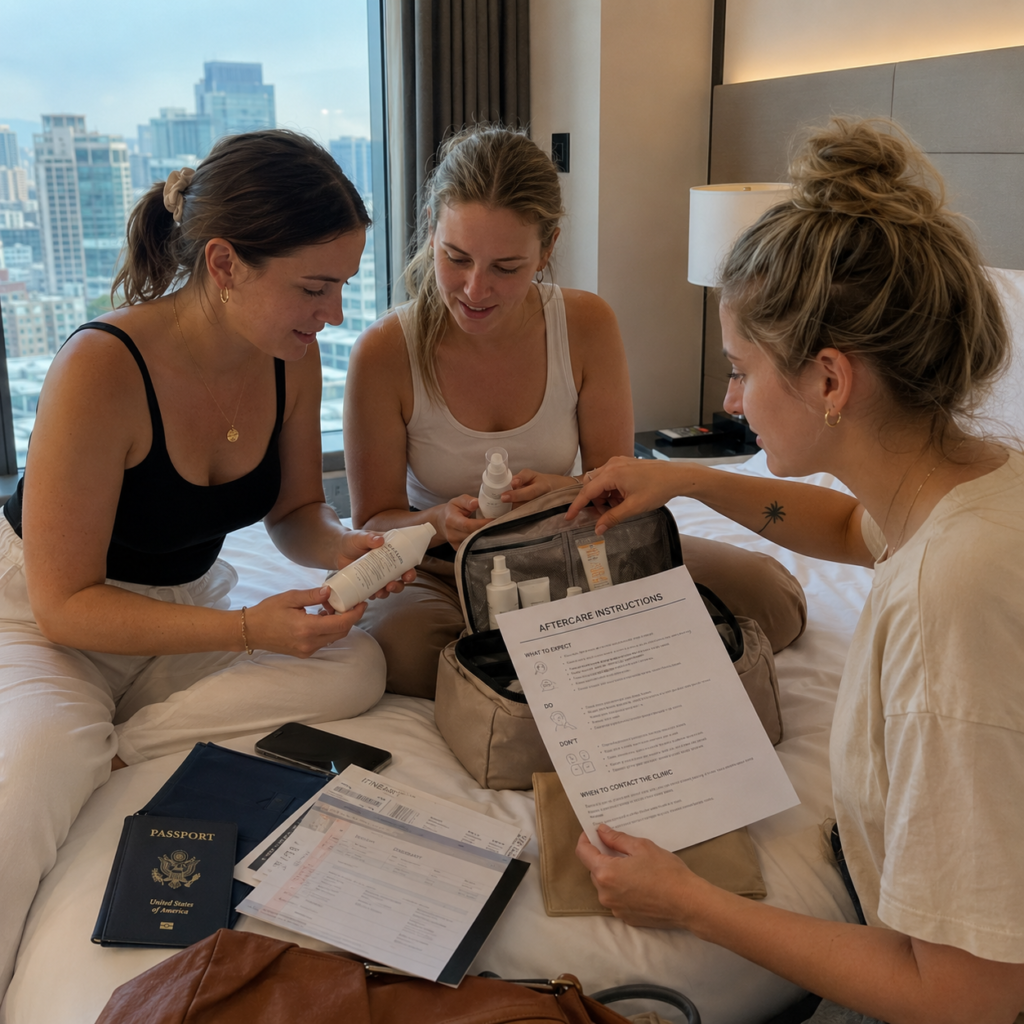
There is no universal safe number of days between a cosmetic procedure and a flight. The appropriate schedule depends on the exact treatment, your health, expected reactions, and whether the clinic needs to examine you again.
Before paying, ask:
- How soon should the clinic reassess me?
- What symptoms should prompt an earlier review?
- Can the clinic provide follow-up after I leave Seoul?
- Are there procedure-specific restrictions involving flying, sun exposure, exercise, heat, alcohol, makeup, or skin products?
- What should I do if symptoms appear after I return home?
The CDC medical tourism guidance explains that complications and follow-up care can become more difficult after a traveler returns home. Do not choose a procedure only because it fits between shopping and departure.
6. Understand the complete cost and insurance limitations
Request an itemized final quote before treatment begins. The amount should clearly show what is included and what may cost extra.
- consultation
- numbing or anesthesia
- product, device, dose, number of shots, or treatment area
- medication and aftercare products
- translation or coordination services
- follow-up visits
- deposit and cancellation charges
- treatment changes recommended after consultation
Do not assume that U.S. health insurance, Medicare, Medicaid, or travel insurance will reimburse elective cosmetic care or complications. Confirm overseas coverage, exclusions, reimbursement requirements, and medical evacuation terms directly with the insurer in writing.
The U.S. State Department’s South Korea guidance warns that most U.S. insurance is not accepted abroad and that travelers are responsible for medical bills. Medicare coverage outside the United States is limited, as explained in the official Medicare foreign-travel coverage guide.
For payment backup advice, read what to do if your credit card is declined in Korea.
7. Protect communication, consent, and personal information
An English-speaking coordinator can help with scheduling, interpretation, and payment. Medical suitability, alternatives, risks, and complications should still be explained by the treating clinician in a way you understand.
Ask for written English information rather than relying only on a quick conversation. Do not sign a consent form you cannot read or proceed while important questions remain unanswered.
Use the clinic’s verified website, email, booking system, or documented business account. Ask why identification is required before sending a passport copy, and avoid sending a full passport image through an unverified social-media account.
For medical institution information or language-support questions, see the Medical Korea Support Center information. The official listing provides the support number 1577-7129 for use in Korea.
Red flags to take seriously
- The clinic will not identify the treating doctor or specialty.
- A coordinator recommends treatment before a clinician examines you.
- The price changes repeatedly without an itemized explanation.
- You are pressured to pay immediately to keep a same-day discount.
- The clinic will not provide the product, device, dose, or treatment details.
- No written aftercare or emergency contact is available.
- Consent forms are presented without time to read or ask questions.
- The advertisement promises a guaranteed or perfect result.
- The clinic dismisses your medication, allergy, pregnancy, or previous-procedure history.
Leaving without treatment is a reasonable decision when you do not understand the plan or feel pressured. A deposit or limited-time promotion should not control a medical decision.
What to prepare for the appointment
- Bring the identification the clinic has officially requested.
- Prepare a list of medications, allergies, medical conditions, and previous cosmetic procedures.
- Save the clinic address, official contact details, and appointment confirmation offline.
- Bring a primary and backup payment method.
- Write your treatment goals and questions before the consultation.
- Ask for the final treatment plan and cost before payment.
- Leave time in your itinerary for monitoring and follow-up.
- Keep all records and aftercare instructions for your U.S. healthcare provider.
Frequently asked questions
Does Medical Korea registration guarantee that a clinic is safe?
No. Registration is a useful first verification step for institutions serving foreign patients, but it does not guarantee a specific result or replace checking the clinician, procedure, consent process, and aftercare.
Are all doctors at Korean skin clinics board-certified dermatologists?
Do not assume so from the clinic name alone. Ask for the treating doctor’s name and specialty and confirm who will perform the procedure.
How many days before my flight should I schedule treatment?
There is no single interval that applies to every laser, injectable, device treatment, or skin procedure. Ask the treating clinician how much observation and follow-up your specific treatment requires.
Will my American insurance cover treatment in Korea?
Do not assume coverage. Elective cosmetic procedures and related complications may be excluded, and Medicare coverage abroad is limited. Confirm the exact policy terms with the insurer before booking.
What should I do if a serious problem develops?
Contact the clinic promptly if symptoms worsen. For severe breathing difficulty, loss of consciousness, sudden vision changes, or another medical emergency in Korea, call 119. The official emergency information for travelers lists 119 for medical emergencies.
Final takeaway
A foreign-patient registration, English booking page, social-media following, or low price can help you find options, but none of them replaces a clear medical consultation.
Verify the institution and clinician, understand the exact treatment and risks, request written records, confirm the total cost and insurance limitations, and leave enough time for follow-up. The safest booking is one you can understand and decline without pressure.
This article provides general travel and health information and does not replace medical advice, diagnosis, or treatment. Ask a qualified clinician whether a procedure is appropriate for you. In a medical emergency in Korea, call 119.
You Might Also Like: How to Use 1339 in Korea