
If a Korean ATM keeps your foreign card, stay near the machine long enough to identify the ATM operator, check for assistance instructions and record the machine details. If the ATM is attached to an open bank branch, go inside and explain what happened.
If you cannot confirm that the card will be returned, protect it through your issuing bank. A reversible card lock may be available in your banking app, but if you have to leave without a reliable recovery plan, contact your issuer promptly and ask whether the card should remain locked or be cancelled and replaced.
Quick answer: Record the ATM operator, location, time and machine number; contact the operator while you are still nearby; secure the card through your issuer if recovery is uncertain; and switch to replacement or emergency-payment options if the card cannot be returned.
Last checked: September 13, 2026. ATM recovery procedures vary by operator and card issuer, so follow the instructions from the company operating the machine and the financial institution that issued your card.
Do These Things Before You Leave the ATM
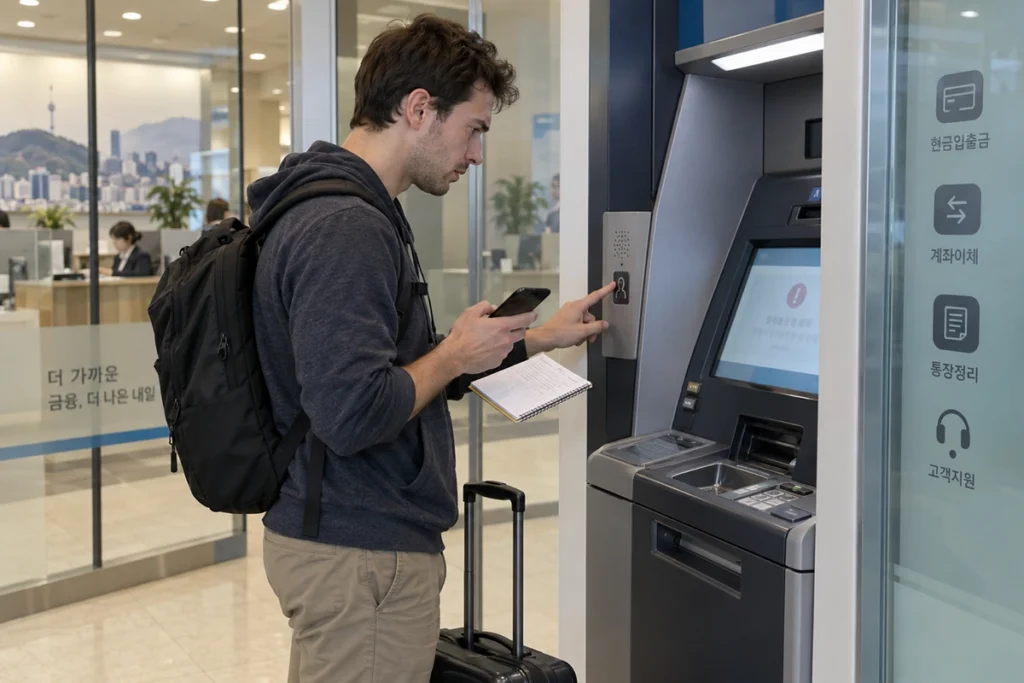
- Stay at the machine for the moment. Do not assume the incident is finished simply because the card did not come back.
- Check the screen. Look for an error message, customer-service instruction or other assistance information.
- Use any help option shown on the machine. This may be a help button, customer-service phone number or intercom, depending on the ATM.
- Record the ATM details. Note the bank or operator name, exact location, date and time, and any machine or terminal number displayed on the ATM.
- Keep the receipt if one was printed. It can be useful if the withdrawal was also charged to your account.
- Secure the card if recovery is uncertain. Contact the ATM operator and your card issuer before relying on the affected card for another withdrawal.
A photo of the ATM’s operator name and machine number can also be useful. Avoid photographing or sharing sensitive account information, and never give anyone your PIN because they claim they can retrieve the card.
If the ATM Is Attached to an Open Korean Bank Branch
Go inside the branch and explain that the ATM retained a foreign-issued card. Keep your passport or another photo identification document available in case staff ask you to verify your identity before discussing the retained card.
Do not assume that branch staff can immediately open the ATM and hand the card back. The machine may follow a separate servicing procedure, retained cards may be collected later, or the bank may need to identify the transaction before explaining whether recovery is possible.
VISITKOREA’s current business-hours guidance lists general Korean bank hours as 09:00 to 16:00 on weekdays, with exceptions for some banks and branches. An ATM lobby or automated banking area may remain accessible when the staffed branch is closed, so an operating ATM does not necessarily mean bank employees are available.
If the ATM Is at a Convenience Store, Station or Shopping Center
First identify who actually operates the ATM. Staff at a convenience store, station or shopping center may be able to help you identify the operator, but they may not have access to the machine itself.
Look for the ATM operator name, customer-service number and any help instructions displayed on the machine. Tell the operator that an overseas-issued card has been retained and provide the location, time and machine identification information you recorded.
If communication in Korean is the main problem, the Korea Tourism Organization’s 1330 Korea Travel Helpline provides tourist information and tourist interpretation through phone and real-time chat. From within Korea, call 1330; from overseas, the listed number is +82-2-1330.
1330 does not operate the ATM and cannot decide whether the card will be returned. Its role is more useful when you need help explaining the situation or understanding instructions from the ATM operator or another travel-related service.
Should You Lock or Cancel the Card?
The safest choice depends on whether you have confirmed that the card is securely retained and whether there is a realistic recovery plan. If your banking app offers a reversible card lock, you may be able to lock the card while contacting the ATM operator and your issuer.
If you have to leave without knowing when or whether the card will be returned, contact your issuing bank promptly. Ask whether the card should remain temporarily locked or be permanently cancelled and replaced.
If the issuer cancels the card, do not assume that it becomes usable again simply because the ATM later returns the physical card. Follow the issuer’s instructions before attempting to use a recovered card.
Check your recent transactions as well. If you see a withdrawal or purchase you did not authorize, report it through your issuer’s official fraud or lost-card channel immediately.
Who Can Help With a Retained Card?
| Who to contact | What they can help with |
|---|---|
| ATM operator or bank | Confirming the machine incident and explaining whether the physical card can be recovered |
| Your card issuer | Locking or cancelling the card, checking transactions, handling disputes and arranging replacement |
| 1330 Korea Travel Helpline | Tourist information and interpretation when communication is difficult |
| Visa or Mastercard assistance | Possible lost-card, emergency replacement or emergency-cash assistance, depending on the card and issuer |
What If the Korean ATM Will Not Return the Card?
If the ATM operator says the card cannot be returned, or you cannot establish a reliable recovery plan, switch from recovery mode to replacement mode. Contact the bank or financial institution that issued the card and report what happened.
Ask your issuer about:
- blocking or cancelling the retained card
- an emergency replacement card
- a digital replacement card, if your issuer supports one
- emergency cash while you are traveling
- whether another card linked to the same account remains usable
Depending on your card and issuer, card-network assistance may also be available. Visa’s lost-card assistance includes options related to card cancellation, replacement and emergency cash. Mastercard emergency services also provide assistance for lost or stolen cards, emergency replacement cards and emergency cash advances. Availability and approval depend on the card, issuer and individual circumstances.
What If the ATM Kept the Card and Charged Your Account?
Treat the retained card and the missing cash as two related but separate problems. Save the receipt, note the amount requested, record the ATM location and exact transaction time, and check whether the transaction is shown as pending or completed in your banking app.
Contact both the ATM operator and your card issuer if money was debited but no cash was dispensed. Follow your issuer’s instructions for reporting or disputing the transaction rather than assuming that getting the physical card back will automatically resolve the withdrawal issue.
If the card is eventually returned but ATM withdrawals continue to fail, see our Korean ATM Rejected Your Foreign Card? Causes and Fixes guide before repeatedly trying similar machines.
A Simple Korean Sentence to Show Bank Staff
ATM에 제 해외 발급 카드가 들어갔는데 나오지 않아요. 카드를 돌려받을 수 있을까요?
This means: “My foreign-issued card is stuck in the ATM and is not coming out. Can I get it back?”
You can also show staff the ATM location, transaction time and receipt instead of trying to explain every detail verbally.
If You Get the Card Back
Do not immediately put the recovered card into the same ATM again. First inspect it for obvious damage and check your banking app for a security alert, temporary lock or unfamiliar transaction.
If the card was retained after a PIN error, issuer decline or another unexplained problem, contact your issuer before making another withdrawal attempt.
When you try again later, use an ATM that shows a Foreign Card, Overseas Card or similar international-card pathway and check for a card-network logo that matches your card. A machine being labeled as an ATM, or even as a Global ATM, does not guarantee that every foreign-issued card and transaction will be accepted.
A retained card is more urgent than a simple ATM decline because you no longer control the physical card. Your priorities are straightforward: identify the ATM operator, record the machine details, find out whether recovery is possible, secure the card through your issuer if recovery is uncertain, and arrange a replacement or emergency payment method if the card cannot be returned.