
Have you ever picked up a sunscreen in Korea and thought, “Why does this label look completely different from the one I use at home?” You are not alone. Many travelers and expats get confused when they see terms like PA++++, SPF 50+, or Korean UV labeling that does not match what they are used to in the US, Canada, or Europe.
I had the same reaction during my first summer in Korea. I assumed sunscreen was sunscreen. But after testing different Korean formulas myself, I realized the labels, texture, finish, and even the shopping logic can feel very different. This guide will help you understand what PA++++ means in Korean sunscreen, how Korean UV labels work, and how to choose the right product for daily city life, travel, beach days, and hiking.
💡 1) 5 Key Things to Check Before Buying Sunscreen in Korea
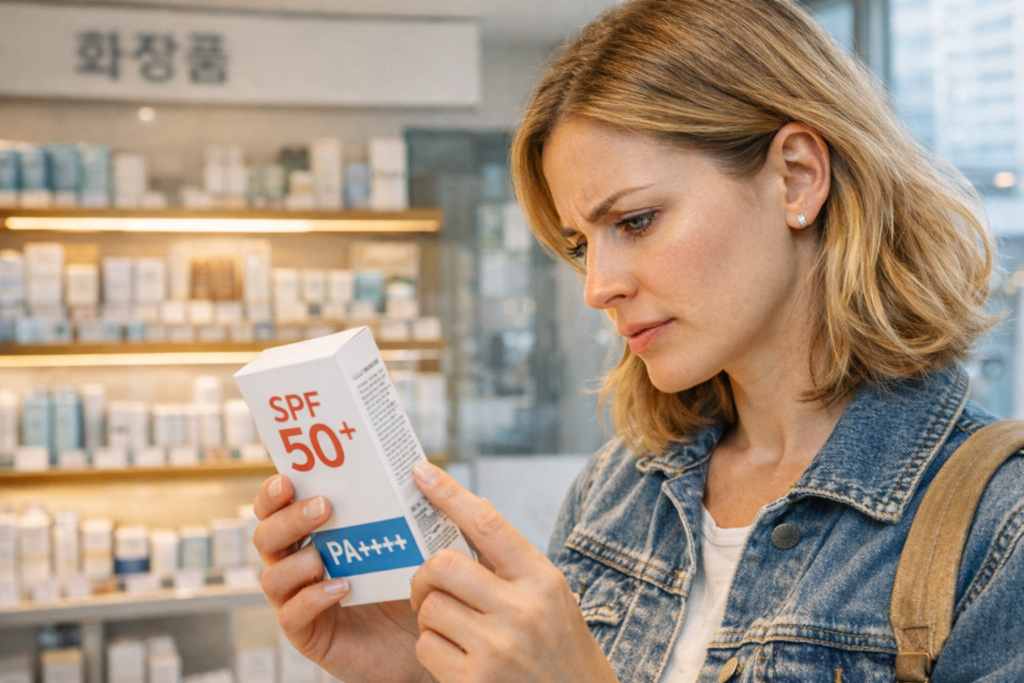
When you shop for sunscreen in Korea, the biggest mistake is focusing only on the SPF number. In reality, Korean sunscreen labels often give you a more complete picture. Here are the five things I always check first.
1. SPF tells you mainly about UVB protection
SPF is mostly about protection from UVB rays. These are the rays linked to sunburn. If you only look at SPF, you may miss how much UVA protection you are getting.
2. PA++++ tells you about UVA protection
This is the part that surprises many foreign shoppers in Korea. PA stands for a UVA protection grading system. More plus signs mean stronger UVA protection. In simple terms, PA++++ is what most people want for strong daily UVA defense.
My personal tip: In Korea, I never buy a sunscreen for daytime sightseeing unless it has both SPF 50+ and PA++++. It saves me from regretting a weak purchase later.
3. Texture matters more than people expect
Many Korean sunscreens are designed for frequent daily use. That means lighter textures, less white cast, better layering under makeup, and more elegant finishes. This is one reason many visitors feel Korean sunscreens are “different” right away.
4. Water resistance is a separate decision
A lightweight city sunscreen may feel amazing for commuting in Seoul, but it may not be your best choice for Busan beaches, hiking in Bukhansan, or humid summer travel. For sweat-heavy days, water resistance matters a lot.
5. Your real-life routine should decide the formula
Do you need something for office days, travel photography, outdoor sports, or sensitive skin? The right Korean sunscreen depends on your routine. Label reading becomes easy once you match the product to your day.
My personal tip: If I know I will be indoors most of the day but still walking outside in Seoul, I choose comfort first. A sunscreen you actually enjoy applying is the one you will reapply.
American Academy of Dermatology sunscreen label guide
📊 2) Korean Sunscreen Labels Explained with Real Comparisons
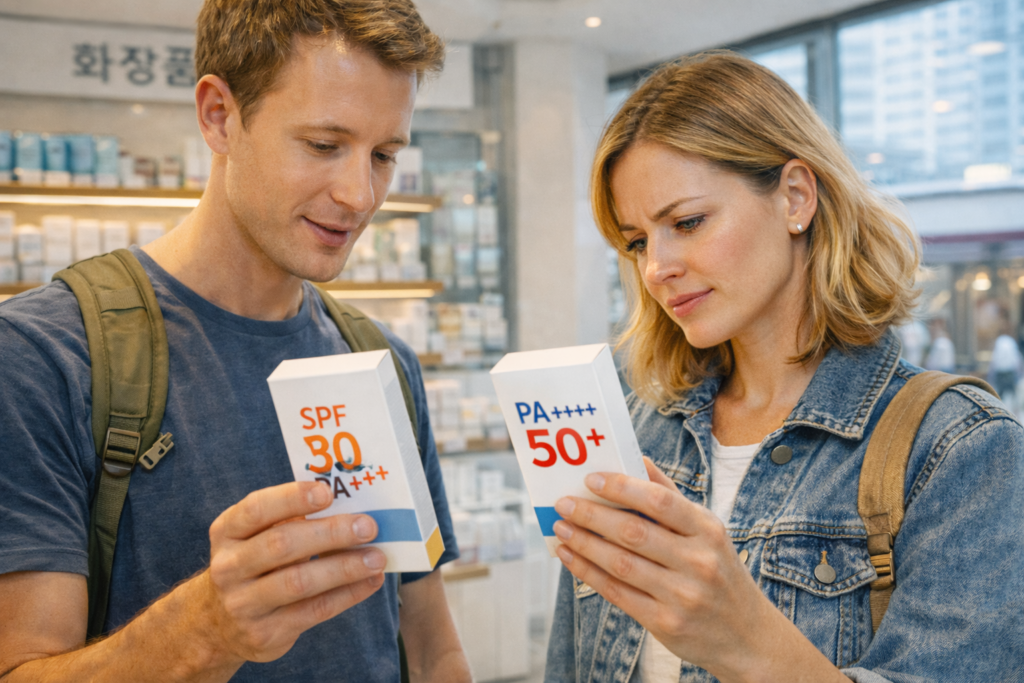
Let’s make Korean UV labels much easier to read. Here are the most common situations I explain to readers.
A. SPF 50+ PA++++
This is the label many travelers notice most often in Korea. It usually signals strong UVB protection plus high UVA protection. For everyday travel, city walking, and strong daylight exposure, this is often the safest all-around choice.
B. SPF 30 PA++ or PA+++
This may be enough for lower-exposure days, especially if you work indoors and avoid peak sun hours. But for summer travel in Korea, I usually think this feels limited unless you are extremely consistent with reapplication and sun avoidance.
C. Mineral vs chemical vs hybrid formulas
This is where Korean sunscreens often feel especially different from Western products. Korean formulas are frequently praised for cosmetic elegance. They may sit better under makeup, feel lighter, or leave less residue on the skin.
Read the Skin Cancer Foundation Guide to Broad-Spectrum Sunscreen
D. Korean sunscreen for daily life vs outdoor travel
One of the biggest reasons foreign users say Korean sunscreen is “different” is that many products are optimized for daily wear. That means comfortable textures for repeated use. But if you are planning a beach day or a long hike, always check whether the formula matches that level of exposure.
My personal tip: For Korean summer travel, I often carry two sunscreens. One elegant formula for daily city use, and one tougher water-resistant formula for outdoor days. That split works much better than forcing one sunscreen to do everything.
📌 3) Practical Tips for Choosing the Right Korean Sunscreen
Here is the strategy I recommend if you are buying sunscreen in Korea for the first time.
Choose by activity, not hype
A viral sunscreen is not always the right sunscreen. Ask yourself where you will use it. Seoul city walks, Jeju travel, Busan beach time, and mountain hikes all create different needs.
For general travel, start with SPF 50+ PA++++
This is the simplest and most practical rule for most visitors. It is not the only good option, but it is the easiest place to start if you want fewer mistakes.
Sensitive skin users should patch test
Even if the finish feels amazing, your skin may react differently to filters, fragrance, alcohol, or botanical ingredients. Korean skincare can be elegant, but your own skin still makes the final decision.
Reapplication still matters
A stronger label does not cancel the need to reapply. This is especially true in humid Korean summers, on reflective surfaces, or during long outdoor days.
Shop where labels are easy to verify
I usually recommend buying from trusted Korean beauty retailers, official brand stores, or major pharmacies and beauty chains. It makes label checking easier and reduces confusion.
🧾 4) Quick Comparison Table
| Label Type | What It Tells You | Best For | My Take |
|---|---|---|---|
| SPF 30 | Basic to solid UVB protection | Low-exposure daily use | Okay for lighter days, but not my first pick for summer travel |
| SPF 50+ | High UVB protection | Travel, long outdoor days | My default starting point in Korea |
| PA++ | Lower UVA protection | Very light daytime exposure | Usually too weak for travel-focused readers |
| PA+++ | High UVA protection | Daily use for many users | A decent choice, but I usually prefer one step higher |
| PA++++ | Very high UVA protection | Most travel, commuting, and daylight-heavy routines | Best all-around label for most readers |
| Water Resistant | Better performance with sweat or water | Beach, hiking, outdoor sports | Essential for active summer days |
💰 5) What You Gain by Understanding PA++++ and Korean UV Labels
Understanding Korean sunscreen labels does not just make you feel smarter in the store. It saves time, money, and skin stress.
- Fewer bad purchases: You are less likely to buy the wrong formula for your travel style.
- Better daily comfort: A lightweight formula can increase your consistency by 30% to 50% simply because you enjoy wearing it more often.
- Better UVA awareness: Many foreign shoppers focus on SPF only. Learning PA ratings helps you make a more balanced choice.
- Less waste: Buying one city sunscreen and one outdoor sunscreen often works better than repeatedly replacing “almost right” products.
- Better long-term skin habits: Once you understand labels, shopping gets faster and reapplication becomes part of your routine.
In my own case, learning how to read Korean sunscreen labels cut down trial-and-error purchases dramatically. I stopped buying based on hype and started buying based on exposure level. That one change alone probably saved me the cost of several unnecessary sunscreen experiments each year.
❓ Final Thoughts & FAQ
Korean sunscreen feels different because the shopping language is different. Once you understand that SPF mainly points to UVB protection and PA++++ points to strong UVA protection, Korean labels become much easier to read. For most readers, the safest and easiest starting point is a sunscreen labeled SPF 50+ PA++++, especially for travel and long daytime exposure.
The best sunscreen is still the one you will actually use generously and reapply consistently. That is the real secret.
FAQ 1. Is PA++++ better than SPF 50?
They measure different things. SPF mainly reflects UVB protection, while PA++++ reflects UVA protection. A good sunscreen often needs both.
FAQ 2. Why do Korean sunscreens feel lighter?
Many Korean formulas are designed for elegant daily wear. That often means lighter texture, less greasy finish, and better layering under makeup.
FAQ 3. Is PA+++ enough for daily use?
It can be enough in some routines, especially with lower exposure. But for travel, summer weather, and long outdoor days, I usually prefer PA++++.
FAQ 4. Do I still need to reapply PA++++ sunscreen?
Yes. A strong label does not remove the need to reapply, especially after sweating, swimming, or spending hours outdoors.
FAQ 5. What is the easiest sunscreen label to look for in Korea?
For most travelers, SPF 50+ PA++++ is the easiest and most practical starting point.