
Last checked: August 2, 2026. Personal-space expectations vary by person and situation. This guide focuses on common travel situations in crowded public places rather than treating every Korean or every interaction the same way.
Personal space in Korea can feel different when you are moving through a packed subway station, market, bus or restaurant entrance. A shoulder brush, bag tap or brief bump in a dense crowd does not by itself tell you whether the other person was careless, rushed or intentional.
The most useful distinction is between brief contact caused by crowding and behavior that is repeated, targeted or threatening. You do not need to interpret every accidental bump as hostility, but you also do not need to dismiss behavior that makes you feel unsafe as “just Korean culture.”
Quick answer: Physical contact with strangers is generally avoided in Korea, but some contact can be unavoidable on crowded buses, subways and other busy public spaces. Give brief crowd contact some context, use a short phrase when you need room, and treat repeated, deliberate or threatening behavior as a safety issue rather than an etiquette question.
Personal Space in Korea Depends on the Situation
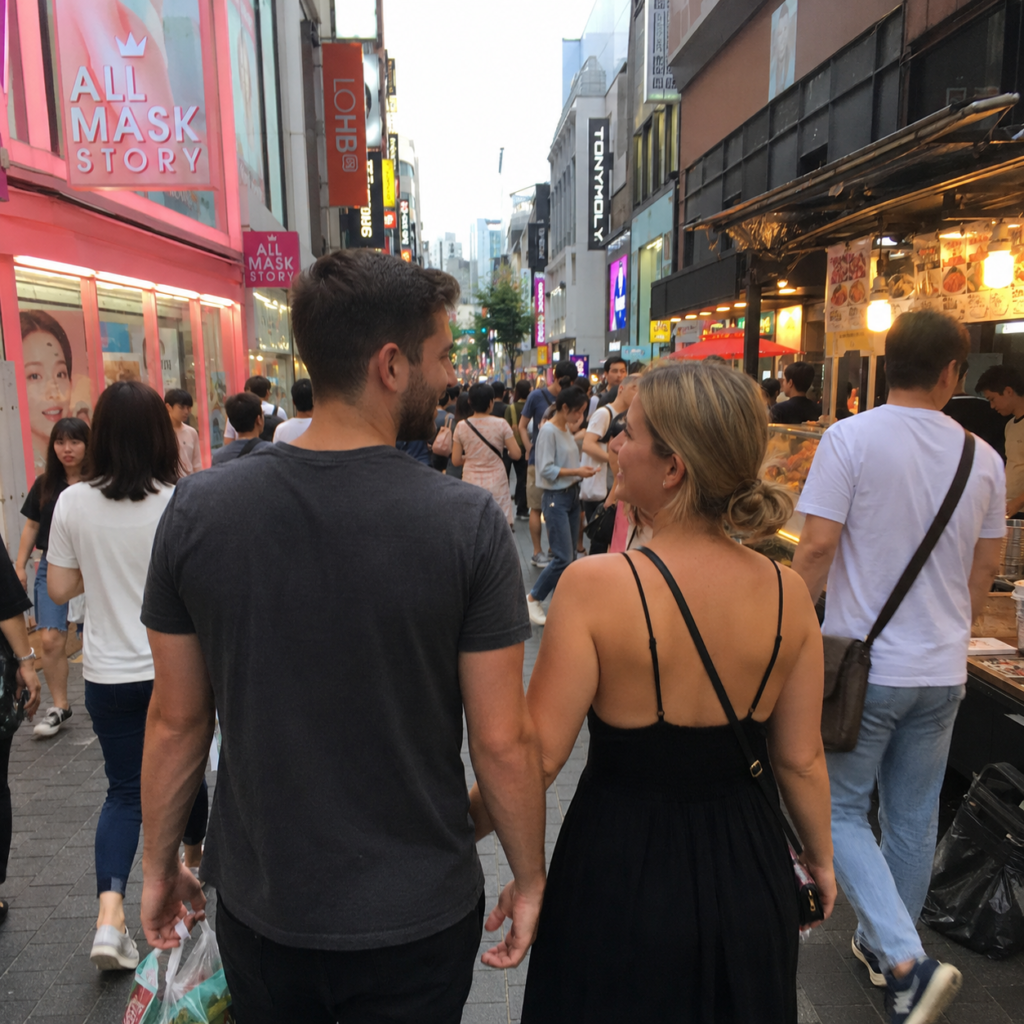
There is no single Korean personal-space distance that applies everywhere. A quiet café, hotel lobby or residential street can feel completely different from a transfer corridor at rush hour.
The official Visit Seoul etiquette guide notes that physical contact with people you do not know well should generally be avoided, while some degree of contact can be unavoidable in crowded public spaces such as buses and subways.
That distinction is important. Crowding can reduce the physical distance between people without creating a different rule about personal boundaries. A full subway car may require passengers to stand shoulder-to-shoulder, while the same amount of contact would feel unusual in an almost empty carriage.
For travelers, it is therefore more useful to read the setting and the behavior than to assume that “Koreans do not care about personal space.” Individual expectations still vary.
Where Travelers May Notice Less Physical Space
| Place | What You May Experience | Practical Response |
|---|---|---|
| Subway doors | Passengers may stand close together while people leave and board. | Wait beside the boarding area and allow people to exit before moving forward. |
| Transfer corridors | People may pass close together near stairs, escalators and intersections. | Keep moving with the flow and step aside before stopping to check your phone. |
| Bus aisles | Passengers may need to pass closely when preparing to get off. | Move farther inside when space is available and keep bags out of the aisle. |
| Traditional markets | Shoulders, bags, baskets or shopping carts may brush in narrow lanes. | Keep belongings close and leave the main walking lane before stopping. |
| Restaurant entrances | People may cluster near a waiting tablet, payment counter or doorway. | Wait to one side when possible instead of blocking the entrance. |
| Festivals and events | Crowd movement may temporarily reduce the distance between people. | Keep valuables secure and move to a less crowded area if you become uncomfortable. |
A brief contact in one of these crowded settings is not enough by itself to determine another person’s intention. Look at whether the contact stops as people move apart or continues after there is space to separate.
Subway Etiquette That Reduces Accidental Bumps
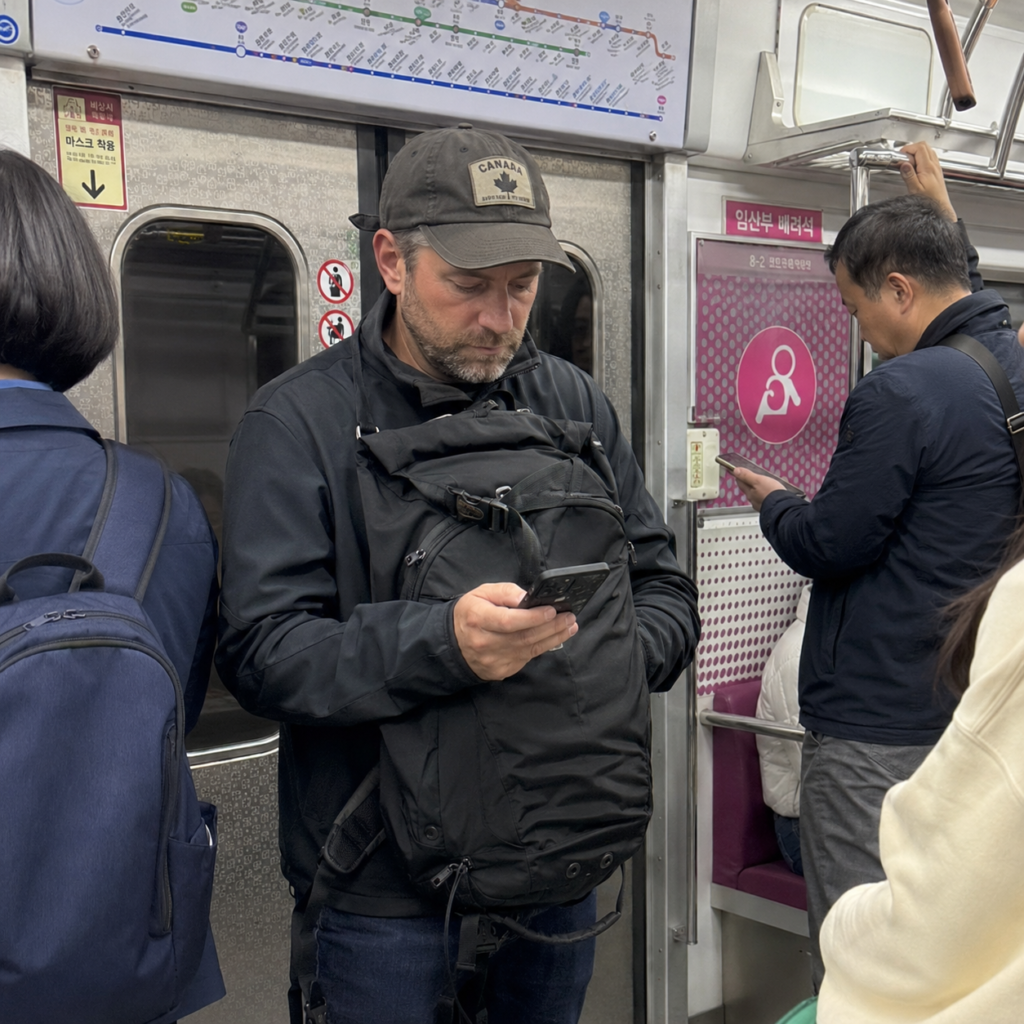
Seoul’s official public-transport etiquette guidance gives two particularly useful rules for crowded travel: let passengers get off before boarding and keep a bulky backpack in front of you or down by your side.
You can review those recommendations in the official Visit Seoul public transportation etiquette guide.
- Stand beside the subway door markings. Leave the center clear so passengers can exit first.
- Move away from the doorway after boarding. Door areas become crowded again at every stop.
- Keep your backpack within your body line. Wear a large backpack in front or hold it where you can control it.
- Step aside before checking your phone. Avoid stopping at the top or bottom of escalators, outside ticket gates or in the center of transfer corridors.
- Keep luggage upright and close. Avoid blocking aisles, doors and card readers.
- Make your movement predictable. Sudden stops or turns in a moving crowd can create avoidable collisions.
If you are still getting used to subway exits, buses, transportation cards and transfers, our Seoul public transportation guide covers the full travel process for first-time visitors.
How to Respond to a Brief Bump
You do not need a confrontation every time someone brushes your shoulder in a packed station. Start by creating a little space and checking what happens next.
- Move slightly to the side if there is room.
- Keep your bag and phone close to your body.
- Use a short phrase if you need to pass or reach an exit.
- If the contact stops as the crowd moves, continue on your way.
- If the behavior repeats after you move away, treat the situation more seriously.
A missing verbal apology after one brief contact is not enough evidence to know the person’s intention or attitude toward foreigners. The same event can look different in a packed transfer corridor and in an otherwise empty space.
If you accidentally bump someone yourself, a quick 죄송합니다 is polite and usually enough.
Useful Korean Phrases When You Need Space
| Korean | Meaning | When to Use It |
|---|---|---|
| 잠시만요 | Excuse me / one moment | When you need to pass through a crowd |
| 실례합니다 | Excuse me | Before reaching past someone or entering their space |
| 죄송합니다 | I’m sorry | If you bump someone, step on a shoe or block the way |
| 내릴게요 | I’m getting off | When you need to reach the exit on a crowded bus or subway |
Use a clear but normal voice and, when helpful, gesture toward the door or direction you need to move. A short phrase is usually easier than a long explanation in a noisy station.
When Contact Is More Than Normal Crowding
Do not dismiss repeated or deliberate behavior as a cultural difference. Sexual touching, repeated body contact after you move away, following, threats, aggressive pushing or attempts to access your bag or pockets should be treated as safety concerns.
If possible, create distance first and move toward a staffed or populated place such as a subway information office, convenience store, hotel lobby or staffed shop.
For an immediate police emergency in Korea, call 112. For fire, rescue or an ambulance, call 119. You can review the current official guidance on the VISITKOREA emergency information page.
For general travel information and interpretation assistance, the 1330 Korea Travel Helpline can help travelers, but it is not a replacement for 112 or 119 during an immediate emergency.
If you want the emergency numbers separated clearly before your trip, our guide to how Korea’s emergency and public-help numbers differ explains 112, 119, 1330, 1339 and 1345.
What Not to Assume About Personal Space in Korea
Do Not Assume Every Bump Is Rude
A brief shoulder or bag contact in a packed train, narrow market or moving queue may simply happen because there is very little room. The setting matters.
Do Not Assume Koreans Have No Personal Boundaries
Official Seoul etiquette guidance itself says physical contact with people you do not know well should generally be avoided. Crowding is an exception created by the environment, not proof that personal boundaries do not matter.
Do Not Assume Silence Reveals Intent
Someone not verbally apologizing after a brief contact does not tell you why it happened. Avoid turning one small interaction into a conclusion about the person, Seoul or Korean culture as a whole.
Do Not Ignore Repeated Behavior
If someone continues touching, following or blocking you after you move away, the situation is no longer just about the amount of space in a crowd. Create distance and seek help when needed.
A Simple Crowd Checklist for Travelers
- Let subway passengers exit before boarding.
- Keep large backpacks in front or close to your side.
- Move away from doors after boarding when space allows.
- Step aside before stopping to check your phone.
- Keep suitcases and shopping bags out of main walking paths.
- Use 잠시만요 when you need to pass.
- Say 죄송합니다 if you accidentally bump someone.
- Do not infer intent from one brief contact alone.
- Create distance if contact repeats after you move.
- Use 112 or 119 when the situation becomes an immediate safety emergency.
Frequently Asked Questions
Do Koreans have less personal space?
It is more accurate to say that the amount of physical space available can become much smaller in crowded places such as subway cars, transfer corridors, buses and markets. Personal expectations also vary by individual, so avoid treating one crowded situation as a rule for every Korean interaction.
Why did someone bump me without saying sorry?
There is no reliable way to know a stranger’s intention from one brief contact. In a packed area the contact may have happened while people were boarding, passing or changing direction. If the behavior is repeated, targeted or aggressive, respond to that behavior rather than assuming it is normal crowding.
Should I apologize if I bump someone in Korea?
Yes. Saying 죄송합니다 is a polite response if you step on someone’s shoe, hit them with a bag, block their path or cause noticeable contact.
What should I do with a backpack on a crowded Seoul subway?
Visit Seoul’s public-transport etiquette guidance recommends wearing a bulky backpack in front or putting it down so that it does not hit other passengers as you turn.
What should I do if someone keeps touching or following me?
Move toward staff or another populated area and create distance. Call 112 if you feel threatened or believe a police emergency is occurring. Call 119 if you need emergency medical, fire or rescue assistance.
Final Takeaway
Personal space in Korea is best understood through context rather than a fixed cultural rule. Physical contact with strangers is generally avoided, but some contact can become unavoidable in crowded buses, subway cars, markets and transfer corridors.
A brief bump in a packed place does not by itself reveal someone’s intention. Keep your belongings close, follow the flow of the crowd, let passengers exit first and use a short phrase when you need room.
At the same time, crowding does not excuse repeated or deliberate contact. If someone continues touching, following, threatening or blocking you after you move away, treat the situation as a safety issue and seek help.
The most useful rule is simple: give ordinary crowd contact context, but keep your own boundaries and safety standards intact.