

First, Know This: 1339 Is Not the Ambulance Number
The 1339 number in Korea is the Korea Disease Control and Prevention Agency Call Center. It provides information about infectious diseases, travel vaccinations, prevention guidance, and infectious disease reporting. It is not Korea’s ambulance or general medical emergency number.
Call 119 if you need an ambulance, rescue assistance, or an urgent emergency response. Use 1339 when your question specifically concerns infectious diseases or guidance provided by the KDCA.
Quick answer
For a life-threatening emergency in Korea, call 119. Use 1339 for infectious disease information, travel vaccination guidance, prevention advice, or infectious disease reporting. From overseas, KDCA lists +82-2-2633-1339 and +82-2-2163-5945.
The Korea Disease Control and Prevention Agency lists its official English call center information on the KDCA Call Center page. Travelers should save 119, 1339, and 1345 before arriving in Korea because each number serves a different purpose.
Why Foreign Travelers Mix Up 119 and 1339
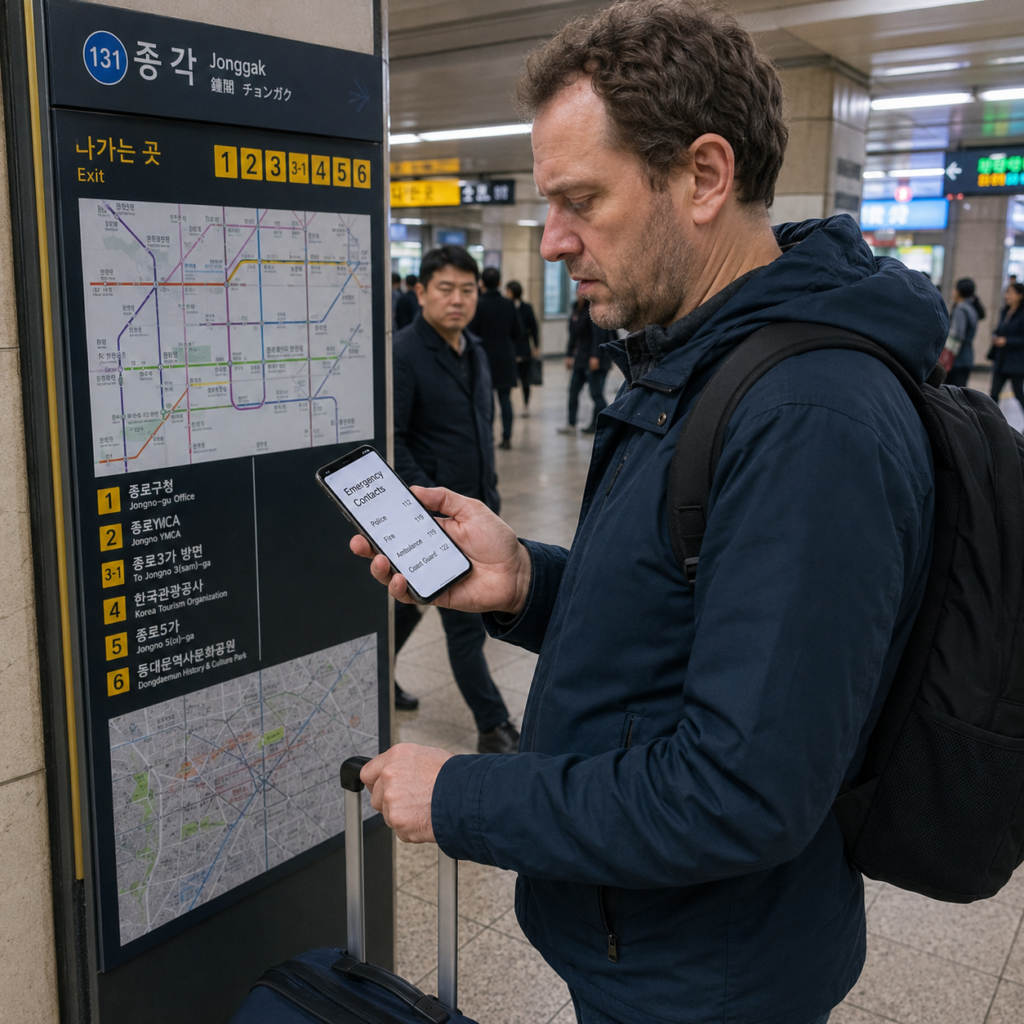
In Korea, emergency numbers are short and easy to dial, but their roles are not always obvious in English. A traveler with chest pain, a high fever, or a sudden injury may search online and see several numbers: 112, 119, 1330, 1339, and 1345. That is a lot to process when you are already stressed.
Here is the clean version. 119 is for fire, rescue, and ambulance emergencies. 112 is for police. 1330 is the Korea Travel Hotline. 1339 is for infectious disease, vaccination, prevention, and reporting guidance.
A realistic example: imagine waking up in a hotel near Myeongdong at 2 a.m. with severe breathing trouble. That is not the moment to compare hotlines. Call 119. But if you have a question about infectious disease exposure, travel vaccinations, prevention, or reporting guidance, 1339 is the number to know.
5 Essential Facts About 1339 in Korea
1. 1339 is for infectious disease guidance, not general medical triage
Think of 1339 as an infectious disease information and public health call center. It provides guidance on major infectious diseases, travel-related infections, travel vaccinations, prevention, and reporting procedures. It is not a general symptom-checking or hospital recommendation service.
It is not the number to use when someone collapses, has severe bleeding, loses consciousness, shows stroke-like symptoms, has serious chest pain, or needs immediate rescue. In those situations, call 119 first and explain your location as clearly as possible.
2. KDCA directs foreign-language callers to 1345
KDCA’s official English page directs foreign-language callers to 1345, the Immigration Contact Center. This service can provide multilingual assistance during its operating hours, but it is not a replacement for emergency response.
If someone needs urgent physical help, call 119 first. For a non-emergency infectious disease question, use the current KDCA and 1345 instructions shown on their official pages.
3. From overseas, you need the international number
If you are already inside Korea, dial 1339. If you are outside Korea and need to reach KDCA-related support, use the international format shown by KDCA: +82-2-2633-1339 or +82-2-2163-5945.
This can matter before departure. For example, if you are checking health-entry information, disease-related guidance, or public health updates before flying to Incheon Airport, the overseas number is more useful than trying to dial the short code from abroad.
4. 119 is still the fastest choice for a real emergency
If there is one rule to remember, make it this: when in doubt during a serious medical emergency, call 119. Korea’s 119 service is designed for emergency response and ambulance dispatch.
When calling 119 as a foreigner, keep your sentences short. Say your location first, then the problem. For example: “I am at Seoul Station Exit 15. My friend cannot breathe.” If you are in a hotel, give the hotel name, district, room number, and nearby landmark if possible.
5. Save Korean words that help in urgent calls
You do not need perfect Korean to get help, but a few words can reduce panic. Save these in your phone notes before your trip.
- Emergency: eunggeup sanghwang
- Ambulance: gugeupcha
- Hospital: byeongwon
- Pharmacy: yakguk
- I need help: dowajuseyo
- I am a foreigner: jeoneun oeguginimnida
Even if your pronunciation is not perfect, these words can help staff, hotel reception, subway workers, or nearby Koreans understand the situation faster.
When Should You Call 1339?
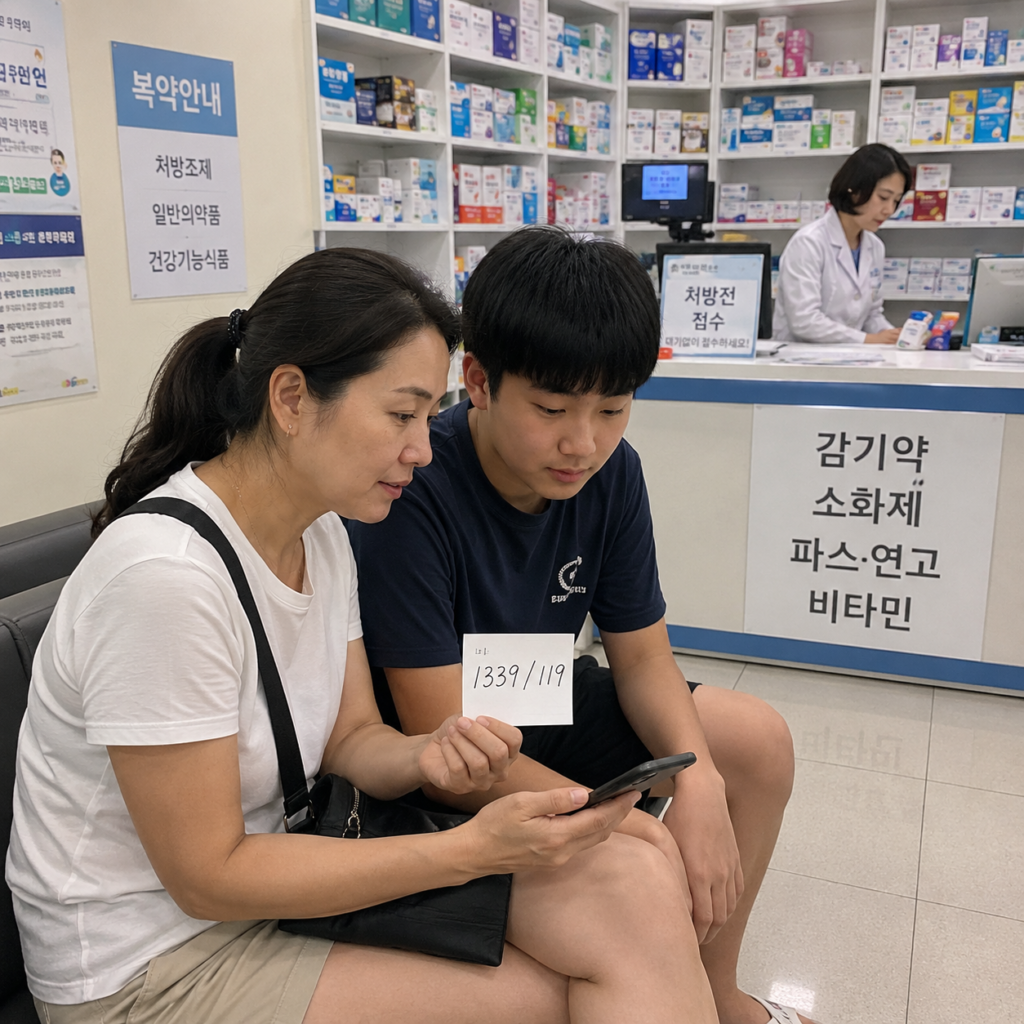
Call 1339 when your question specifically concerns infectious diseases, travel vaccinations, disease prevention, or reporting guidance. It may also be useful when you need current KDCA information about an outbreak that could affect your trip.
Use 1339 for situations like these:
- You have questions about a suspected infectious disease exposure.
- You need information about travel vaccinations or disease prevention.
- You need guidance on reporting a suspected infectious disease case.
- You want current KDCA information about an infectious disease outbreak.
- You are calling KDCA from overseas using one of its international numbers.
Do not use 1339 as a substitute for emergency medical care or general symptom triage. Call 119 for severe breathing problems, unconsciousness, heavy bleeding, seizures, serious allergic reactions, or other urgent emergencies.
Which Number Should You Use?
| Situation | Call | Why |
|---|---|---|
| Ambulance, fire, rescue, serious medical emergency | 119 | Emergency response and dispatch |
| Police, assault, theft in progress | 112 | Police assistance |
| Infectious disease, vaccination, prevention, or reporting questions | 1339 | KDCA infectious disease guidance |
| Tourist help, interpretation, travel questions | 1330 | Korea travel hotline |
| Immigration or foreigner language support | 1345 | Immigration Contact Center |
What to Prepare Before You Call
In a medical situation, the hardest part is often not the phone number. It is explaining where you are. Korean addresses can be detailed, and subway stations may have many exits. Gangnam Station Exit 11 and Gangnam Station Exit 1 are not the same place when someone is trying to find you.
Before calling, collect the clearest details you can:
- Your exact address in Korean, if available
- Building name, floor, and room number
- Nearest subway station and exit number
- Hotel or guesthouse name
- Patient’s age, symptoms, allergies, and medication
- Passport name and travel insurance information, if relevant
If you are at a café, restaurant, or shop, show your phone to a staff member and ask for help saying the address. Most Korean businesses have their Korean address on Naver Map, receipts, reservation pages, or the entrance sign.
If You Need to Visit a Hospital
Emergency rooms in Korea can be efficient, but they may feel different from what travelers expect. You may need to register first, show your passport, explain your symptoms, and pay according to hospital procedures. Travel insurance is helpful, but you may still need to pay upfront and claim later depending on your policy.
Large hospitals in Seoul often have international clinics, but emergency rooms do not always work like hotel concierge desks. English support may be available, but it can vary by hospital, time of day, and staff on duty. Late-night visits, weekends, and public holidays can feel more difficult.
For non-urgent problems, such as a mild rash, stomach upset, minor cold symptoms, or a prescription question, a local clinic or pharmacy may be faster than a major hospital emergency room. In Korea, pharmacies are marked with 약 or 약국, and many are close to subway stations and clinic buildings.
Practical Phone Setup for Travelers
Save these numbers in your contacts before landing in Korea. Do not wait until your hands are shaking in a hotel hallway or a subway station.
- 119: Fire, rescue, ambulance
- 112: Police
- 1339: KDCA infectious disease and prevention guidance
- +82-2-2633-1339: KDCA from overseas
- +82-2-2163-5945: KDCA from overseas
- 1330: Korea Travel Hotline
- 1345: Immigration Contact Center
Also save your hotel address in Korean and English. A screenshot is better than relying on mobile data. If you use an eSIM, keep your home number available for insurance calls and bank verification when possible.
FAQ
Which number should foreign-language callers use?
KDCA’s official English page directs foreign-language callers to 1345, the Immigration Contact Center, during its listed service hours. Call 119 for urgent medical help.
Should I call 1339 or 119 for a medical emergency?
Call 119 for a serious medical emergency, ambulance, fire, or rescue. Use 1339 for infectious disease, vaccination, prevention, or reporting guidance that does not require emergency dispatch.
The Safest Way to Remember It
Do not try to make 1339 do every medical job in Korea. It is useful, but it is not the number to call first when someone needs urgent physical help.
For foreigners in Korea, the safest pattern is clear: call 119 for emergencies, use 1339 for infectious disease, vaccination, prevention, or reporting guidance, and use 1345 when you need foreign-language assistance. Keep your Korean address ready as well. That one small preparation can make a stressful moment much easier to handle.
You Might Also Like: eSIM vs Physical SIM vs Roaming in Korea